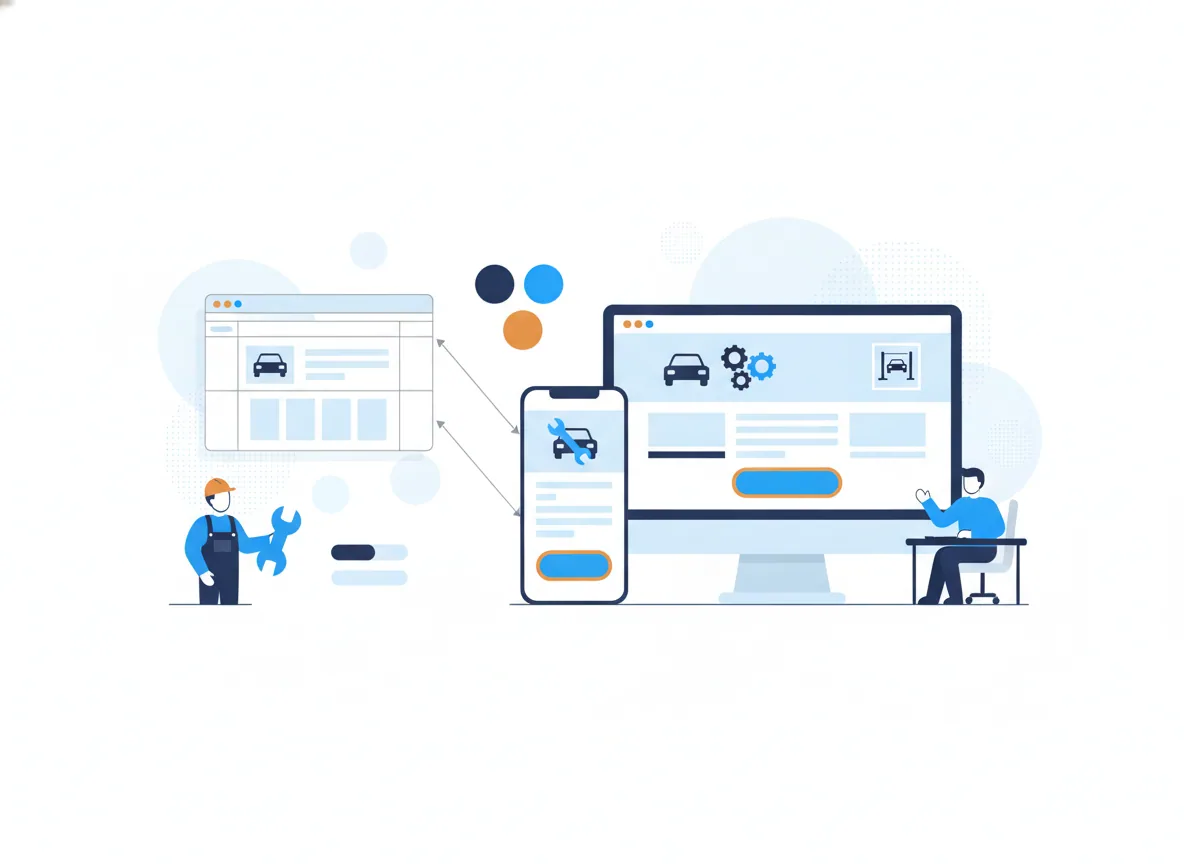
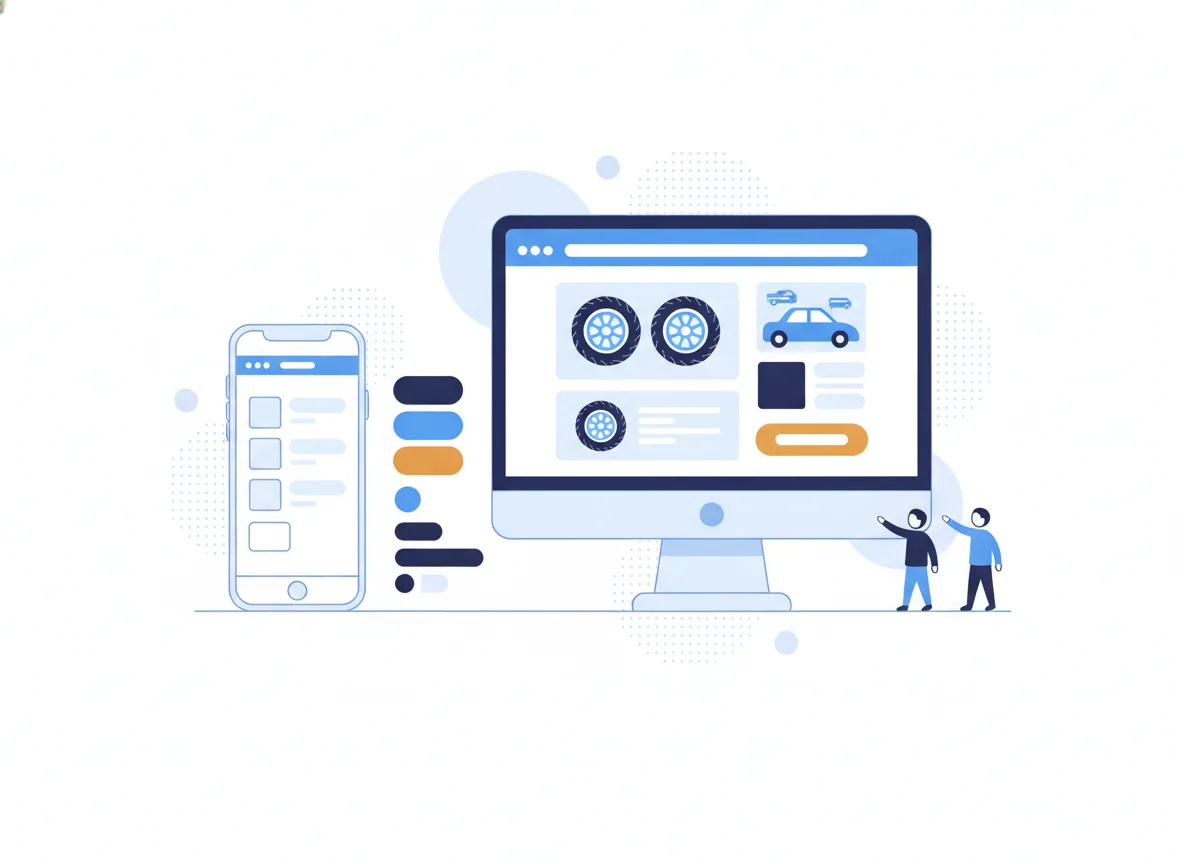
A professional website for your auto repair shop requires an initial investment ranging from a few thousand dollars for a standard informational setup to larger capital investments for complex, high-performance builds. The exact cost depends directly on the custom features you need to turn mobile searchers into vehicles on your lifts. A cheap site often costs you more in missed appointments than you ever saved on the initial build.
To scale mechanic online visibility, you have to treat your website as a revenue-generating tool, not a digital brochure. The budget you allocate goes toward user experience, technical performance, and conversion tracking. Knowing where your money goes ensures you invest in elements that actively drive business to your service bays.
Breaking Down the Mechanic Web Design Investment
When you hire an agency to build a website, your money funds several distinct phases of work. Understanding these phases helps you spot bloated proposals and avoid paying for things you do not need.
Discovery and Strategy
Before anyone writes a single line of code, an agency needs to understand your local service area, your most profitable repair jobs, and your immediate competitors. Strategy involves mapping out the site architecture. If your shop specializes in transmission rebuilds and European auto repair, those specific services need dedicated pages. Proper strategy ensures a logical flow so a customer dealing with a sudden check engine light can find your diagnostics page and book an appointment in less than three clicks.
Professional Content Writing
Your technicians do not have time to write website copy, and relying on auto-generated fluff hurts your credibility. Professional copywriting represents a major line item in any serious web design budget. A dedicated copywriter researches the specific terminology your customers use when their cars break down. They write comprehensive pages that explain your warranty terms, your ASE certifications, and your specific repair processes. Clear, direct content builds trust with anxious customers and helps search engines accurately categorize the services your shop offers.
Custom Design and User Experience
Design is about more than making your logo look good on a screen. It involves structuring the page so the most critical information is immediately visible on a mobile device. This includes your phone number, your physical address, and your appointment booking button. When a driver is stranded on the side of the highway with a blown radiator, they will not hunt through complex menus to find your contact page. Custom design ensures the user experience is entirely frictionless.
Technical Development and Coding
Development brings the design mockup to life. This phase covers writing clean code, optimizing image sizes, and ensuring the site loads in under three seconds. Slow sites lose customers immediately. Technical development also includes integrating third-party software, such as your shop management system or customer relationship management tools. Proper integration ensures that online appointments flow directly to your service advisors without requiring manual data entry.
Budgeting Honestly for Standard Pricing Ranges
Web design pricing varies wildly across the industry. Here is an honest look at what you get at different investment levels, allowing you to align your budget with your specific growth goals.
The Entry-Level Budget
At the lowest end, you can use a self-service builder or hire a beginner freelancer. This buys you a basic, template-based site populated with standard stock photos and generic text. These sites function strictly as digital business cards. They rarely rank well in competitive local searches and offer extremely limited options for tracking mechanic customer acquisition. If you are a brand-new mobile mechanic with zero marketing budget, this gets you online, but it will not drive consistent, heavy traffic to a physical location.
The Mid-Market Investment
A mid-market build represents the sweet spot for an established independent auto shop looking to modernize its online presence. At this level, you work with an established professional agency. You receive custom design elements tailored to your brand, original content written for your primary revenue-driving services, and proper technical on-page optimization. The site will be built on a reliable content management system, load quickly, and function flawlessly on mobile devices. This level of investment captures consistent local search traffic and builds strong community trust.
The High-Performance Asset
Complex sites designed for multi-location auto groups or highly specialized diagnostic centers demand higher capital investments. These robust projects often include advanced API integrations with enterprise shop management software, custom interactive diagnostic tools for users, and extensive content libraries covering every make, model, and major repair type. The higher upfront cost pays off through automated appointment scheduling, significantly lower administrative overhead for your front desk staff, and aggressive dominance in highly competitive local search markets.
Essential Website Features for Auto Repair Shops
Your budget must account for specific features that modern consumers expect when searching for auto repair services. Skipping these features severely limits your conversion rate.
Frictionless Appointment Scheduling
Customers want to book appointments on their own schedule, often after your shop has closed for the day. Integrating a seamless scheduling tool allows users to select their service, choose an available time slot, and provide their vehicle information online. This reduces phone volume for your front desk and captures leads that would otherwise move on to a competitor.
Transparent Pricing and Warranty Information
Auto repair comes with inherent anxiety over cost. A modern shop website must clearly communicate your pricing structure, diagnostic fees, and comprehensive warranty information. Dedicating space to explain your two-year or 24,000-mile nationwide warranty builds immediate trust. Customers are far more likely to book a major repair when they feel confident that your shop stands behind its work.
Customer Reviews and Authentic Social Proof
Text-based testimonials carry very little weight on their own. Your website must pull in dynamic, verified reviews from external platforms. Highlighting real feedback from local drivers proves your reliability. Additionally, feature high-quality photos of your actual shop, your waiting room, and your mechanics actively working on vehicles. Stock photos of clean-handed models holding wrenches look completely fake and actively erode trust.
What Typically Goes Wrong With Auto Shop Websites
Many auto shop owners get burned by marketing agencies because the industry is notorious for hidden fees and poor technical execution. Knowing what goes wrong helps you vet potential agency partners effectively.
Hidden Maintenance and Management Fees
Some agencies lure shop owners in with a massive discount on the upfront build cost, only to lock them into a rigid multi-year contract with exorbitant monthly maintenance fees. You end up paying heavily for simple text changes and routine plugin updates. Always ask for a transparent itemization of all ongoing costs. You should pay for secure hosting, regular security patching, and deliberate marketing efforts, not just basic access to your own digital property.
Held Hostage by Proprietary Platforms
Never let an agency build your site on a proprietary content management system that only they control. If you ever decide to leave the agency due to poor performance, you lose your entire website and have to start over. Your site should always be built on a standard, open-source platform. You must own the domain name, the hosting account, and all website files. If an agency refuses to grant you full administrative access from day one, find another agency immediately.
Bloated Templates and Slow Speeds
Agencies frequently cut corners by purchasing a cheap, generic template and simply changing the primary colors to match your brand. These templates come loaded with extra code, complex animations, and features your auto shop will never use. This technical bloat drastically slows down your site. A slow site harms your search engine visibility and deeply frustrates mobile users who need immediate assistance with a broken vehicle.
Ignoring Mobile Users Completely
A massive portion of auto repair searches happen on mobile devices. A potential customer might be sitting in a tow truck or stuck in a parking lot trying to find a reliable mechanic quickly. If your site was designed primarily for desktop monitors, the buttons will be far too small to tap, and the text will be entirely unreadable on a smartphone screen. Failing to prioritize the mobile experience is the absolute fastest way to lose booked repair jobs.
Transitioning from a Brochure to an Asset
A website only provides a measurable return on investment if it actively contributes to your bottom line. To make this crucial transition, your site needs highly specific, conversion-focused elements that drive action.
You need dedicated landing pages for your most profitable and highly searched services. If brake pad replacements, engine diagnostics, and timing belt jobs drive the majority of your revenue, those services require deep, informative individual pages. A single generic page with a bulleted list of services is not enough to compete. Dedicated service pages allow you to target specific search queries accurately and provide the exact technical information a potential customer needs before handing over their keys.
Trust signals must be prominent and easily verifiable. Display your technical certifications, your Better Business Bureau rating, and your affiliations with recognized industry organizations proudly on the homepage. When a visitor lands on your site, they should immediately feel that they are dealing with a legitimate, highly qualified automotive business.
Integrating Digital Marketing for Mechanics
Your website serves as the foundation of your digital strategy, but it requires consistent, targeted traffic to generate substantial revenue. Integrating your custom site with active marketing campaigns is exactly how you scale your operations effectively.
When you run paid search ads targeting emergency towing or specialized transmission repair, you need those ads to direct users to a highly relevant page on your site, not just the generic home page. The site architecture must be built to track exactly how many phone calls and online form submissions originated from those specific paid ads. Without accurate, granular tracking in place, you cannot accurately calculate your true cost per booked job.
Proper site architecture also directly supports your ongoing organic search efforts. When your site is structured correctly with clean code and logical internal linking, search engines can easily crawl and index your individual service pages. This solid technical foundation allows your shop to compete aggressively for critical local search terms in your specific geographic market.
Measuring the Return on Your Investment
You measure the success of a wrench by how well it turns a bolt, and you measure a website by how many cars it consistently brings into your shop bays.
Focus intensely on the cost per booked job rather than vanity metrics like total site visitors. If you invest heavily in a custom website build, you need to track exactly how many viable leads that site generates each month. Use dynamic call tracking numbers to see which specific service pages prompt customers to call your front desk. Implement reliable conversion tracking on all of your appointment request forms.
When you know that a specific, reliable percentage of website visitors convert into paying customers, you can make highly informed decisions about scaling your advertising budget. You move away from guessing about your marketing performance and transition to managing a predictable, measurable pipeline of diagnostic and repair work.
How ITZ Digital Builds Transparent Billing Profiles
You deserve to know exactly what you are paying for when investing in your business. We design completely transparent, scalable billing profiles that eliminate marketing waste and focus entirely on rigorous asset tracking.
We clearly separate the cost of designing and building your website from the ongoing costs of active marketing. You will never find hidden management fees buried in a confusing, multi-page invoice. Our contracts clearly define the exact scope of the web design project, the firm timeline for completion, and the exact deliverables you own outright when the site launches.
When we manage your digital marketing campaigns, we track tangible results. We integrate clear analytics that show you exactly how many leads your new site generated and exactly where those leads originated. We contrast our direct, results-oriented approach with the standard agency model of vague reporting and opaque monthly retainers. You completely own your website, you own your performance data, and you see exactly how your investment translates directly into booked repair jobs.

 By Kayce Marty