
Automotive marketing
Automotive marketing for a proximity-and-trust decision
Auto services are chosen on distance, reviews and whether the shop answers the phone. Everything we do points at those three.

5mi
Typical search radius for auto services
Specialisations
Where automotive campaigns actually differ
Each of these has its own search behaviour, its own compliance constraints and its own definition of a good lead. We run them as separate strategies.
Our approach
How we run automotive campaigns
The playbook that consistently works in automotive — and the parts most generalist agencies skip.
01
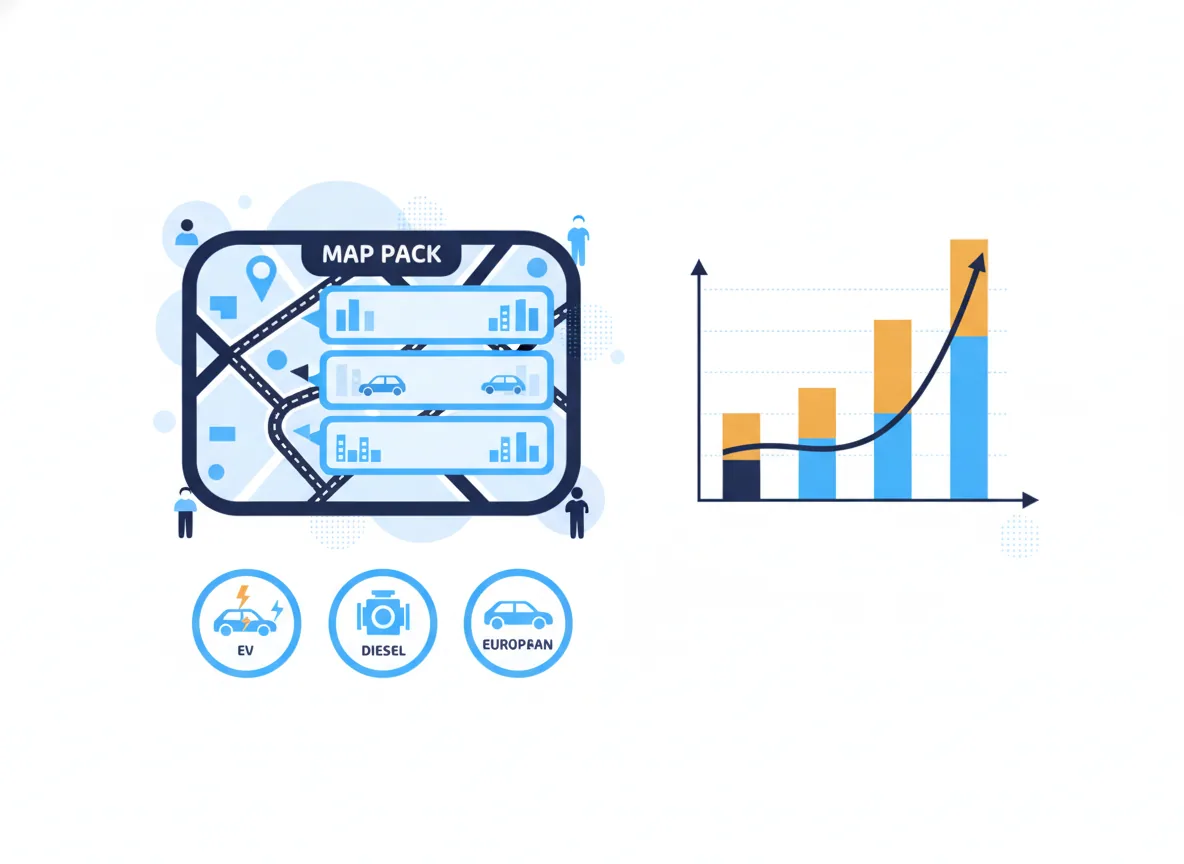
Win the map pack first
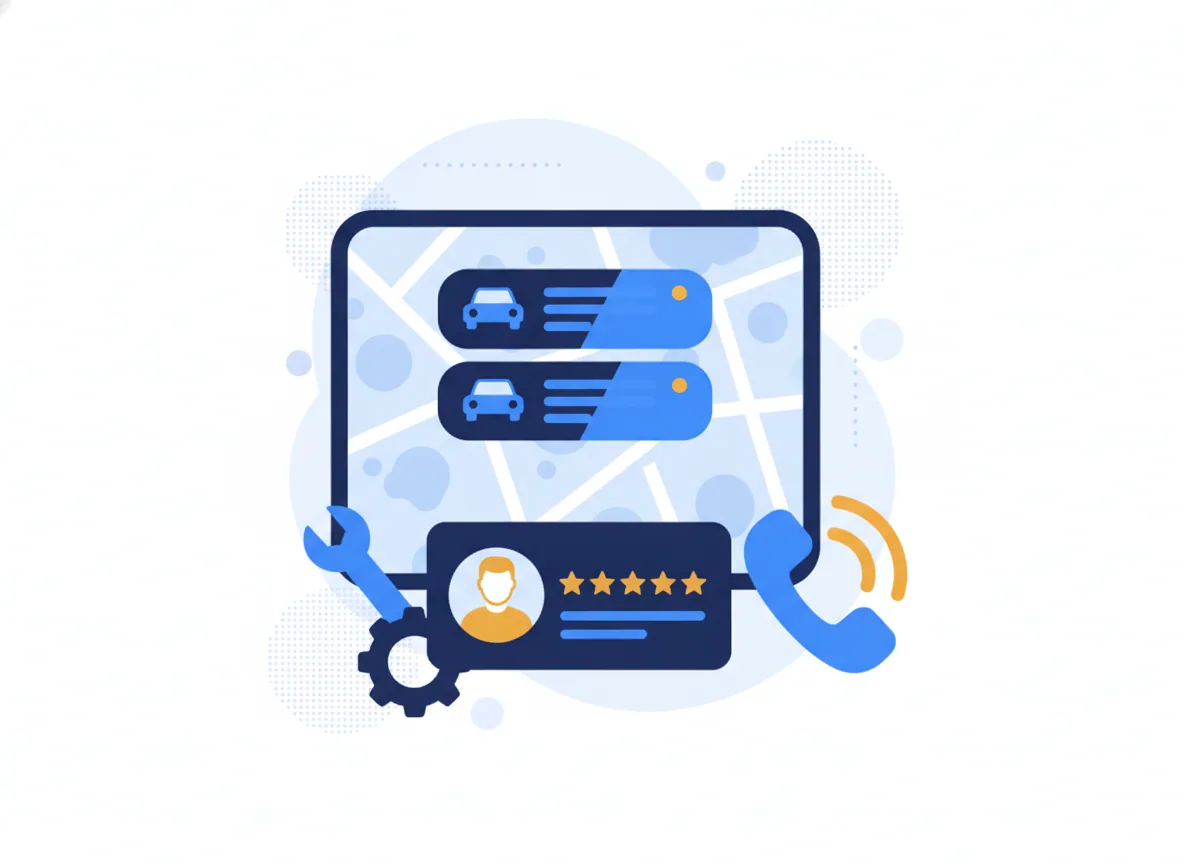
The local three-pack takes most of the calls for repair and service searches. Proximity, review recency and a complete Google Business Profile outrank almost anything on your website, so that is where the first work goes: services listed, hours accurate, photos current, reviews flowing.
02
Specialise to escape the bidding war
European, diesel, EV, transmissions, fleet, ceramic coating — a specialisation cuts the competitor set and raises the average ticket at the same time. We build the pages and campaigns around what you want more of rather than chasing every "mechanic near me" click against every shop in town.
03
Plan for the weather
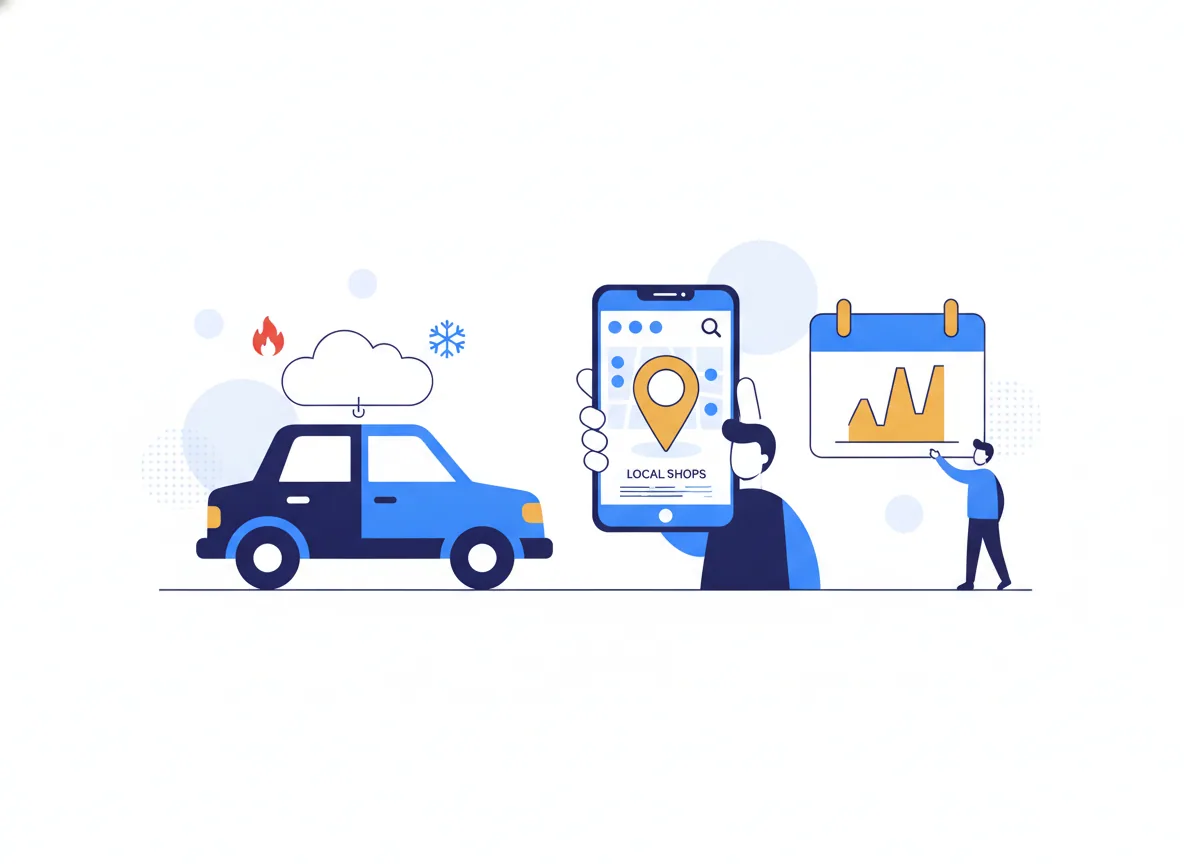
Air conditioning in the first hot week, batteries in the first hard freeze, detailing before holidays and sales. Demand in this category spikes on a predictable calendar, and campaigns that are already live and bid up when the spike hits capture it while slower competitors are still reacting.
The market
How automotive buyers actually decide
Almost every one of these searches happens on a phone, within a few miles, and often with the car already making a noise. The buyer looks at the map pack, scans the star rating and the two most recent reviews, and calls the first shop that looks competent. If nobody picks up, they call the next one. That is most of the decision.
Underneath it sits a trust problem — people expect to be upsold — so photos of your bay, named technicians, written estimates and a stated warranty do more than a coupon. Higher-ticket work behaves differently: collision, coatings and restoration are considered for days, which is where paid social and retargeting earn their place. Everything else is proximity, hours, reviews and someone answering the phone.
A second location changes what you can rank for in a way more content never will — two Business Profiles, two service areas, two sets of local reviews. If growth is the goal, the marketing plan and the real-estate plan are connected.
For collision and higher-ticket work, the customer often calls their insurer before they call a shop and does not know they can choose where the car goes. A direct-to-owner strategy — being visible and trusted before the accident, and clear about the choose-your-shop right after — is a different and more durable play than competing only for the people already searching.
Why us
What you get from an agency that knows automotive
Typical search radius for auto services — that is the number this work has to move.
- Map pack work first: hours, service categories, photos and review velocity, since that is where the calls come from.
- Call tracking with recordings, so you can hear how many booked jobs the front counter is losing.
- Campaigns split by service and ticket size, so brake jobs and ceramic coating are not bought the same way.
- Service-radius targeting matched to how far people will actually drive, instead of a blanket citywide budget.
How we know it's working
What we watch, month to month
Booked work is the goal, but it lags. These are the earlier signals that tell us a automotive campaign is on track.
Calls and booked jobs from the Business Profile
Tracked separately from website conversions, because for this category the profile is often the whole funnel. Call volume and booked appointments are the read.
Average ticket by service line
Specialisation should be pulling the mix toward higher-value work. If the phone is ringing but tickets are flat, the targeting is too broad.
Review recency and rating trend
Recent reviews move map-pack position and conversion together. A slowing review flow is an early warning for both.
Seasonal capture
Whether you actually caught the AC, battery or pre-holiday spike this year — campaigns live and funded ahead of the curve versus scrambling after it started.
What we run
Channels that work for automotive businesses
Programmatic Ads
Google Business Profile, service and specialisation pages, and a review workflow tied to the service write-up — the map-pack fundamentals.
Learn moreSearch Engine Optimization
Search bid up ahead of seasonal spikes, Local Services Ads where eligible, and offer campaigns for the slower weeks.
Learn morePPC Management
Clear service and pricing-context pages, easy appointment booking, and specialisation pages that justify a higher ticket.
Learn more


Questions
Automotive marketing: common questions
What automotive owners ask us most often before starting.
Proximity, relevance and prominence, in roughly that order, and you cannot change proximity. What you can change: complete service categories and attributes on your profile, a page on your site for each service you want to rank for, correct hours including weekends, real photos posted regularly, and a steady flow of new reviews. In a dense metro this takes months, and a shop on the wrong side of town may never rank downtown.
Partly. Price shoppers come from ads that lead with a discount, and from pages with no pricing information at all, which forces the question. Putting ranges, diagnostic fees and what is included on the page filters out some of them before they call. The rest is a counter script: answer the price question, then move to the diagnosis. We can send better traffic; we cannot turn a coupon shopper into a full-service customer.
Compete on the things a dealer cannot easily copy: same-week availability, a named technician, a clear warranty, and reviews that mention specific repairs rather than generic praise. On search, target the make and model plus the service, Subaru timing belt style terms, where dealer ads are less aggressive than on generic repair keywords. And claim the maintenance work customers assume they must do at the dealer to keep a warranty.
For most shops, the profile and reviews come first. If your site loads on a phone, shows your services, hours and phone number without pinching, and has a page per service, it is good enough to start. Rebuild when it is slow, hard to read on a phone, or you cannot add a page yourself. Spending on a redesign while your Google Business Profile is half-filled is the wrong order.
Find out how we can help your business succeed.
Ready to grow your automotive business?
Free audit of your current visibility, your competitors and the gap between them.
Free audit · No obligation · No long-term contract
Other industries