
One ad, set and forget
Meta creative fatigues fast. Without a pipeline of new variants, cost per result climbs week after week.
Meta Ads
Search captures people already looking. Meta creates the people who will look next month — and retargets the ones who visited but did not call.
In plain terms
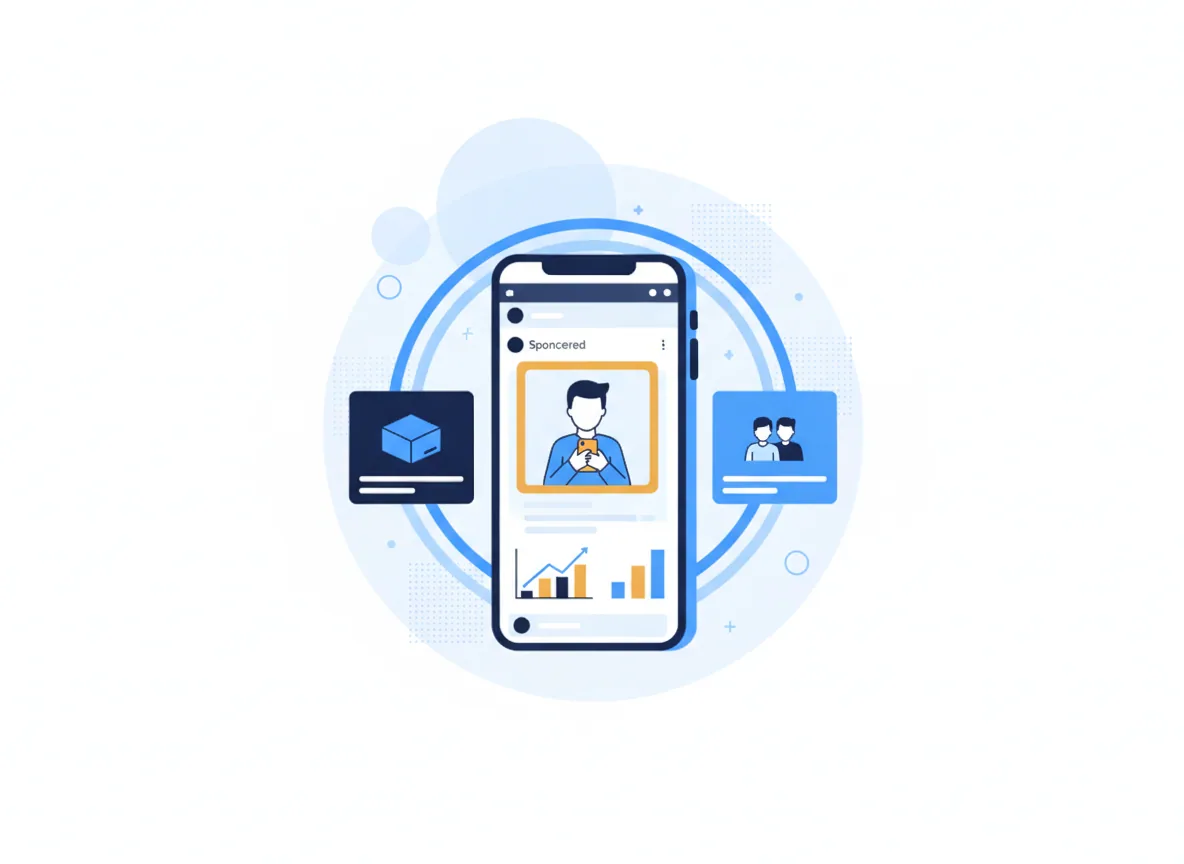
Meta ads — Facebook and Instagram — reach people who are not searching yet. That makes them strong for demand generation, retargeting and visually-driven services, and weaker for capturing someone with an urgent, right-now need. Used for the right job they are one of the cheapest ways to stay in front of a market.
Creative is the lever. On Meta the audience is broad and the algorithm is good, so the ad itself — the hook, the image or video, the offer — does most of the work. We run a steady test of variants rather than setting one ad and hoping.
Server-side events configured properly, deduplicated, and verified in Events Manager.
Static, carousel and short-form video variants shot or assembled from your existing footage.
Cold, warm and retargeting tiers with budgets set to the stage of the funnel.
Cost per qualified lead by creative, so you know which asset to make more of.
The engagement
The sequence rarely changes, even though every account does. Fix the foundation, launch what is fast, then compound.
Week 1
Pixel and conversions API check, audience mapping, and a first creative slate built around your actual services and offers.
Weeks 2–4
Launch with a small number of clean tests, let each ad set gather enough conversion data to judge, then cut and scale.
Monthly
New creative on a schedule to fight fatigue, retargeting kept current, and budget moved to the audiences and formats that convert.
Ongoing
Landing-page testing, offer iteration, and coordination with search so the two channels are not fighting over the same click.
Fit
And who it isn’t
Wrong first channel for urgent, high-intent services. Someone whose transmission just failed is on Google, not scrolling Instagram. Run search first, then use Meta to stay in front of everyone who looked and did not call.
What goes wrong
The failure modes we see most often when this channel is run without discipline — worth checking your current setup against.
Meta creative fatigues fast. Without a pipeline of new variants, cost per result climbs week after week.
Changing budget or targeting before an ad set has enough conversions restarts learning and wastes the spend so far.
Someone with a burst pipe is on Google, not scrolling Instagram. Meta is for demand you build, not demand that already exists.
How we measure it
Booked jobs are the goal. These are the earlier reads that tell us the channel is on track to get there.
Which audiences and creative angles actually produce inquiries, so spend concentrates where it works.
Visitors who did not convert the first time, brought back by a relevant follow-up ad rather than lost.
A tested library of hooks and formats, refreshed on a schedule so results do not decay.
Steady, affordable presence in a market so your name is familiar by the time someone is ready to buy.
Questions
Inquiries often appear in the first week. Useful ones take longer. Plan on three to four weeks to clear the learning phase and identify which creative works, then continuous iteration after that. Meta creative fatigues faster than search ads. An image that performs in month one usually needs replacing by month three, so this is not a set-and-forget channel.
Creative is a bigger variable here than on search. Meta needs a steady supply of fresh video and images, so either we produce them, you send footage we edit, or performance flattens. Media budget depends on audience size and lead volume needed. Small local audiences saturate quickly, so pushing more spend at the same handful of people stops working.
Often, yes, and that is expected. You are interrupting someone rather than answering a question they asked, so more form fills are casual. Two things fix most of it: qualifying questions in the form, and following up within minutes. Compare cost per booked appointment rather than cost per lead. Meta frequently wins the first number while losing the second.
Partly, and only when it is configured properly. Pixel-only tracking now misses a meaningful share of conversions, so we run the Conversions API server-side and deduplicate against pixel events, which recovers much of the signal. Attribution still will not match your CRM exactly. Expect Meta to report differently than your intake sheet, and treat the CRM as the truth.
Find out how we can help your business succeed.
Tell us your market and target job type. We come back with the demand, the competition and a number.
Free audit · No obligation · No long-term contract
Also worth a look