

A broad list instead of a precise one
Casting wide feels like more opportunity but produces lower response rates and wastes every touch on people who were never going to buy.
Cold Outreach
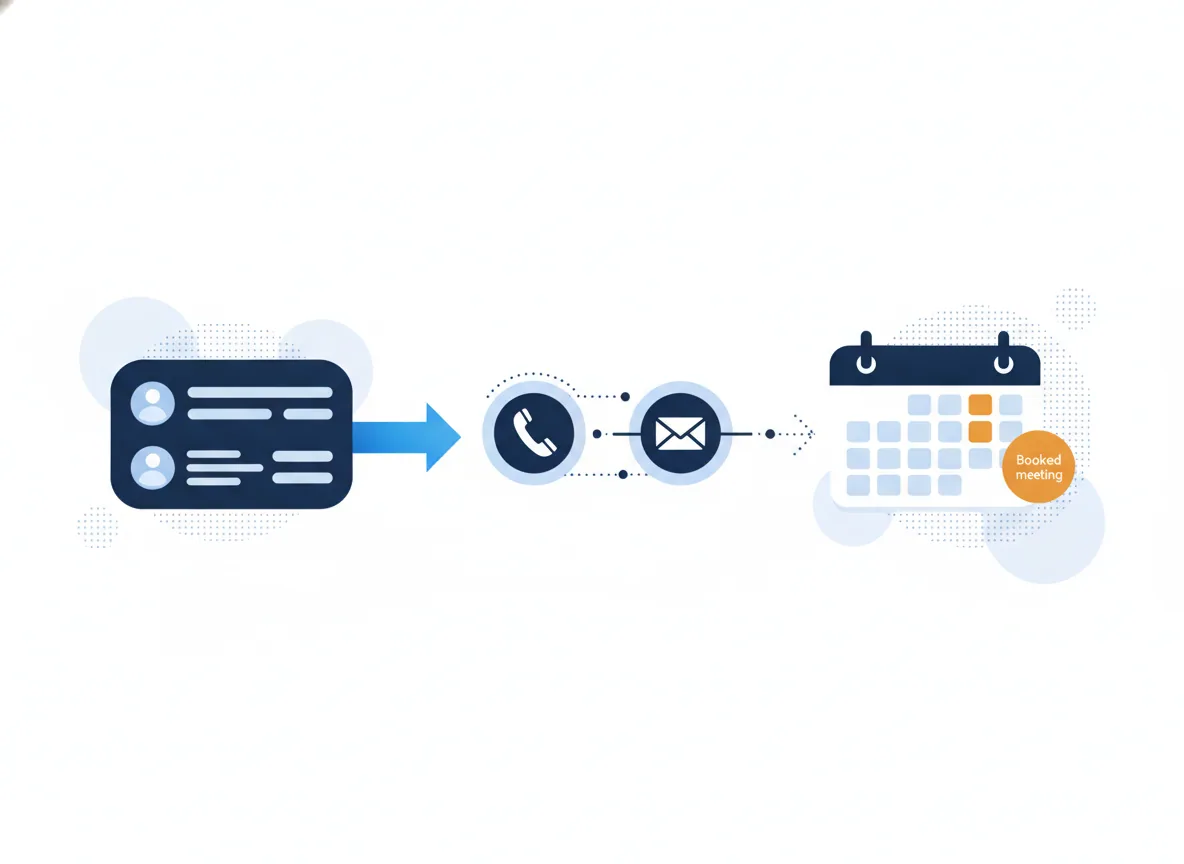
A single cold email or a single cold call gets ignored more often than not. We run both as one sequence against a list built on your real buyer definition, so the second and third touch land instead of starting over each time.
In plain terms
Inbound channels wait for someone to search or scroll into an ad. Outreach goes and finds the specific companies and people who fit your buyer profile, whether or not they are actively looking yet — which is the only way to reach a market that rarely searches for what you sell, or to hit a growth number inbound alone will not cover on its own timeline.
It only works when the list is right. A perfectly written sequence sent to the wrong companies still fails, and a rough one sent to the right fifty people can book real meetings. We spend real time on the buyer definition and the list before a single call or email goes out, because that decision matters more than any script.
Your ideal-customer profile turned into a verified, deduplicated list of real prospects who fit it.
A coordinated calling and email cadence, with scripts and copy built around your actual offer.
Calls made and emails sent on schedule, with every meaningful response routed to you the same day.
Touches made, response rate and meetings booked — by list segment, so you see what is actually working.
The engagement
The sequence rarely changes, even though every account does. Fix the foundation, launch what is fast, then compound.
Week 1
Define the buyer profile precisely, build and verify the prospect list, and set the qualification criteria for what counts as a real meeting.
Week 2
Write the calling script and email sequence, set up sending infrastructure, and launch against a small test segment.
Weeks 3–4
Full sequence live across the list. Early responses reviewed to see which angle is landing, and the sequence adjusted.
Ongoing
Continued outreach against a refreshed list, with weekly reporting on touches, responses and meetings booked.
Fit
And who it isn’t
Skip outreach if you sell a low-ticket consumer product, or if you have nobody available to follow up on a response within a day or two — a good reply that sits for a week is a wasted one.
What goes wrong
The failure modes we see most often when this channel is run without discipline — worth checking your current setup against.
Casting wide feels like more opportunity but produces lower response rates and wastes every touch on people who were never going to buy.
A single cold email or a single unanswered call is not a real test of interest. Most replies come from the second or third coordinated touch.
A campaign that generates interest with nobody ready to follow up within a day loses the momentum that got that reply in the first place.
How we measure it
Booked jobs are the goal. These are the earlier reads that tell us the channel is on track to get there.
The number that actually matters — meetings with people who match your buyer profile, not a raw count of replies.
Which part of your target list is actually responding, so future outreach spends more time where it is working.
A prospect list built once and kept current, rather than rebuilt from scratch on the next push.
Scripts and copy refined from real response data, not written once and left unchanged.
Go deeper
Live phone outreach that hands you a qualified conversation, not a dial-count report
Learn moreProspecting email that reaches the inbox and reads like it was written by a person
Learn moreQuestions
Most B2B prospects need more than one touch before they respond, and different people respond to different channels. We run calling and email as one coordinated sequence against the same target list — a call that references an email sent two days earlier converts differently than either alone. If your list or offer only supports one channel, we will say so rather than sell you both by default.
From your ideal-customer definition — industry, company size, title, geography, whatever actually predicts a good client for you — cross-checked against verified contact data so we are not calling and emailing bounced or outdated records. We review the list with you before anything goes out, because a list built on the wrong definition wastes every touch that follows it.
A booked call or meeting with someone who fits your buyer definition and confirmed real interest — not a list of anyone who replied. We track response rate and meetings booked separately, because a campaign generating replies that never turn into meetings has a qualifying problem, not an outreach volume problem, and we adjust the targeting rather than just sending more.
Expect the first two to three weeks to be list-building, sequence-writing and testing which message actually lands — meetings before that point usually mean the targeting was already narrow and easy. Real, repeatable volume typically shows up by week four to six, once we know which angle gets a response from your specific buyer.
Find out how we can help your business succeed.
Tell us your market and target job type. We come back with the demand, the competition and a number.
Free audit · No obligation · No long-term contract
Also worth a look