

Sending before the domain is ready
A cold domain sending high volume on day one gets flagged by spam filters before the copy is ever a factor. Warm-up is not optional.
Cold Email
Most cold email fails on deliverability before the copy is ever read. We fix the sending setup first — domain authentication, warm-up, sending limits — then write sequences specific enough to your prospect that they read past the first line.
In plain terms
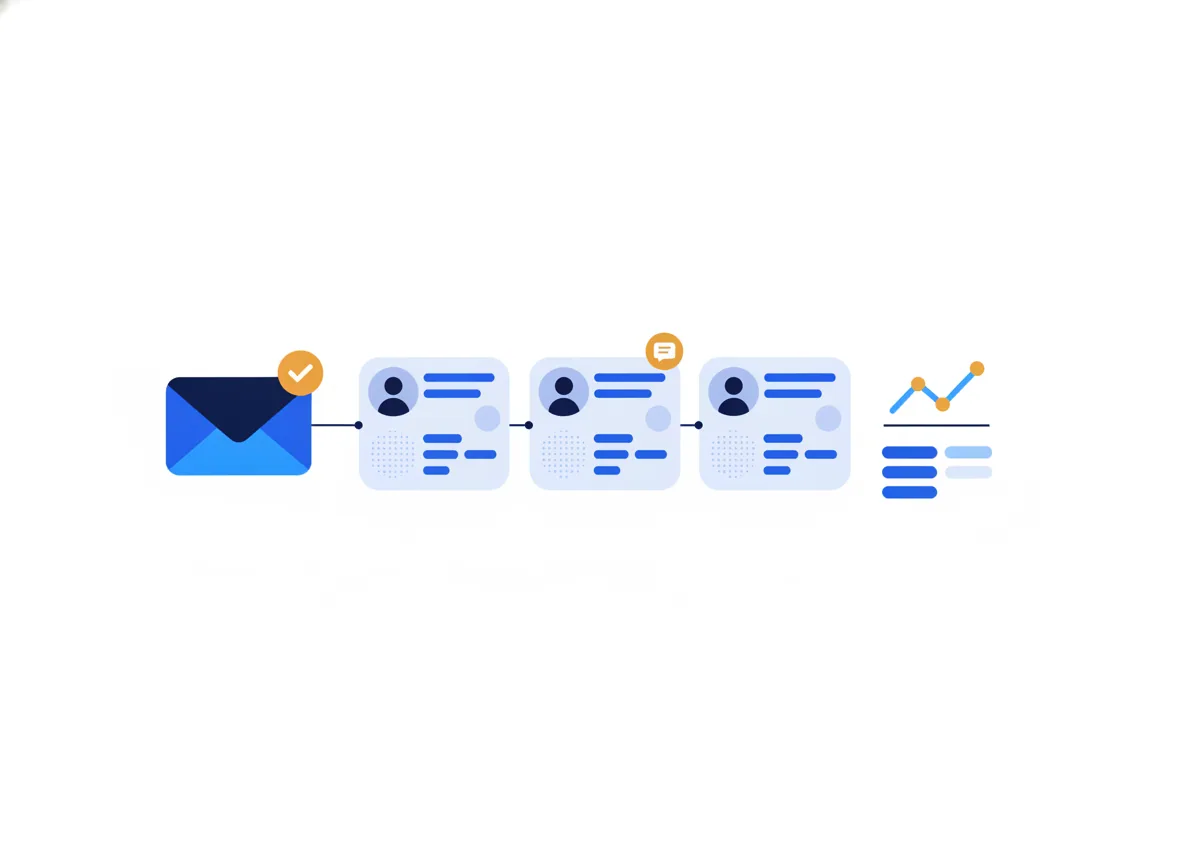
Cold email fails for one of two reasons almost every time: it never reaches the inbox, or it reaches the inbox and reads like it was sent to ten thousand people at once. We treat both as separate problems that need separate fixes — proper domain setup and warm-up before volume, and copy specific enough to one recipient that it does not read like a template with a name swapped in.
The sequence matters as much as any single email. A prospect who ignores the first message might respond to the third, if the third actually adds something new rather than repeating the same pitch with more urgency in the subject line.
SPF, DKIM, DMARC and a warmed-up sending domain, checked before volume ramps up.
A verified list with the specific detail per contact the copy will actually reference.
A multi-email sequence with a distinct angle per email, ending in a genuine breakup message.
Interested replies routed to you promptly, with open, reply and meeting-booked rates by segment.
The engagement
The sequence rarely changes, even though every account does. Fix the foundation, launch what is fast, then compound.
Week 1
Domain authentication set up (SPF, DKIM, DMARC), sending mailbox warmed up, list built and verified.
Week 2
Sequence written — three to five emails with a distinct angle each — and sent to a small test segment to check deliverability and response.
Weeks 3+
Full sequence live across the verified list, sending volume ramped gradually to protect domain reputation.
Ongoing
Weekly reporting on open, reply and meeting-booked rate by segment, with copy refined from what is actually getting replies.
Fit
And who it isn’t
Skip cold email if your list is unverified or bought in bulk — deliverability and your domain reputation both suffer, and the campaign underperforms before the copy is even a factor.
What goes wrong
The failure modes we see most often when this channel is run without discipline — worth checking your current setup against.
A cold domain sending high volume on day one gets flagged by spam filters before the copy is ever a factor. Warm-up is not optional.
Recipients can tell the difference between a name dropped into a template and an email that actually references something true about them.
Resending the same pitch with "just following up" rarely works. Each email in a real sequence needs its own reason to exist.
How we measure it
Booked jobs are the goal. These are the earlier reads that tell us the channel is on track to get there.
Whether the sequence is actually landing in the inbox rather than spam — checked directly, not assumed from open rate alone.
Which part of the list and which email angle is getting responses, so the next sequence spends less time on what does not work.
The number that actually matters, tracked separately from replies — a reply that never becomes a meeting is not yet a result.
Sending practices that keep your domain healthy for outreach next quarter, not just this campaign.
Questions
Domain and mailbox setup matters more than most people expect — proper SPF, DKIM and DMARC records, a warmed-up sending domain separate from your main company email, and sending volume that ramps up gradually rather than blasting a full list on day one. We set this up before a single prospecting email goes out, because a great email that lands in spam never gets read regardless of the copy.
Each email references something specific and true about the recipient or their company — not a mail-merge first name dropped into a generic template. That takes more time per contact than a mass blast, which is why list quality matters more than list size: a smaller, well-researched list that actually gets read outperforms a huge one that gets deleted.
Typically three to five emails spaced several days apart, each with a different angle rather than the same pitch resent — the first states the reason for reaching out, later ones add a new piece of value or social proof, and the last is a genuine breakup email. We stop the sequence the moment someone replies or unsubscribes, and never re-add them without a fresh opt-in.
Open rate, reply rate and — the number that actually matters — qualified meetings booked, broken out by list segment and by which email in the sequence got the response. That tells us which message is working and which segment of the list is worth expanding, rather than one blended number that hides both.
Find out how we can help your business succeed.
Tell us your market and target job type. We come back with the demand, the competition and a number.
Free audit · No obligation · No long-term contract
Also worth a look