
Education marketing
Enrolment marketing across a long, multi-decision-maker funnel
Education buyers research for months and rarely decide alone. Campaigns need to speak to the student and the person paying, often in the same visit.

9mo
Typical enrolment research window
Specialisations
Where education campaigns actually differ
Each of these has its own search behaviour, its own compliance constraints and its own definition of a good lead. We run them as separate strategies.

Our approach
How we run education campaigns
The playbook that consistently works in education — and the parts most generalist agencies skip.
01
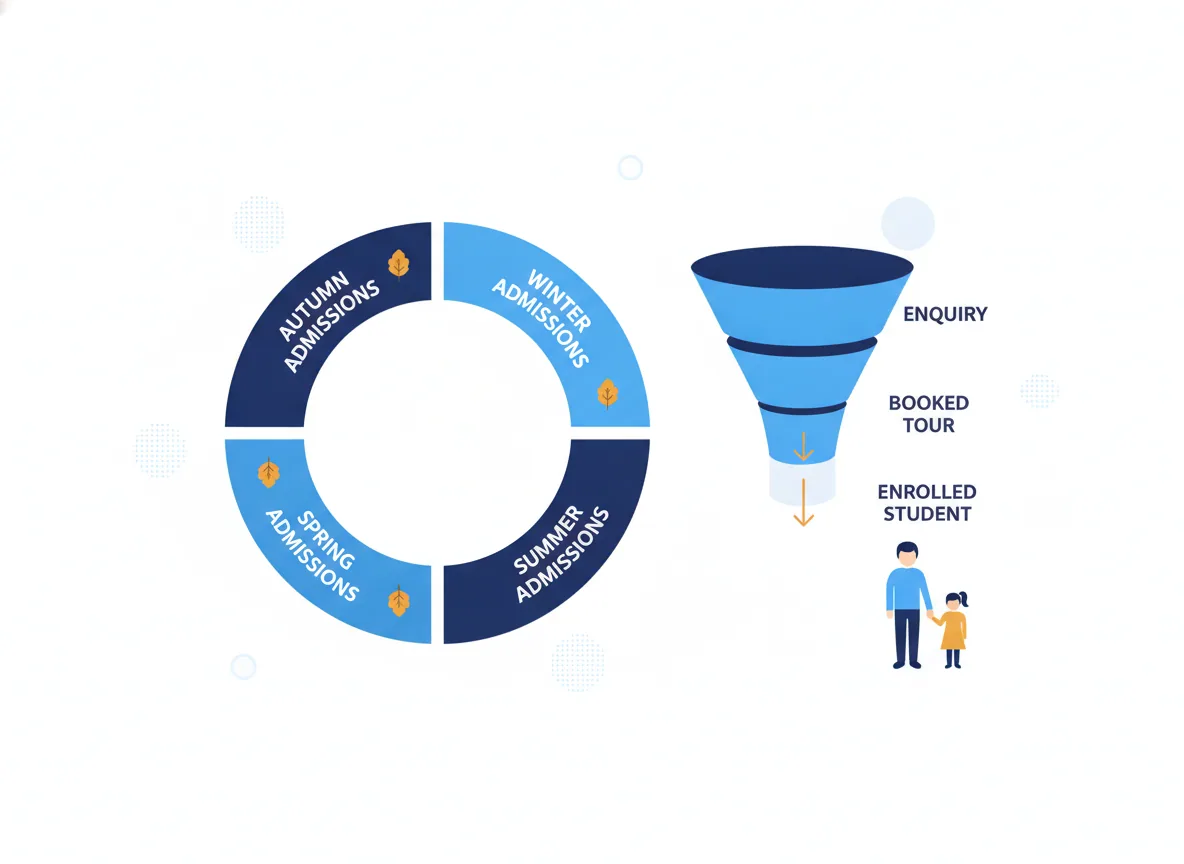
Campaigns run on the admissions calendar
Awareness and open-house campaigns belong in one part of the year, applications and financial aid in another, decisions and re-enrolment in a third. We build the annual plan around your calendar so spend lands when families are actually deciding, not spread flat across twelve months.
02
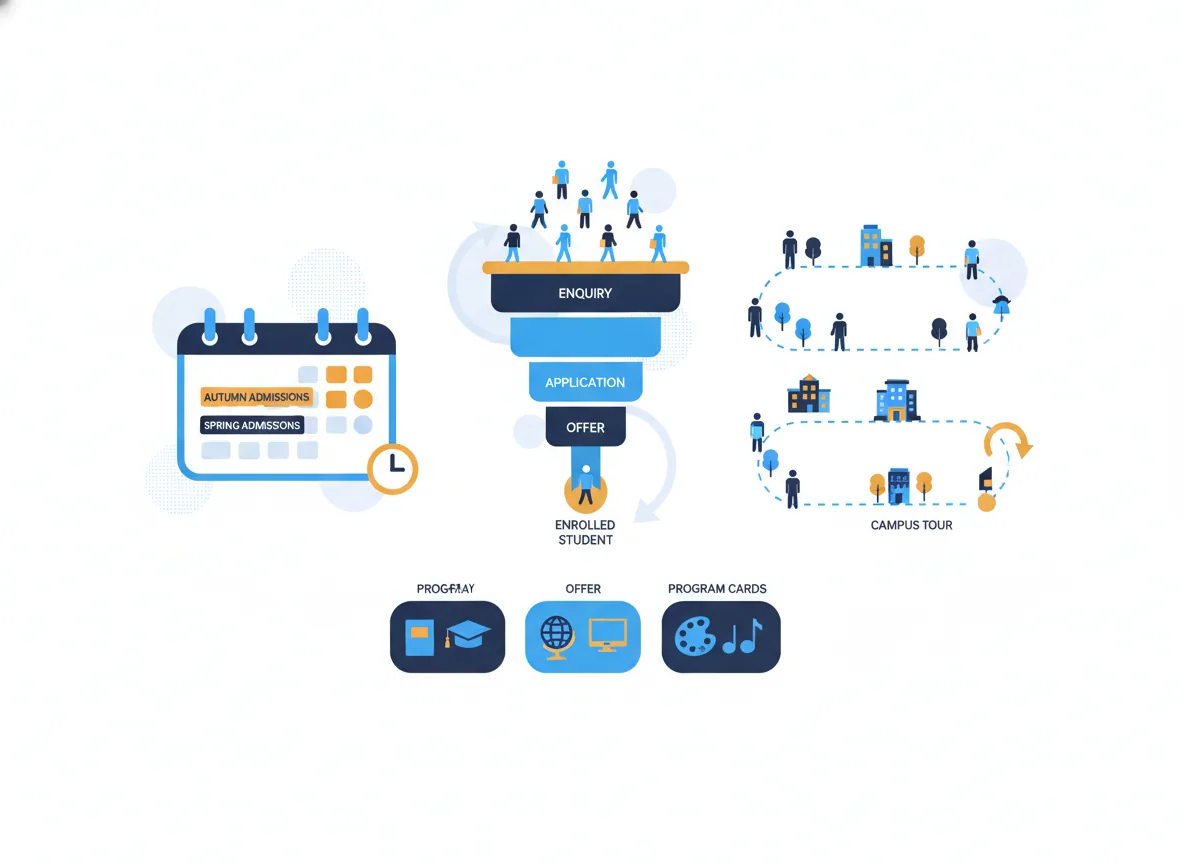
Two audiences, one campaign
The person who pays and the person who attends are rarely the same, and they respond to different things. Our messaging and landing pages speak to the parent’s questions about outcomes and cost and the student’s question about whether they will belong — because you need both to say yes.

03
The tour is the conversion event
Inquiries are cheap and mostly meaningless; a booked tour or a completed application is the real signal. We optimise the whole funnel toward those, and we help you shorten the gap between an inquiry and a scheduled visit, which is where most enrolment is won or lost.
The market
How education buyers actually decide
Two people have to be convinced and they want different things. The student wants to know what the day looks like and where it leads. The parent paying for it wants cost, financing and evidence it was worth it. Both read forums and third-party ratings you do not control, then judge you on a campus visit or an open house your ads exist to fill.
That makes the calendar the strategy. Spend front-loads into inquiry season, then shifts to nurturing the people already in your CRM through deadlines. Programs, not the institution, are what people search, so each one needs its own page and budget. And every claim about outcomes, jobs or salaries has to be substantiated before it runs, which rules out the copy most agencies would write.
Retention is part of the marketing math. A family that re-enrols is years of tuition at near-zero acquisition cost, so campaigns that only chase new families while attrition leaks out the back are solving half the problem. We factor re-enrolment communication into the plan.
Compliance varies by segment. Accredited institutions and Title IV schools face real limits on what they can claim about placement, salaries and outcomes, and how recruiters may be compensated. Private K-12 has more latitude but still needs care around financial-aid messaging. We keep the applicable rules in the brief.
Why us
What you get from an agency that knows education
Typical enrolment research window — that is the number this work has to move.
- Reporting on tours, applications and starts, pulled from your CRM rather than inquiry counts from the ad platform.
- Budget shaped to the admissions calendar, heavier before open houses and deadlines instead of a flat monthly spend.
- Program-level pages and campaigns, so high-demand programs stop subsidizing the ones nobody searches for.
- Copy written to survive compliance review, with outcome and financial aid claims sourced before anyone sees a draft.
How we know it's working
What we watch, month to month
Booked work is the goal, but it lags. These are the earlier signals that tell us a education campaign is on track.
Tours booked and applications started
The mid-funnel actions that actually predict enrolment. Inquiry volume is easy to generate and tells you almost nothing on its own.
Inquiry-to-visit time
How many days pass between a family raising their hand and a scheduled tour. Shortening this is usually the single biggest lever on yield.
Cost per enrolled student by channel
Traced through to census or start date, not to the inquiry. This is the number that tells you where next year’s budget belongs.
Re-enrolment / retention rate
Tracked alongside recruitment, because a campaign that fills the front door while families leave the back one is not actually growing the school.
What we run
Channels that work for education businesses
Programmatic Ads
Programme and outcome pages that match how families search — by career, format and location — plus the local profile work for K-12.
Learn moreSearch Engine Optimization
Seasonally-timed search and paid social aimed at tours and applications, with outcome claims kept inside accreditation rules.
Learn morePPC Management
A site that answers the parent’s and the student’s questions and makes booking a visit the obvious next step.
Learn more


Questions
Education marketing: common questions
What education owners ask us most often before starting.
Shorten the gap between the form and a human. Most no-shows come from a lead that sat overnight, or a confirmation that never repeated. What works: a call attempt within minutes, a text confirmation with a map and a name to ask for, and a reminder the morning of. On the campaign side, we send fewer people who were only chasing a brochure and more who picked a date.
Only what you can document, and the documentation has to exist before the ad runs. Accreditors, state regulators and the FTC all take an interest in outcome claims, and for Title IV schools the disclosure requirements are specific. We work from figures your institutional research team signs off on, cite the cohort and time period on the page, and write around anything you cannot support. Vague is safer than an unsourced number.
Both, with different messages and usually different channels. For K-12 and traditional undergrad, the parent controls the decision and responds to safety, outcomes and cost clarity, while the student decides whether they want to be there. For adult and trade programs, the student is the buyer but a spouse often approves the money. We build separate audiences and landing content rather than one page for everyone.
Earlier than most schools do, because the research window opens long before your application deadline. Practically, that means building the pages and audiences in the quarter before inquiry season, running awareness while competitors are quiet, and saving the heaviest spend for the weeks around open houses and deadlines. Starting the month applications open means paying peak prices to reach people who already shortlisted somewhere else.
Find out how we can help your business succeed.
Ready to grow your education business?
Free audit of your current visibility, your competitors and the gap between them.
Free audit · No obligation · No long-term contract
Other industries