
 By Chris Lee
Meta Ads
Proven Med Spa Meta Ads Blueprints for Accelerating Growth
Get the operational blueprint for running profitable Meta Ads for your med spa. Learn how to map user behavior, capture leads, and segment audiences effectively.
8 min read
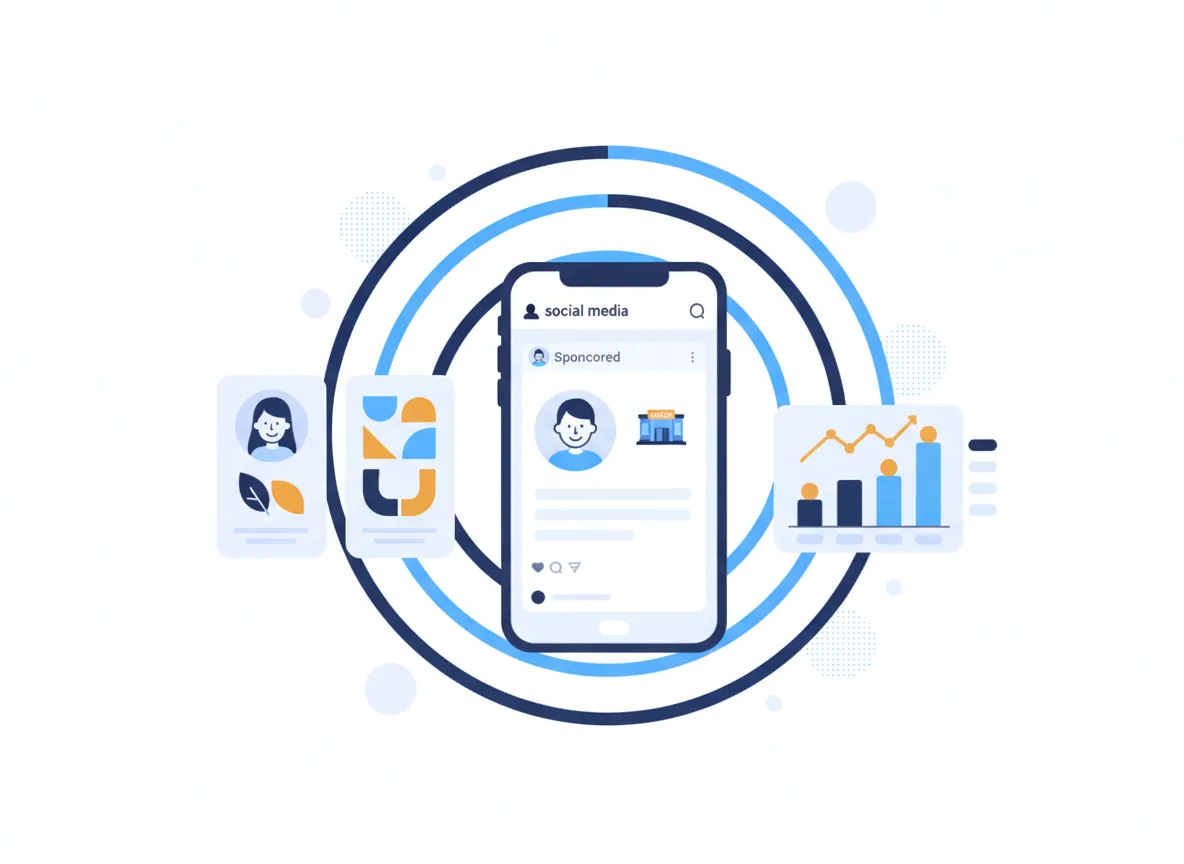
A baseline med spa Meta Ads investment requires between $1,500 and $3,000 per month in direct ad spend to generate consistent patient bookings. Spending less restricts the Meta algorithm from gathering enough data to optimize delivery, leaving your ads stuck in the learning phase. If you want to scale a med spa online, you have to separate your media spend—the money paid directly to Meta—from the management fee paid to the agency running the campaigns.
When planning your digital marketing for med spa growth, the Meta Ads budget splits into three distinct categories: direct ad spend, campaign management fees, and creative asset production.
Direct ad spend is the budget you load into your Meta Business Manager. This money buys impressions in the Facebook and Instagram feeds. Management fees cover the strategic execution, daily optimization, and reporting handled by your agency. Creative production covers the cost of shooting photos and videos, writing copy, and designing the actual ads.
Many practice owners blur these lines. They ask an agency for a total monthly price and never find out how much of that check actually goes toward buying ads. This lack of transparency hides marketing waste. At ITZ Digital, we mandate separate billing. Your credit card is billed directly by Meta for your ad spend. You pay a flat, transparent management fee to us. This setup aligns our goals with your results and ensures every dollar allocated for media actually buys media.
To acquire new patients predictably, your daily budget needs to support Meta's machine learning requirements. The platform needs about 50 conversion events per week to optimize a campaign. For a med spa, a conversion event is typically a submitted lead form or a booked appointment.
If your local market dictates that a raw lead costs $30, generating 50 leads requires $1,500 a week. If you set a budget of $10 a day, you will only generate a couple of leads per week. The algorithm never learns who your ideal patient is. The campaign stalls.
This is why starting with a micro-budget rarely works. You end up spending $300 a month for zero return, concluding that Meta Ads do not work for your practice. In reality, the budget was just too small to enter the auction effectively. A starting budget of $50 to $100 per day gives the system enough fuel to find users actively interested in injectables, laser hair removal, or body contouring.
Your ad spend should not go entirely to one single campaign. A healthy ad account requires a split between cold traffic acquisition and warm traffic retargeting.
The most common metric agencies report is Cost Per Lead (CPL). This number tells you how much it costs to get a name, email, and phone number. CPL is useful for monitoring ad performance, but it tells you nothing about profitability.
To evaluate your med spa customer acquisition strategy accurately, you must track the Cost Per Acquisition (CPA)—the actual dollar amount spent to get a paying patient through your doors.
The math requires tracking the lead through your front desk. If you spend $1,000 on ads and generate 50 leads, your CPL is $20. If your front desk connects with half of those leads, you have 25 conversations. If 10 of those people book an appointment, and 8 actually show up and pay for a treatment, your true CPA is $125.
Understanding this math dictates your budget. If you want 30 new Botox patients this month, and your historical CPA is $125, you need to budget $3,750 in ad spend.
Your allowable CPA changes based on the treatment you advertise. Promoting a basic facial leaves very little room for acquisition costs. If it costs $100 in ad spend to acquire that patient, the margin is too thin to sustain the campaign unless that patient upgrades or returns regularly.
Conversely, a body contouring package or a comprehensive laser skin resurfacing plan commands a much higher retail price. For these high-ticket treatments, you can comfortably spend a few hundred dollars to acquire a single patient and still generate a massive return on ad spend.
When designing your budget, direct the bulk of your funds toward services with high margins or high retention rates. Use neurotoxins and fillers as acquisition tools—patients who love their injector will return three to four times a year. The lifetime value of that patient far exceeds the initial acquisition cost.
The success of your budget is heavily dependent on the strength of your offer. Med spas often run ads simply stating they exist, listing their services, and linking to their homepage. This approach burns through cash. Users scrolling through social media are not actively looking for a med spa; they are looking at photos of their friends and family. Your ad must interrupt their scrolling with a compelling reason to stop and click.
A strong offer does not always mean a steep discount. Devaluing your services attracts price-shoppers who will never return for a full-priced treatment. Instead of discounting, focus on value-adds. Offer a complimentary skin assessment with the purchase of a specific laser treatment. Bundle three sessions of microneedling with a premium post-care product.
Your budget will stretch much further when the ad directs traffic to a dedicated landing page rather than your website's homepage. A homepage is designed for exploration, giving the user too many options. A dedicated landing page removes the navigation and focuses entirely on the single offer advertised. It features strong before-and-after photos, social proof, and a single, clear contact form. Improving your landing page conversion rate effectively cuts your customer acquisition cost in half, doubling the buying power of your existing budget without spending an extra dime on ads.
Even with a sufficient budget, campaigns frequently fail due to execution errors. Wasting money on the Meta platform is notoriously easy if you do not know which levers to pull.
First, boosting posts from your Instagram or Facebook page is not the same as running a campaign in Ads Manager. Boosted posts are optimized for vanity metrics—likes, comments, and shares. They are rarely optimized for lead generation or booked appointments. Relying on the boost button drains your budget without filling your calendar.
Second, practices fail to align their creative assets with their budget. Ad fatigue is real. If you run the exact same video for three months, the local audience stops noticing it. The click-through rate drops, and your costs skyrocket. You must budget time and resources to shoot new, raw, authentic video content on your smartphone every few weeks to keep the campaigns fresh.
Third, practices misjudge the timeline for success. Meta Ads require a testing period. The first 30 to 60 days are dedicated to testing different creatives, headlines, offers, and audiences. The cost per lead will be highest during this phase. If you panic and cut the budget after two weeks because you are not instantly profitable, you forfeit the money spent gathering that initial data. Real profitability scales from month three onward as the winning combinations are identified and funded.
The gap between a lead generated online and a patient in the chair is where most budgets bleed out. You must budget time for your staff to manage the influx of inquiries. A Meta Ads campaign will generate leads at all hours of the day and night.
Implementing automated follow-up sequences is a requirement for modern campaigns. When a lead submits their information, they should instantly receive an automated text message acknowledging their inquiry and offering a link to book a consultation on your calendar. This instant engagement keeps the prospect warm until your staff arrives in the morning to make a manual phone call.
Train your front desk to handle digital leads differently than referral calls. A patient referred by a friend already trusts your practice and is ready to book. A lead from a Meta Ad is cold. They are interested but skeptical. The phone call must focus on answering their questions, building rapport, and selling the value of the consultation. If your staff treats internet leads like a nuisance, your ad budget is entirely wasted.
Once a campaign is generating profitable appointments, the immediate reaction is to double the budget. Doing this usually breaks the campaign.
Meta's algorithm relies on stability. Drastic budget increases reset the learning phase. The system scrambles to spend the new money, often expanding into lower-quality audiences, which drives up your acquisition costs and ruins your profit margins.
To scale a med spa online successfully, use the 20 percent rule. Increase your winning campaign budget by no more than 20 percent every few days. This gradual scaling allows the algorithm to find more of the same high-quality users without panicking.
Scaling also requires horizontal expansion. Instead of just pushing more money into one winning ad, test new angles. If a campaign targeting brides prepping for their weddings is working, build a parallel campaign targeting busy mothers looking for quick aesthetic refreshers. Expanding your messaging allows you to increase your total spend by opening up new audience segments within your local radius.
When you hire an agency to manage your med spa meta ads investment, understand exactly what you are paying for. Management fees generally follow one of three models: a percentage of ad spend, a flat monthly retainer, or a performance-based fee.
Percentage of spend models create a conflict of interest. The agency makes more money when you spend more money, regardless of whether that increased spend generates a positive return. This encourages aggressive scaling even when the data suggests pulling back.
Flat monthly retainers offer predictability. You know exactly what the management costs will be each month, allowing you to project your marketing expenses accurately. This model ensures the agency is focused on efficiency and lowering your acquisition costs, rather than just inflating your media spend.
Always ask what is included in the fee. Does it cover the design of the landing pages where the traffic is sent? Does it cover the setup of tracking pixels and conversion APIs? Does it include writing the ad copy and providing guidance on video creation? A low monthly fee that excludes landing page optimization often ends up costing you more in lost conversions.
You cannot manage a budget effectively if you cannot track the results accurately. In the modern digital landscape, privacy updates have made tracking more complex. Relying solely on Meta's internal reporting will give you an incomplete picture of your performance.
To protect your investment, implement robust tracking infrastructure. This means installing the Meta Pixel on your website and setting up the Conversions API. These tools allow your website to communicate directly with Meta's servers, matching website visitors and lead form submissions back to the exact ad they clicked.
Furthermore, integrate your ad campaigns with your practice management software or CRM. When a lead comes in from Facebook, it should be tagged with a specific source. When that lead eventually pays for a treatment, you can run a report showing exactly which campaign generated that revenue.
This closed-loop reporting eliminates guesswork. When you sit down to review your budget for the next quarter, you will not be looking at generic metrics like reach or impressions. You will look at a dashboard that shows precisely how many dollars in ad spend turned into how many dollars in patient revenue. That is the only data that matters when deciding whether to increase, decrease, or reallocate your marketing budget.
Understanding the financial timeline of a Meta Ads campaign prevents premature cancellation. Here is a realistic breakdown of what to expect when you invest in digital marketing for med spa growth.
Month one is the testing and data gathering phase. You will spend money to buy data. The agency will test multiple audiences, ad creatives, and copy variations. You will see leads come in, but the cost per lead will likely be volatile. The goal this month is not maximum profitability; the goal is identifying which ads actually get clicks and conversions.
Month two is for optimization. The losing ads are turned off. The budget is consolidated and pushed into the winning campaigns. Your cost per lead should stabilize, and you should see a consistent flow of inquiries. Your staff will start closing these leads, and you will begin to see a return on your investment, though it may just break even against the ad spend and management fees.
Month three and beyond is the scaling phase. The system is dialed in. You have a predictable cost per acquisition. Now, the focus shifts to maximizing lead volume while maintaining that CPA. You begin to layer in new offers, refresh the video creatives to prevent fatigue, and carefully increase the daily budgets using the 20 percent rule. This is when the campaign transitions from an expense into a reliable revenue engine for your practice.
A med spa should plan to spend between $1,500 and $3,000 per month on direct Meta Ads spend to start. This budget provides the algorithm with enough data to optimize campaigns and generate a consistent volume of local leads for your practice.
Yes, Meta Ads are highly effective for local med spas when properly managed. Success requires a sufficient budget, strong localized targeting, compelling before-and-after video creatives, and an immediate follow-up process by your front desk to turn raw online leads into booked appointments.
A good cost per lead for a med spa varies by market and treatment, but typically ranges from $20 to $50. However, tracking your cost per booked appointment is far more important than raw lead costs when measuring your campaign's actual profitability.
Med spa campaigns typically fail due to insufficient daily budgets, relying on boosted posts instead of the Ads Manager, suffering from ad creative fatigue, or lacking a rapid front desk follow-up protocol. Without fast outreach, even high-quality leads will go cold and ignore your calls.
Keep reading
Meta Ads
Get the operational blueprint for running profitable Meta Ads for your med spa. Learn how to map user behavior, capture leads, and segment audiences effectively.
Social Media Ads
Ready to supercharge your Med Spa's growth? This strategic playbook reveals proven social media ad tips and ITZ Digital's proprietary methods to attract new clients and boost…

Social Media Ads
Dive into the true financial cost of med spa social media ads, exploring ad spend, agency fees, and crucial ROI expectations. Discover how ITZ Digital provides transparent,…
Find out how we can help your business succeed.
Free audit of your market, your competitors and the gap between them.
Free audit · No obligation · No long-term contract