
 By Raheim Binnie
Google ads
Breaking Down the Real Financial Cost of Med Spa Google Ads
Understand the true financial cost of running Google Ads for your med spa, from daily budgets to management fees and cost per patient acquisition.
8 min read
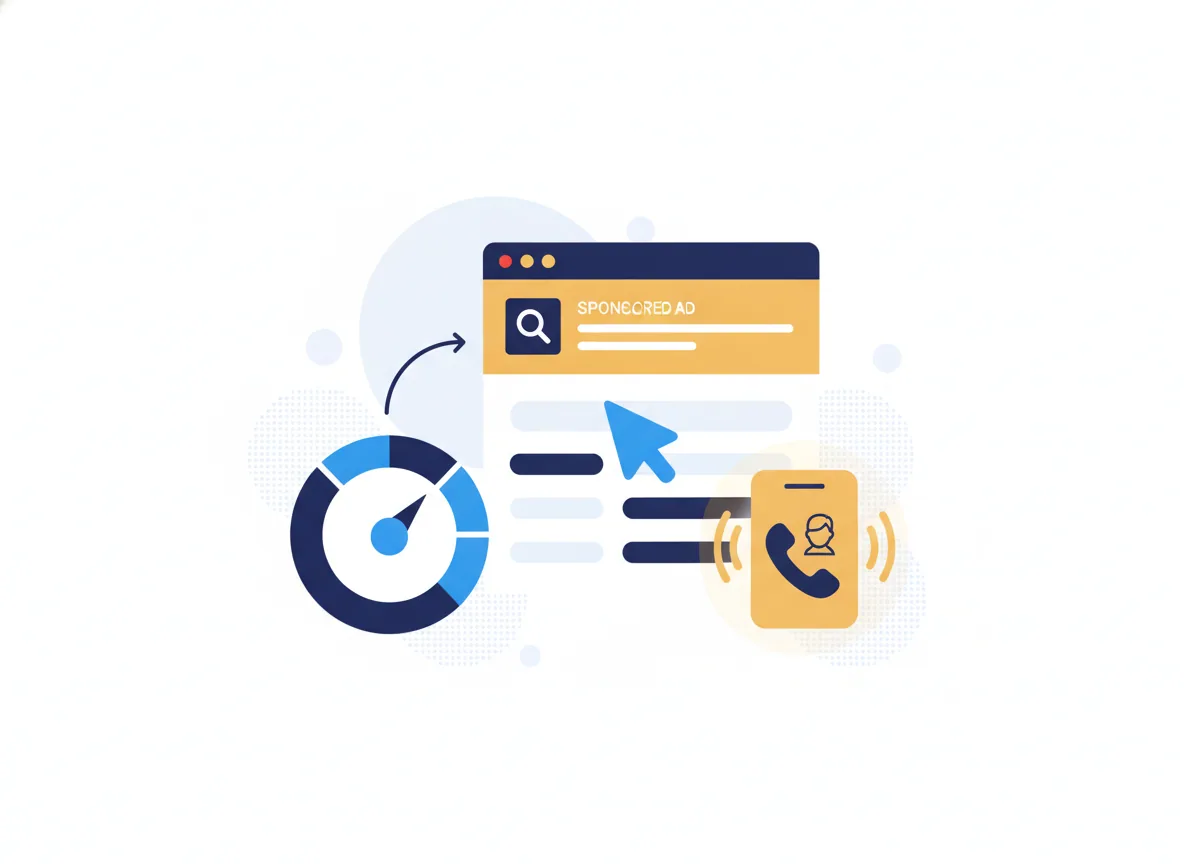
Optimizing Google Ads for a medical spa means shifting focus from generating clicks to driving booked appointments at a profitable margin. You achieve this by restructuring your campaigns around high-intent treatment keywords, sending that traffic to dedicated landing pages, and capturing leads through automated sequences. A high-ROI campaign treats every click as a potential consultation and removes friction from the booking process.
Understanding exactly how potential patients behave is the foundation of successful digital marketing for med spa practices. Someone searching for what is microneedling is just researching the procedure. Someone searching for microneedling appointment near me is ready to buy right now. Your campaign must cater exclusively to the buyer.
Stop bidding on broad terms like skin care or spa treatments. These drain budgets incredibly fast on users who are not ready to spend money. Focus entirely on bottom-of-the-funnel searches. Structure your ad groups tightly around specific services so the ad copy perfectly matches the search intent.
Not all med spa treatments yield the same profit margin. A basic B12 injection brings in less revenue than a full-face thread lift or a series of Morpheus8 sessions. Do not lump all your services into one generic campaign. Segment your campaigns by service category and assign budgets based on profit margins and your clinic's operational capacity. If your laser technician is fully booked for a month, pause the laser hair removal campaign and reallocate that daily budget to injectables or body contouring.
Paid traffic is completely useless if it does not convert into an actual human conversation. An automated lead capturing cascade ensures that every click has the highest possible chance of turning into a booked appointment, and eventually, a paying patient.
Your homepage serves as a digital brochure. It contains far too many distractions, outbound links to staff bios, and general information. When a user clicks an ad for acne scar treatment, they must land on a page dedicated exclusively to acne scar treatments. A high-converting landing page needs specific elements to succeed.
Your lead capture mechanism must be immediate. If a patient fills out a form and nobody calls them until the next afternoon, they have already booked a consultation with a competitor. Integrate your landing page forms directly with your scheduling software or HIPAA-compliant CRM using webhooks. Set up automated SMS and email sequences. When a user submits a lead form, a precise workflow must activate.
This immediate follow-up sequence drastically reduces your overall cost per booked job by maximizing the conversion rate of the leads you already paid to acquire.
Google Ads provides robust tools to target specific groups of people based on their direct interactions with your business. Custom audience segmentation configurations allow you to focus your remaining budget on users who are mathematically most likely to schedule a treatment.
Most visitors will not book an appointment on their very first visit to your website. Implement remarketing tags to build a specific audience of users who clicked your ad and viewed a treatment page but did not submit a form. Serve these users targeted display or video ads across the Google network. If they looked at lip fillers, show them a short YouTube bumper ad highlighting your injector's expertise. Keep the frequency cap reasonable so you stay top-of-mind without becoming annoying to the user.
If you have a large list of past patients in your CRM, upload it directly to Google Ads using the Customer Match feature. You can use this powerful data in two specific ways to scale med spa online operations.
You need to understand the realities of budgeting and costs in this industry. A successful med spa customer acquisition strategy requires sufficient capital to compete in local ad auctions. Med spa keywords are highly competitive because the lifetime value of a patient is substantial. Depending on your local market density, a single click for botox near me can cost anywhere from a few dollars to well over fifteen dollars.
If your daily budget is twenty dollars and clicks cost ten dollars, you get two clicks a day. That is absolutely not enough data for Google's machine learning algorithms to optimize your campaign. You will spend money every day without ever seeing a return on investment.
Determine your starting budget by working backward from your target cost per acquisition. If a new patient is worth one thousand dollars in lifetime value to your clinic, you might be comfortable spending one hundred and fifty dollars to acquire them. If your landing page converts traffic at ten percent, you need ten clicks to get one patient. If a click costs ten dollars, your acquisition cost is one hundred dollars. This math dictates your budget. Set a daily budget that allows for at least five to ten clicks per day for your core campaigns. Be prepared to run the campaigns for three to six months. The first few weeks involve buying data, identifying negative keywords, and training the algorithm. Profitability typically scales in months three and beyond as you trim wasted spend and optimize your conversion rates.
Many practice managers try to run ads themselves or hire cheap generalist agencies. The result is almost always a drained budget with zero new patients walking through the door. Here is exactly what typically goes wrong in these accounts and how you must fix it.
If you do not build a robust negative keyword list before launching, Google will show your ads for entirely irrelevant searches. If you bid on laser hair removal, your ad might show for laser hair removal machine for home, laser hair removal jobs, or laser hair removal training school. You pay full price for those useless clicks. Add negative keywords for at home, jobs, DIY, training, school, classes, and cheap before the campaign ever launches. Maintain this list aggressively.
You cannot optimize what you do not track accurately. Many med spas track a simple page view on their contact page as a conversion in Google Ads. That is a vanity metric that ruins automated bidding. You must track actual phone calls lasting longer than sixty seconds, successfully submitted consultation forms, and completed online calendar bookings. Without precise and strict conversion tracking, Google's automated bidding strategies will bid aggressively on low-quality traffic, assuming it is performing well because users are simply clicking around.
Google constantly pushes advertisers to use Broad Match keywords combined with Smart Bidding. While this can work beautifully for seasoned campaigns with heavy conversion data, it is a complete disaster for a brand new med spa account. It allows Google far too much freedom to interpret search intent. Start your campaigns using Exact Match and Phrase Match to maintain tight control over your daily budget. Only introduce Broad Match once you have a solid baseline of conversions and a massive negative keyword list to block bad traffic.
Google enforces incredibly strict policies regarding medical and healthcare advertising. Certain terms related to prescription drugs, experimental treatments like some stem cell therapies, PRP, or making guaranteed medical claims can trigger instant ad disapprovals or complete account suspensions. Ensure your ad copy focuses heavily on the consultation process, the quality of the clinic, and the expertise of your staff rather than making guaranteed medical outcome claims. Stay compliant to keep your ads running without interruption.
To maintain a high-ROI acquisition channel over the long term, treat your Google Ads account as a living system that requires routine maintenance. Use the following growth checklists to manage your campaigns effectively and scale your patient volume.
The ultimate metric for your med spa is not cost per click, cost per impression, or even cost per lead. It is strictly the cost per booked job. Every single optimization you make in the ad account must serve this specific metric. If adjusting a bid strategy increases your cost per click by twenty percent but doubles your actual patient conversion rate, you win the auction and scale your business.
Focus relentlessly on the entire pipeline. Google Ads controls the quality of the traffic. Your landing page controls the efficiency of the lead capture. Your front desk staff or automated follow-up software controls the final booking. When all three of these systems align perfectly, you build a reliable, predictable engine for acquiring new patients without breaking the bank. Monitor your baseline numbers weekly, stay highly disciplined with your negative keyword additions, and aggressively cut ad spend on any keyword that does not turn into a real patient walking through your clinic doors.
A starting med spa Google Ads investment requires enough budget to generate sufficient clicks for machine learning to optimize. If clicks for injectables cost several dollars in your local market, a tiny budget restricts visibility. Set a starting daily budget that allows for at least a few clicks a day, then scale based on your cost per booked appointment.
Your ads receive clicks without leads because the landing page fails to capture intent or the traffic is entirely irrelevant. Searchers looking for cheap DIY treatments might click your ad but bounce when they see premium clinic pricing. Fix this by auditing your search terms report, adding negative keywords, and ensuring your landing page features a clear booking form.
The most profitable keywords focus on specific treatments combined with local geographic modifiers. Phrases like lip filler near me or laser hair removal in your city show high intent. Avoid broad terms like skin care or beauty spa, which drain budget on informational searches. Focus entirely on bottom-of-the-funnel searches where the user is ready to book right now.
Google Ads drives traffic immediately, but consistent high-ROI lead generation usually takes three to six months to stabilize. The first month involves gathering baseline data and identifying wasted spend. Subsequent months focus on refining negative keywords, testing landing page variations, and allowing automated bidding algorithms to learn which specific users actually convert into paying patients.
Keep reading
Google ads
Understand the true financial cost of running Google Ads for your med spa, from daily budgets to management fees and cost per patient acquisition.
SEO
Most med spas spend between $1,500 and $5,000 per month on SEO. Find out exactly what drives these costs and how to measure patient acquisition ROI.

Google ads
Attracting high-intent clients is crucial for med spa growth. This article profiles the top 4 elite Med Spa Google Ads firms specializing in high-volume lead generation,…
Find out how we can help your business succeed.
Free audit of your market, your competitors and the gap between them.
Free audit · No obligation · No long-term contract