
 By Chris Lee
Meta Ads
Breaking Down the Real Financial Cost of Urgent Care Meta Ads
Discover the real costs behind running Meta Ads for urgent care clinics. Learn to manage ad spend, track patient acquisition, and avoid common budget traps.
8 min read
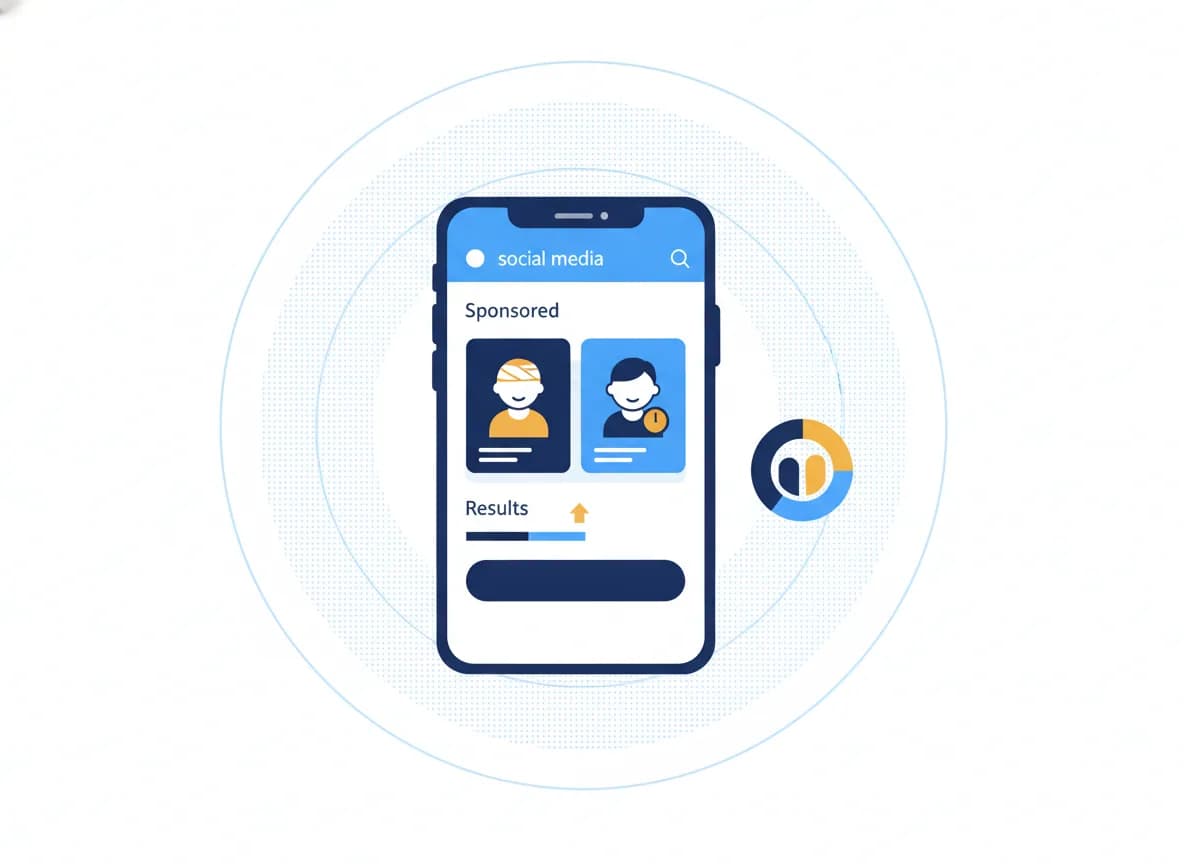
Optimize your urgent care Meta Ads by combining tight geographical targeting with ad creatives that answer a patient's immediate questions: wait times, location, and accepted insurance. High-ROI acquisition relies on capturing local users exactly when they realize they need immediate, non-emergency medical care. You cannot rely on broad brand awareness campaigns to fill your waiting room. You need a structured, direct-response approach that intercepts patients at the moment of intent. To achieve consistent urgent care customer acquisition, your practice must treat Meta Ads as an extension of your front desk operations, guiding users seamlessly from their social media feed into a confirmed booking.
Patients interact with healthcare advertising differently based on their immediate needs. Someone needing stitches acts with high urgency, while a parent planning a back-to-school physical has a longer consideration window. ITZ Digital uses proprietary methodologies in user behavior mapping to align your ad sets with these distinct patient mindsets. By categorizing your medical services into behavioral buckets, you prevent your advertising budget from being wasted on the wrong message at the wrong time.
Acute care covers non-life-threatening injuries and sudden illnesses. Think sprains, minor burns, deep cuts, or sudden high fevers. Users in this bucket are not browsing casually; they are actively searching for immediate solutions. When mapping behavior for acute care, your digital marketing for urgent care must prioritize proximity and speed. Users will click an ad that explicitly states current walk-in availability and highlights a short drive time. Your Meta Ads strategy here relies heavily on hyper-local geo-fencing, ensuring your ads only display to mobile devices within a tight radius of your clinic.
Administrative healthcare needs include sports physicals, occupational health screenings, flu shots, and STD testing. Users in this bucket exhibit planning behavior. They might see your ad on Tuesday and book an appointment for Saturday morning. User behavior mapping for this segment involves longer conversion windows. Your ad creatives should emphasize convenience, flexible weekend hours, and the ability to schedule ahead online. This is where you can leverage slightly wider geographical targeting, as patients are often willing to drive a few extra miles for a guaranteed appointment time for routine administrative medical needs.
Proper targeting requires strict custom audience segmentation configurations. Meta's advertising platform offers vast targeting capabilities, but healthcare advertisers must navigate these tools carefully to maintain compliance while maximizing relevance. Structuring your audiences correctly ensures your urgent care meta ads investment translates into actual patient visits rather than meaningless impressions.
Geography is the single most important targeting lever for an urgent care clinic. You must drop a pin precisely on your clinic's physical address and establish a tight radius. For densely populated urban environments, a radius of one to three miles is often sufficient to capture a massive patient base. For suburban or rural clinics, you may need to extend this radius to ten or fifteen miles. Always cross-reference your geographic targeting with major physical barriers. If a river or a heavily congested highway sits between a neighborhood and your clinic, users in that neighborhood are unlikely to cross it for urgent care. Exclude those specific zip codes to protect your budget.
Beyond location, household composition provides critical segmentation opportunities. Parents of young children represent a high-frequency demographic for urgent care services. Use Meta's demographic tools to create ad sets specifically targeting parents. Serve these audiences ad creatives featuring pediatric urgent care services, child-friendly waiting rooms, and messaging about after-hours availability. Another highly effective segment involves targeting adults interested in local sports leagues or fitness activities, presenting them with messaging regarding X-rays, sports injury treatment, and orthopedic evaluations.
Generating a click is only the first step. To scale urgent care online, you must deploy automated lead capturing cascades that guide the user from the ad to a scheduled visit without relying on manual intervention from your front desk staff. Every point of friction in the booking process reduces your conversion rate and increases your cost per acquisition.
When a user clicks your Meta Ad, they must land on a page that directly mirrors the ad's specific promise. If the ad promotes fast flu testing, the destination page must feature flu testing prominently. Do not drop users onto your generic homepage and force them to navigate your site menu. These destination pages must load in under three seconds on a cellular connection. They must feature a clear, high-contrast button for online check-in or appointment scheduling immediately above the fold.
Browser-based pixel tracking is no longer sufficient for measuring patient acquisition. Privacy updates and ad blockers prevent standard pixels from reporting accurately. Implementing Meta's Conversions API (CAPI) is mandatory. CAPI establishes a secure server-to-server connection between your clinic's booking software and Meta's advertising platform. When a patient confirms an appointment online, your server sends that conversion data back to Meta. This allows the algorithm to learn exactly which user profiles are converting into actual patients, drastically improving the efficiency of your future ad delivery.
Your ad creative must cut through the noise of a user's social media feed. In medical advertising, clarity outperforms cleverness every time. Users looking for medical care want their anxieties addressed quickly. They need to know where you are, when you are open, and how they will pay for the visit.
Your ad copy must address the three primary concerns of any urgent care patient: speed, cost, and location. State your operating hours clearly in the primary text. List the major insurance networks you accept. Emphasize walk-in availability or the option to save a spot in line online. For example, highly effective copy reads: "Walk-in urgent care open until 8 PM. Most major insurances accepted. Save your spot in line online before you arrive." This tells the user exactly what to expect and how to take action.
Visual assets should build trust and familiarity. Static images featuring the exterior of your building help patients recognize your location when they are driving in a stressed state. Short video tours showing a clean, modern waiting room and friendly triage staff perform exceptionally well. Avoid using generic stock photos of smiling doctors looking at clipboards. Authenticity drives conversion. Use your smartphone to record a simple, ten-second video of your lead practitioner explaining the services available at your clinic. Ensure all videos feature bold, legible captions, as most users watch social media videos with the sound muted.
Budgeting for paid social media requires a realistic understanding of how the algorithm learns. You are not buying guaranteed traffic; you are buying data that helps the system find your ideal patients. This process requires a sustained financial commitment. Expect a testing phase that lasts between 30 and 90 days. During this initial window, your cost per acquisition will be higher as the system tests different audiences and creatives.
A starting daily budget of fifty to one hundred dollars per clinic location provides enough volume for the platform to learn efficiently. If you restrict the budget too tightly, the algorithm will never gather enough conversion data to optimize delivery. Measure your success exclusively by the cost per booked appointment or verified walk-in. Metrics like cost per click or impression share are secondary indicators. Your ultimate goal is a sustainable cost per patient that allows you to maintain profitability on the lifetime value of that patient.
Medical advertising on Meta is heavily regulated by internal platform policies. The most frequent issue urgent care clinics face is ad account disablement due to policy violations. Meta's Personal Health policy strictly prohibits advertisers from asserting or implying that a user has a specific medical condition. If your ad copy says, "Do you have a sore throat?" or "Struggling with flu symptoms?", your ads will be rejected. You must reframe your copy to focus on the services your clinic provides. Acceptable copy reads: "Sore throat evaluations and rapid strep testing available today."
Another common point of failure is targeting an audience that is too broad. Clinics often try to reach an entire metropolitan area, resulting in ad impressions shown to users who live an hour away. These users will click the ad out of curiosity but will never drive past three competitor clinics to reach yours. Finally, failing to update your ad campaigns during holidays or unexpected closures wastes your budget and creates highly negative patient experiences. Showing ads for immediate walk-in care when your doors are locked will generate angry reviews and severely damage your local reputation.
Executing a successful campaign requires discipline. Use this operational checklist to deploy and scale your Meta Ads strategy effectively. First, audit your online booking system to ensure it is mobile-responsive and requires minimal fields to secure a spot in line. Second, install and verify the Meta Pixel alongside the Conversions API on your appointment confirmation page. Third, map your service offerings into acute and administrative behavioral buckets.
Fourth, build your custom audience segmentation configurations based on a strict geographic radius around your clinic. Fifth, design three distinct ad creatives: one focused on facility location, one focused on specific diagnostic capabilities like digital X-rays, and one focused on accepted insurance networks. Sixth, write compliant ad copy that never assumes the user's medical condition. Seventh, launch the campaigns with a sufficient daily budget and let them run untouched for at least seven days to exit the initial learning phase. Eighth, review your cost per booked appointment weekly and pause any ad sets that fail to convert after reaching statistical significance. By following these operational blueprints, your clinic will build a reliable, automated patient acquisition channel.
Start with a minimum daily budget of $50 to $100 per clinic location. This budget provides the Meta algorithm with enough data to learn which local users are most likely to book an appointment. You must sustain this spend through a 60-day testing phase to accurately measure your cost per patient acquisition.
Your ads are likely violating Meta's Personal Health policies by implying a user has a specific medical condition. Using phrases like "Are you suffering from flu symptoms?" will trigger an immediate rejection. Instead, use objective, service-based copy like "Walk-in flu testing available today" to maintain compliance while running medical advertisements.
Yes, you can retarget past patients for routine care like sports physicals or flu shots, provided you comply with HIPAA guidelines and Meta's custom audience terms. Use hashed customer lists to create a secure custom audience, and ensure your ad copy focuses on general clinic services rather than referencing their previous medical visits.
It typically takes 30 to 90 days to tune the algorithm and see consistent, high-ROI patient acquisition. The first few weeks involve testing different geographical radiuses, ad creatives, and audience segments to identify what drives actual clinic visits. Once the learning phase concludes, your cost per booked appointment will stabilize.
Keep reading
Meta Ads
Discover the real costs behind running Meta Ads for urgent care clinics. Learn to manage ad spend, track patient acquisition, and avoid common budget traps.
Google ads
Discover the real costs behind Google Ads for urgent care clinics, how to eliminate hidden fees, and strategies to maximize your patient acquisition ROI.

Digital Marketing
Explore the leading urgent care digital marketing experts, including ITZ Digital, Cardinal Digital Marketing, PatientPop, and Practice Builders, to find the best…
Find out how we can help your business succeed.
Free audit of your market, your competitors and the gap between them.
Free audit · No obligation · No long-term contract