
 By Chris Lee
Meta Ads
How Much Does Plumbers Meta Ads Cost? Pricing and ROI Analysis
Find out exactly how much plumbing companies spend on Meta Ads. Understand standard pricing, ROI expectations, and how to scale your customer acquisition.
7 min read
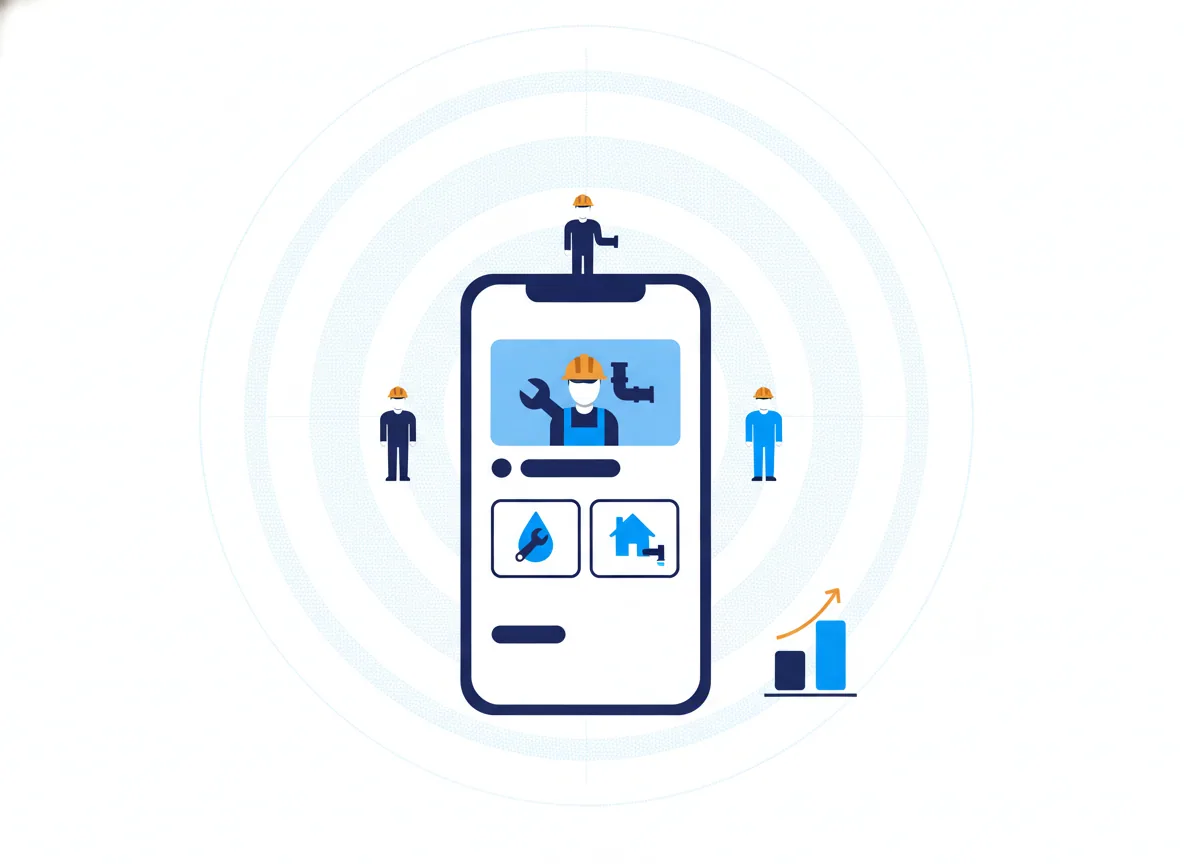
Getting a high conversion rate on Meta Ads for your plumbing business requires routing local homeowners through a specific sequence: targeting custom audiences with specific service offers, and capturing their information instantly. The blueprint involves pairing behavioral targeting with automated lead capture cascades so you stop paying for clicks that never turn into booked jobs. Traditional social media marketing often treats Facebook and Instagram like a search engine, expecting users to book emergency services while scrolling their feeds. This approach drains your budget quickly. High-converting campaigns require a different operational playbook built entirely around generating demand, interrupting scrolling patterns with relevant local offers, and removing friction from the booking process.
Before launching a campaign, you must understand how a homeowner uses Meta platforms. Nobody logs into Facebook to find an emergency plumber to fix a flooded basement. When a main line backs up into a home, that customer goes to a search engine to find immediate help. Meta is an interruption marketing channel. You are placing your business in front of homeowners before an emergency happens, or when they are dealing with a slow, annoying plumbing issue they have been putting off for weeks.
Using thorough user behavior mapping aligns your ad creative with the homeowner's mindset. A successful campaign targets preventative maintenance, system upgrades, or minor annoyances. By focusing on issues like slow drains, aging water heaters, or seasonal maintenance, you capture leads who have time to make a decision. This builds a pipeline of scheduled jobs rather than relying solely on the unpredictability of emergency dispatch.
Your ad creative will fail if it reaches renters or people outside your immediate service area. Strong plumbers customer acquisition on Meta begins with strict targeting rules. Proprietary methodologies in user behavior mapping and custom audience segmentation configurations ensure every advertising dollar is spent reaching verified property owners.
Upload Your Past Customer Lists
The most profitable audience you have is the one that already trusts your firm. Export your customer list from your field service management software and upload it directly to Meta. Create a campaign offering an exclusive seasonal tune-up or a water heater flush specifically for these past customers. Re-engaging past clients requires significantly less ad spend because the trust and brand recognition are already established.
Build High-Ticket Lookalike Audiences
Once you upload your customer list, segment it by the type of job performed. Filter out the low-value calls and isolate customers who purchased tankless water heaters, whole-home repiping, or trenchless sewer repairs. Instruct Meta to build a Lookalike Audience based strictly on these high-ticket buyers. The algorithm will find local users with similar behavioral data, income markers, and homeownership traits.
Geographic and Demographic Fences
Never use default targeting settings. Restrict your ads to the specific zip codes you actually want to service. Set the demographic targeting to homeownership age brackets, typically users aged thirty-five and older. Exclude users who list their job titles as property managers, apartment leasing agents, or real estate agents if your primary goal is direct-to-homeowner residential service.
Stop running generic ads that just feature your logo and the words "Call us today for all your plumbing needs." You need specific offers tied to specific landing environments. Implement these operational blueprints to drive consistent booked jobs to your dispatch board.
This campaign targets a broad local audience with an accessible, low-friction offer. The goal is to get a technician into the home to perform a basic service, allowing them to build a relationship and identify potential future issues during a complementary inspection.
This blueprint focuses on educating homeowners about the financial benefits of upgrading aging systems. The conversion volume will be lower than a maintenance offer, but the revenue per booked job is significantly higher.
Generating a lead is only twenty percent of the battle. If a homeowner submits their contact information and your intake team takes four hours to call them back, that lead will likely ignore your call or hire a competitor. Speed to lead is the most critical metric in home services marketing.
Implement automated lead capturing cascades to eliminate the delay between a lead submission and the first point of contact. This requires connecting your Meta Ads account directly to your customer relationship management software.
This cascade ensures the customer is engaged within thirty seconds of showing intent. It forces a conversation and dramatically lowers your cost per booked job.
A frequent question from ownership is how to properly fund a social media campaign. Budgeting requires absolute honesty about how the Meta algorithm works. The system needs data to optimize delivery, and data costs money.
A realistic starting plumbers meta ads investment is between one thousand and two thousand dollars per month in direct ad spend. This budget allows you to run two distinct campaigns simultaneously without spreading your daily spend too thin. If you spend less than thirty dollars a day, the algorithm will struggle to exit its learning phase, leaving you with erratic results and poor lead quality.
Expect to run your campaigns for three to four months before seeing a normalized, profitable cost per booked job. Month one buys data and tests creative. Month two refines the audience and eliminates underperforming ads. Month three scales the winning combinations. Do not turn off a campaign after four days because it has not generated a massive return. Give the system time to learn your specific market.
Even with a solid blueprint, campaigns can break down during execution. When a plumbing business abandons social media advertising, an audit of their digital marketing for plumbers usually reveals one of these critical failure points.
Once you establish a baseline where your automated cascades are consistently turning leads into profitable booked jobs, it is time to scale. Scaling does not mean just throwing more money at the exact same ad.
To scale plumbers online effectively, you increase your budget incrementally while expanding your targeting parameters. If your preventative maintenance offer is dominating a ten-mile radius, increase the daily budget by fifteen percent and push the radius to fifteen miles. Once your Lookalike Audiences max out, begin testing broader interest targeting focused on home improvement and do-it-yourself pages.
A mature Meta Ads strategy acts as a continuous engine for your plumbing business. By strictly controlling your audience segmentation, relying on automated follow-up sequences, and measuring success by the cost of a booked job rather than vanity metrics like impressions, you secure a predictable pipeline of high-quality residential work.
A reasonable starting budget for a local plumbing company on Meta Ads is $1,000 to $2,000 per month. This provides enough data for the algorithm to learn your audience and optimize ad delivery. You can scale your plumbers meta ads investment up once you establish a reliable cost per booked job.
Meta Ads are better suited for preventative maintenance and non-emergency services rather than immediate emergencies. When a pipe bursts, people search Google for an immediate fix. Use Meta to build brand awareness so customers think of your business first when an emergency eventually happens, or promote services like water heater upgrades.
You should expect to run Meta Ads for three to four months before seeing consistent, optimized results. The first month focuses on testing ad creative and mapping user behavior. Months two and three allow you to refine targeting and automated lead capture cascades to lower your acquisition costs significantly.
High clicks with zero calls usually means your landing page fails to match the ad's promise or your intake process is broken. If a user clicks an ad for drain cleaning but lands on a generic homepage, they leave. Fix this by routing clicks to dedicated, service-specific landing pages with clear contact forms.
Keep reading
Meta Ads
Find out exactly how much plumbing companies spend on Meta Ads. Understand standard pricing, ROI expectations, and how to scale your customer acquisition.
Social Media Ads
Discover the true financial cost of plumbers social media ads, including ad spend, management fees, and realistic ROI. ITZ Digital offers transparent, scalable solutions to…
Social Media Ads
Discover strategic tips and actionable blueprints for plumbers to accelerate growth through effective social media advertising. Learn how ITZ Digital's unique methodologies can…
Find out how we can help your business succeed.
Free audit of your market, your competitors and the gap between them.
Free audit · No obligation · No long-term contract