A high-performing divorce lawyer website turns stressed, private visitors into qualified consultations by offering clear answers and immediate, discreet communication channels. Achieving steady practice growth requires treating your website as an operational engine rather than a static digital business card.
User Behavior Mapping for High-Stress Legal Inquiries
Prospective divorce clients behave differently than consumers shopping for everyday commercial services. They often browse during unconventional hours, frequently on mobile devices, and under emotional strain. Many worry about privacy, shared marital accounts, or spouses discovering their search history. Your website structure must reflect these realities from the moment a page loads.
Effective user behavior mapping begins with immediate privacy considerations. Implement a prominent, floating 'Quick Exit' button that instantly redirects the browser to a neutral domain like a weather portal or search engine. This feature signals empathy, builds goodwill, and protects individuals who need discreet legal guidance.
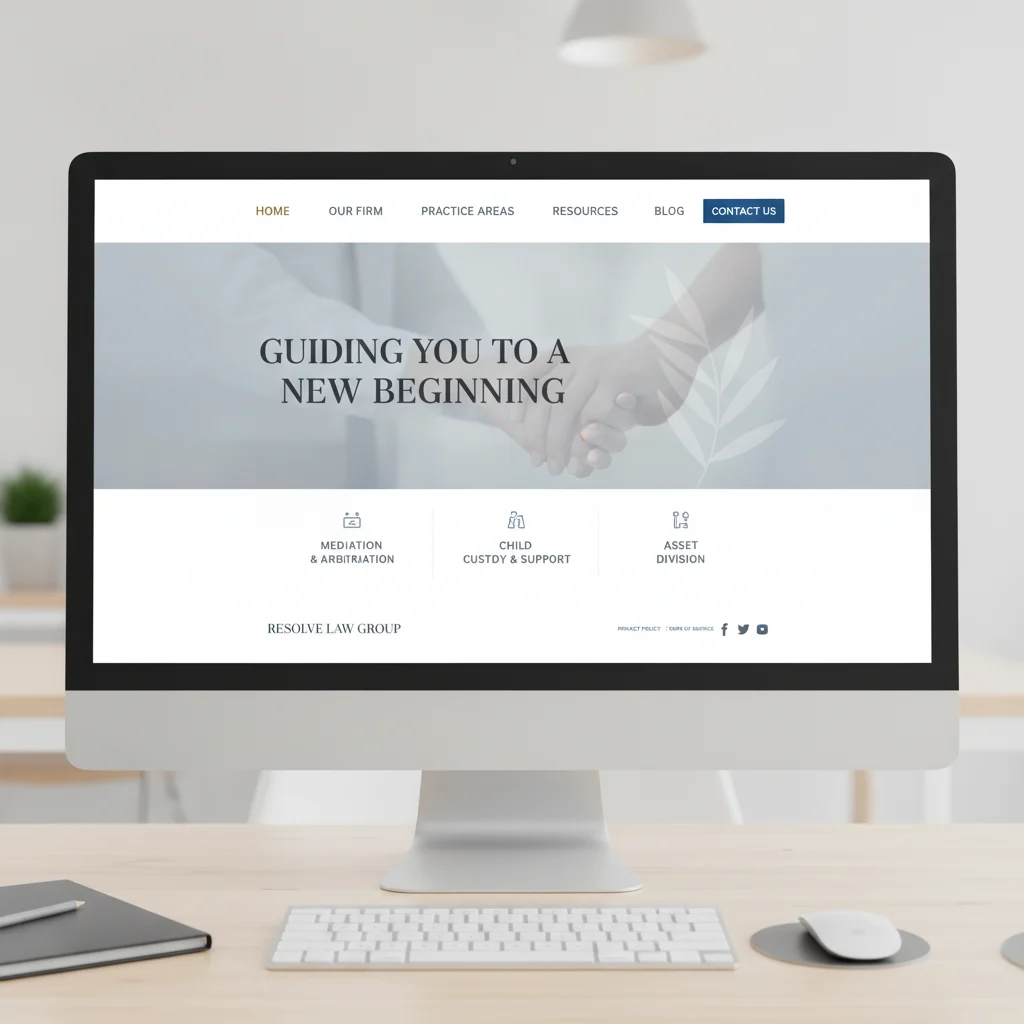
Next, structure your visual hierarchy to minimize cognitive overload. Visitors looking for divorce representation need clarity over legal jargon. Group practice areas by common real-world scenarios rather than statutory codes. For example, separate high-asset property division, contested custody disputes, and uncontested mediation into dedicated, easily identifiable pathways. Applying professional website services ensures these navigation paths remain clean, intuitive, and responsive across every device.
The Core Architecture Blueprint for Modern Family Law Sites
To scale divorce lawyer online inquiries, your platform needs an intentional architecture designed for conversion. A standard five-page website with a basic bio and contact form is no longer sufficient to compete in competitive metropolitan markets.
Practice Area Hubs and Problem-Specific Spoke Pages
Every major legal issue you handle needs its own dedicated content hub. Under a primary divorce section, build distinct pages addressing specific sub-problems:
- High-Net-Worth Asset Protection: Address business valuations, executive compensation, real estate holdings, and tax implications.
- Child Custody and Support: Focus on parenting schedules, interstate jurisdictional conflicts, and modification petitions.
- Military and Out-of-State Divorce: Outline jurisdictional rules, pension division, and deployment custody concerns.
- Collaborative Law and Mediation: Explain cost-effective, out-of-court options for amicable separations.
By giving each issue its own dedicated page, you provide prospective clients with immediate relevance. This targeted structure directly supports our proven strategies on how divorce lawyers can generate higher-quality case leads because it filters intent before a visitor ever picks up the phone.
Attorney Profiles That Build Immediate Confidence
Clients do not hire law firms; they hire people they trust to guide them through personal crises. Your attorney biography pages are often the second most visited pages on your entire domain. Avoid dry resumes listing law school graduation dates and bar association memberships. Frame your experience through the lens of client advocacy, negotiation philosophy, courtroom preparedness, and personal accessibility.
Automated Lead Capturing Cascades
Capturing a lead is only the first half of digital marketing for divorce lawyer practices. The speed and quality of your response dictate your conversion rate. Modern divorce lawyer customer acquisition relies on automated lead capturing cascades that eliminate manual delays.
When a prospective client submits an inquiry through a web form, the lead cascade should trigger immediately:
- Confirmation Message: Display a reassuring confirmation page that sets expectations regarding discretion, response times, and initial consultation procedures.
- Discreet SMS Notification: Send an automated, neutral text message acknowledging the inquiry without revealing sensitive legal details in case a spouse sees the screen notifications.
- Internal Triage Routing: Direct high-priority inquiries—such as emergency custody filings or complex assets—straight to senior paralegals or partners for rapid review.
- Self-Scheduling Integration: Allow pre-qualified users to choose an open consultation window directly from your calendar software, reducing back-and-forth phone tag.
Integrating these mechanisms turns your digital footprint into an active intake workflow. Review our core capabilities on the ITZ Digital homepage to see how strategic site performance pairs with backend operations to secure real business.
Custom Audience Segmentation Configurations
Not every visitor who lands on your site has the same intent or budget. Custom audience segmentation allows your platform to serve relevant information based on the visitor's entry point, behavior, and declared needs.
For instance, someone landing on an uncontested divorce page needs straightforward answers about filing fees, timelines, and process efficiency. Conversely, someone researching hidden offshore assets requires reassurance regarding forensic accounting capabilities and trial experience. If both visitors land on an identical generic contact form, you risk alienating both.
Configure your digital touchpoints to segment visitors based on key criteria:
- Urgency: Differentiate between visitors planning an immediate filing and those exploring long-term options.
- Complexity: Segment standard marital dissolutions from complex business and high-net-worth property divisions.
- Dispute Resolution Method: Guide parties seeking mediation down a cooperative track while pointing contested clients toward trial litigation assets.
When comparing your options for development and growth support, use the evaluation criteria highlighted in our review of divorce lawyer agency conversion support models to ensure your technology stack supports these deep segmentation layers.
The Realities of Divorce Lawyer Website Services Investment
Budgeting for legal web development requires understanding the tradeoffs between initial costs, platform capabilities, and ongoing technical maintenance. While pre-made templates seem cost-effective upfront, they frequently suffer from bloated code, poor mobile responsiveness, slow loading speeds, and rigid intake setups that depress conversion rates.
A sensible divorce lawyer website services investment accounts for both custom structural design and technical foundation work. Expect custom architectures, intake automation, and professional asset creation to represent a serious financial commitment. You should also budget for ongoing hosting, technical updates, security monitoring, and conversion rate optimization.
Timelines require honesty as well. While design and deployment typically take several weeks to a few months, organic search equity and comprehensive market dominance build over six to twelve months of steady optimization. For a detailed breakdown of realistic practice budgets, review our breakdown of divorce lawyer marketing costs across different market environments.
What Typically Goes Wrong with Family Law Websites
Even well-intentioned digital marketing for divorce lawyer firms can fall flat if critical structural mistakes are overlooked. Below are the most common pitfalls that derail performance:
- Generic Legal Copywriting: Filling pages with textbook definitions of statutes rather than explaining how your firm solves problems causes high bounce rates.
- Intrusive Popups and Chatbots: Aggressive, flashing chatbots can overwhelm an already distressed user and undermine the professional tone required for sensitive legal representation.
- Complex Intake Forms: Demanding detailed asset lists or complete family histories on an initial contact form deters prospects. Keep initial web intake short; collect sensitive details over secure phone consultations.
- Slow Page Load Speeds: Heavy stock images, unoptimized code, and cheap shared hosting drag down page speed. Every second of delay directly reduces inbound consultation volume.
- Ignoring Local Search Foundations: Failing to integrate proper geographic targeting, structured data, and local office markers prevents your site from ranking in competitive map packs.
Operational Growth Checklist for Family Law Platforms
Use this operational checklist to evaluate your current platform and identify areas where your website can capture more clients:
- Privacy Protection: Prominent quick-exit button implemented and tested on mobile and desktop layouts.
- Mobile First: Sticky call-to-action buttons for phone calls and discrete consultations visible on all screen sizes.
- Focused Pages: Individual URLs for each family law sub-specialty rather than a single catch-all divorce page.
- Attorney Profiles: Narrative-focused bios featuring direct client philosophies, photos, and clear areas of focus.
- Automated Intake: Integrated calendar booking, instant SMS confirmation, and internal notification cascades configured.
- Technical Health: Page load speeds under two seconds, clean technical indexing, and active SSL encryption.
- Analytics Configuration: Goal tracking configured for calls, form submissions, and calendar appointments to measure return on marketing spend.
By implementing these proven blueprints, family law practices can build an asset that steadily drives qualified consultations, streamlines client intake, and supports sustainable practice growth.

 By Kayce Marty