
Digital Marketing
Breaking Down the Real Financial Cost of Roofing Digital Marketing
A transparent breakdown of roofing digital marketing costs, agency pricing structures, and how to track real customer acquisition without hidden fees.
7 min read
Digital Marketing
 By Chris Lee8 min read
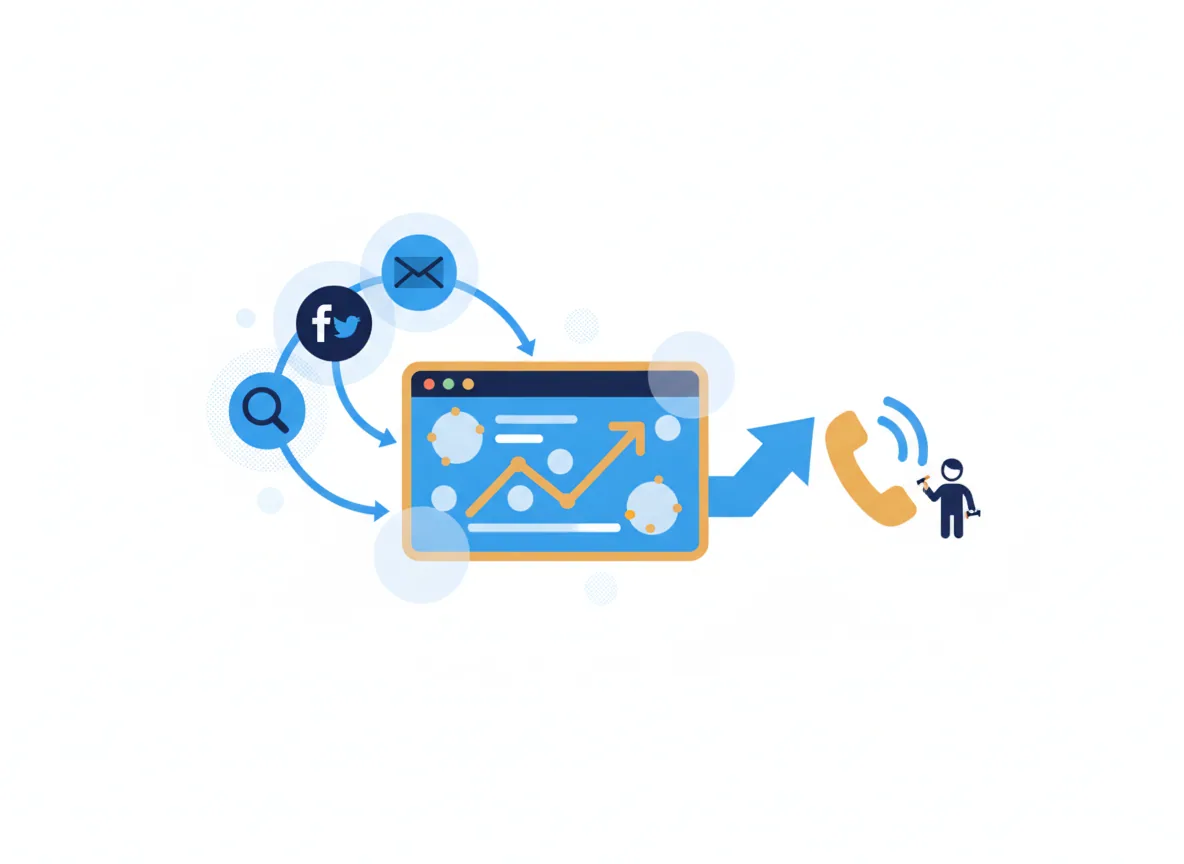
Accelerating your roofing company's growth requires turning your online presence into a direct pipeline for qualified estimate requests rather than treating it like a digital brochure. The most reliable path to consistent job volume combines high-intent search visibility, rapid automated response cascades, and precise local audience segmentation.
Many roofing contractors struggle with seasonal troughs and unpredictable lead pipelines. Relying solely on referrals or third-party lead brokers leaves your schedule at the mercy of factors outside your control. When you take command of your own customer acquisition, you stabilize cash flow, protect profit margins, and gain the leverage required to recruit and retain the best install crews.
Homeowners do not hire a roofing company on a whim. Their research process follows two distinct patterns: the emergency response and the planned capital replacement. To capture both segments, your digital marketing must cater to their specific behavioral triggers.
Emergency inquiries happen after active leaks, fallen tree limbs, or severe hailstorms. These homeowners skip lengthy research. They search on mobile devices using hyper-local terms such as roof leak repair near me or emergency tarping service. They check two things: proximity and recent reviews confirming reliability. If your phone number is not clickable immediately on the screen, or if your office sends them to an unmonitored voicemail, they tap the next contractor on the list.
Planned roof replacements represent your highest-margin projects, but the decision cycle lasts anywhere from two weeks to several months. These property owners conduct extensive diligence. They read warranties, compare asphalt shingles against standing seam metal roofs, examine past project galleries, and review contractor credentials. For this audience, your website must function as an authority hub that answers questions about financing options, installation timelines, and material longevity.
Generating web traffic is only half the battle. If your follow-up process is manual, slow, or disorganized, you waste your marketing spend. Implementing an automated lead capture cascade ensures no prospective job slips through the cracks.
Speed to lead decides who wins roofing estimate bids. When a homeowner fills out an estimate request form, their intent is at its absolute peak. If you respond in thirty minutes, their attention has moved on, or worse, a competitor has already booked the inspection. An automated cascade bridges the gap between marketing and field operations:
By automating these early touchpoints, your team spends less time playing phone tag and more time on roofs closing profitable contracts. You can review real contractor lead generation case studies to see how establishing automated follow-up workflows directly improves quote close rates.
Blasting generic ads across entire metropolitan areas drives up your advertising costs while bringing in calls from outside your preferred service zones. Setting up precise audience segmentation allows you to scale roofing online with surgical precision.
Instead of running campaigns across an entire county, segment your ad spend by specific zip codes and historic housing developments. Target neighborhoods built fifteen to twenty-five years ago where original builder-grade architectural shingles are reaching the end of their design life. Focus your ad messaging on these specific subdivisions by addressing local architectural requirements and common weather challenges.
Hailstorms and high-wind events create immediate spikes in demand. Modern ad platforms allow you to deploy hyper-local geofenced campaigns over specific storm paths within hours of weather confirmation. Pair these radius-targeted ads with educational content outlining the difference between storm restoration insurance claims and out-of-pocket maintenance work.
Your existing customer database is an untapped revenue source. Segment past repair customers into custom audiences for annual maintenance tune-ups and gutter replacements. Homeowners who paid for minor leak repairs two years ago are prime candidates for complete roof replacements today. Re-engaging these past clients through targeted email alerts and social media custom audiences costs a fraction of acquiring cold leads.
Executing an aggressive growth plan requires consistency across technical, creative, and operational channels. Use this growth checklist to audit your digital marketing foundation:
To explore how these technical pieces fit together across your business, review our full range of specialized marketing services designed specifically for local contractors.
A successful roofing digital marketing investment requires viewing marketing expenditures as a capital allocation directly tied to your gross margin, not as an overhead expense to minimize. Understanding your numbers prevents under-investing in high-yield channels or panicking during normal market adjustments.
Acquisition costs in the roofing sector are driven by steep competition and high ticket sizes. Because a single residential roof replacement yields several thousand dollars in gross profit, aggressive competitors are willing to pay significant amounts for top-of-page search placement. You must calculate your numbers backward from your average contract value:
If your average residential replacement job is valued at ten thousand dollars with a forty percent gross margin, spending eight hundred to twelve hundred dollars to acquire that paying customer provides an exceptional return on capital. Budgeting realistically means maintaining your ad spend through slower winter months so your pipeline remains full for the spring rush. Discover more about our background and why predictable financial modeling sits at the heart of every marketing strategy we manage.
Many contractors burn substantial marketing budgets without seeing tangible growth in their bank accounts. Understanding why campaigns fail helps you avoid the common operational mistakes that derail digital marketing for roofing.
Buying leads from directory aggregators seems like an easy shortcut, but it creates a race to the bottom. These vendors sell the exact same homeowner inquiry to four or five competing roofing companies simultaneously. The homeowner gets bombarded by calls within seconds, and the conversation inevitably centers entirely on who offers the lowest price. Building your own branded lead generation engine gives you exclusive inquiries where you set the terms based on value, craftsmanship, and trust.
Over seventy percent of homeowners searching for home exterior repairs access websites on their smartphones. If your website takes longer than three seconds to load, features unreadable text, or hides the phone number behind cumbersome popups, prospects will hit the back button instantly. You pay for the click, but the visitor bounces before seeing your work.
Running paid search campaigns without strict negative keyword management drains budgets rapidly. If you bid on the general keyword roofing without phrase match constraints or comprehensive negative keyword lists, you will pay for clicks from users searching for commercial metal roofing suppliers, free roof repair grants, or how to fix a shingle yourself. Your ad dollars must be guarded carefully to target only paying homeowners seeking professional services.
Focusing on vanity metrics like impressions, clicks, or raw form submissions hides underlying operational issues. A campaign that generates fifty leads at twenty dollars each is useless if none of those leads own a home or can qualify for financing. True performance tracking connects marketing analytics directly to your CRM dispatch board so you evaluate campaigns based strictly on your cost per booked job and return on ad spend.
Scaling a roofing business requires transitioning from erratic storm-chasing to systematic, repeatable lead acquisition. When you combine authoritative local search visibility with rapid response automation and accurate audience targeting, your reliance on unpredictable third-party leads disappears.
Effective marketing works like an install crew with the right tools: every component has a purpose, and when executed systematically, the finished product withstands the elements. If you are ready to evaluate your market opportunity and build a predictable acquisition pipeline, you can reach out directly to start refining your growth strategy today.
A roofing company should allocate between seven and twelve percent of its annual revenue to marketing to sustain steady growth. Newer contractors aiming to scale quickly in competitive markets often require closer to fifteen percent initially. These funds should cover local search engine optimization, paid search advertising, and automated lead capture software to maintain a healthy cost per booked job across seasonal shifts.
Digital marketing for roofing generates immediate inbound leads through paid search ads within days of launching campaigns, while local SEO typically requires four to six months to gain traction. Paid campaigns provide cash flow while organic visibility compounds in the background. Once organic search rankings solidify, your overall cost per lead drops substantially because unpaid search clicks supplement ad traffic continuously.
An automated lead capture cascade is a multi-step workflow that responds to inbound quote requests instantly through automated text messages, emails, and calendar dispatch invites. Most homeowners contact multiple roofers at once. Reaching out within two minutes guarantees you make first contact before competitors reply, dramatically lifting your appointment hold rates and turning cold inquiries into confirmed roof inspections.
Google Local Services Ads and Google Search ads deliver the highest return on investment for immediate roofing customer acquisition because they capture homeowners actively searching for urgent roof repairs or replacements. Meta platforms like Facebook and Instagram work effectively as secondary channels for retargeting past site visitors and building brand awareness after severe storm events sweep through your specific operating territory.
Keep reading
Digital Marketing
A transparent breakdown of roofing digital marketing costs, agency pricing structures, and how to track real customer acquisition without hidden fees.

Digital Marketing
Choosing the right roofing digital marketing agency is crucial for your business's growth. Discover the top 5 essential qualities, from industry expertise to a focus on ROI,…

Digital Marketing
Discover the top roofing marketing experts in the US. Learn how roofing SEO, ITZ Digital, and Built-Right can help you generate more leads and grow your business.
Find out how we can help your business succeed.
Free audit of your market, your competitors and the gap between them.
Free audit · No obligation · No long-term contract