A professional website for an electrical contracting business typically requires an initial investment ranging from a basic setup to a comprehensive custom build, accompanied by ongoing maintenance costs. Understanding the true scope of your electrician website services investment prevents you from overpaying for unnecessary features or getting locked into proprietary platforms that drain your margins.
For trade business owners, a website is not a creative design showcase. It is an operational tool built to turn searchers who have blown panels, flickering fixtures, or commercial buildouts into confirmed service calls. When evaluating the marketplace, you need to know exactly what your money buys, where hidden fees hide, and how website structure directly influences your electrician customer acquisition costs.
The Core Cost Components of Electrician Website Services
Building a commercial-grade website requires several distinct layers of development, strategy, and infrastructure. If an agency quotes you a single flat number without explaining these layers, you are usually getting a templated site with minimal technical configuration.
Upfront Architecture and Design
The visual framework and user experience represent the first phase of investment. Electricians need specific user flows: clear call-outs for emergency service, prominent phone numbers, straightforward booking forms, and dedicated service pages for specific tasks like EV charger installations, panel replacements, and commercial rewires. A custom design ensures your company looks established and distinct from regional competitors, rather than looking like an identical twin using the same standard trade template.
Technical Development and Mobile Responsiveness
More than half of your residential service calls originate from mobile devices. When a homeowner experiences an outage or sparks at a breaker, they pull out their phone. The code powering your site must load instantly on mobile networks, pass Google core web vitals, and feature tap-to-call mechanics that do not fail. Clean coding prevents script bloat that slows down load times and degrades ad performance.
Conversion-Focused Copywriting
Stock filler text does not convince a property manager or homeowner to hand over their credit card or request a bid. Effective web copy addresses safety concerns, highlights licensing and insurance, details warranty coverage, and explains your dispatch process. Investing in professional copy saves your office staff time by answering common customer objections before the phone even rings.
Foundational Search Engine Optimization
A website that search engines cannot crawl is useless. Proper foundational work includes structured metadata, city-specific landing pages, service schema markup, and Google Business Profile integration. Applying proven local search strategies for electrical contractors during the initial build ensures your pages start indexing for high-intent keywords without requiring an immediate, expensive tear-down.
Hidden Costs and Proprietary Platform Traps
Many contractors sign contracts for what looks like an affordable monthly package, only to discover substantial hidden liabilities later. Evaluating quotes requires spotting the business models that protect agency profits at the expense of your equity.
The most common trap in trade web design is the proprietary website lease. Under this arrangement, a marketing firm builds your website on their closed-source system. You pay an initial fee plus a mandatory monthly charge. The moment you decide to switch vendors or bring your marketing in-house, the agency informs you that you do not own the website, the graphics, or the underlying database. You leave with nothing except your domain name, forcing you to rebuild from scratch.
Other agencies hide ongoing costs behind arbitrary service limits:
- Content Change Fees: Charging hourly rates simply to change an address, update an hourly rate, or post an announcement.
- Hosting Markups: Re-billing basic commodity server space at astronomical markups without providing automated backups, staging environments, or malware scanning.
- Integration Add-Ons: Demanding extra integration fees to connect your website forms to your CRM or field management software like ServiceTitan or Housecall Pro.
- Asset Ransom: Demanding high release fees to transfer DNS records, tracking codes, or analytics accounts when you depart.
Partnering with a provider that focuses on full asset transparency eliminates these vulnerabilities. Explore how dedicated professional website services should provide complete code ownership, portable platforms, and clear documentation from day one.
Budgeting for Ongoing Maintenance vs. Lead Generation
Your web presence requires regular technical maintenance to stay secure, functional, and fast. However, you must distinguish between operational maintenance and active customer acquisition budgets.
Routine Operational Upkeep
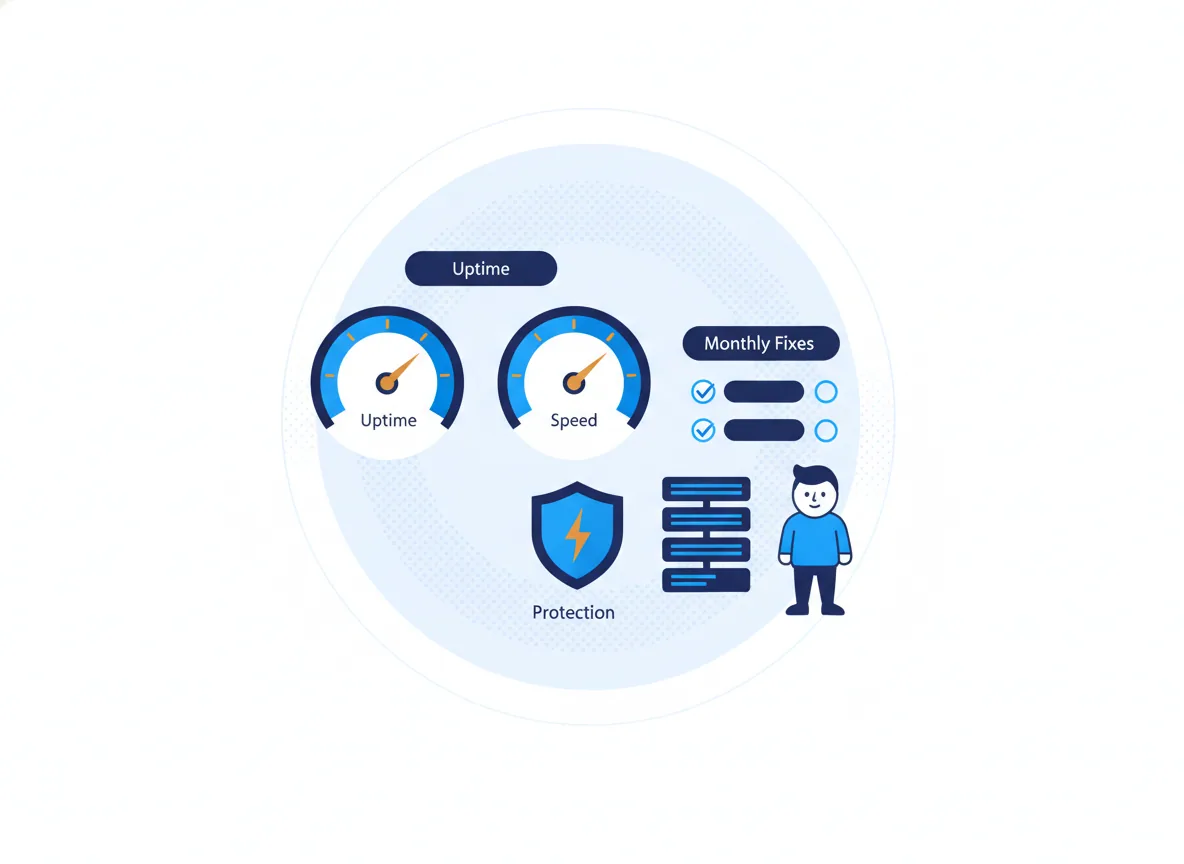
Every website requires regular updates to server software, content management systems, plugins, and security certificates. Broken links and outdated forms cost you jobs. Budgeting for regular technical maintenance covers routine database cleaning, daily offsite backups, and immediate troubleshooting if an API breaks. This is standard overhead, similar to keeping your service vans serviced and inspected.
Growth Marketing and Traffic Drivers
A pristine website sitting on an empty server will not generate revenue on its own. To drive consistent inbound opportunities, you must connect the platform to targeted traffic sources. This includes ongoing local search optimization, pay-per-click advertising, and review generation. When planning your marketing allocation, recognize that your website is the engine, but paid traffic and organic rankings are the fuel.
Understanding the tangible benefits of working with an industry marketing agency helps you allocate your capital intelligently between building the asset and driving actual traffic to it.
Calculating the Return on Investment for Your Electrical Business
A website should never be classified as an administrative expense; it is a revenue-producing sales rep that works 24 hours a day. Calculating the real financial return requires looking past vanity traffic metrics to measure actual cost per acquired lead and booked job values.
Consider the average revenue from different types of electrical work:
- Small residential diagnostic calls and outlet replacements.
- Mid-tier projects like dedicated circuit installs, subpanels, and whole-home surge protection.
- High-value installations such as 200-amp service upgrades, solar tie-ins, and full rewires.
- Commercial maintenance contracts and tenant improvements.
Because higher-tier jobs generate significant gross revenue, a well-built website does not need hundreds of conversions each week to demonstrate positive returns. Capturing just two or three additional panel upgrades each month covers the cost of an advanced web platform within its first quarter of operation. When you design conversion paths specifically around high-margin tasks, your customer acquisition costs decline while your average job size increases.
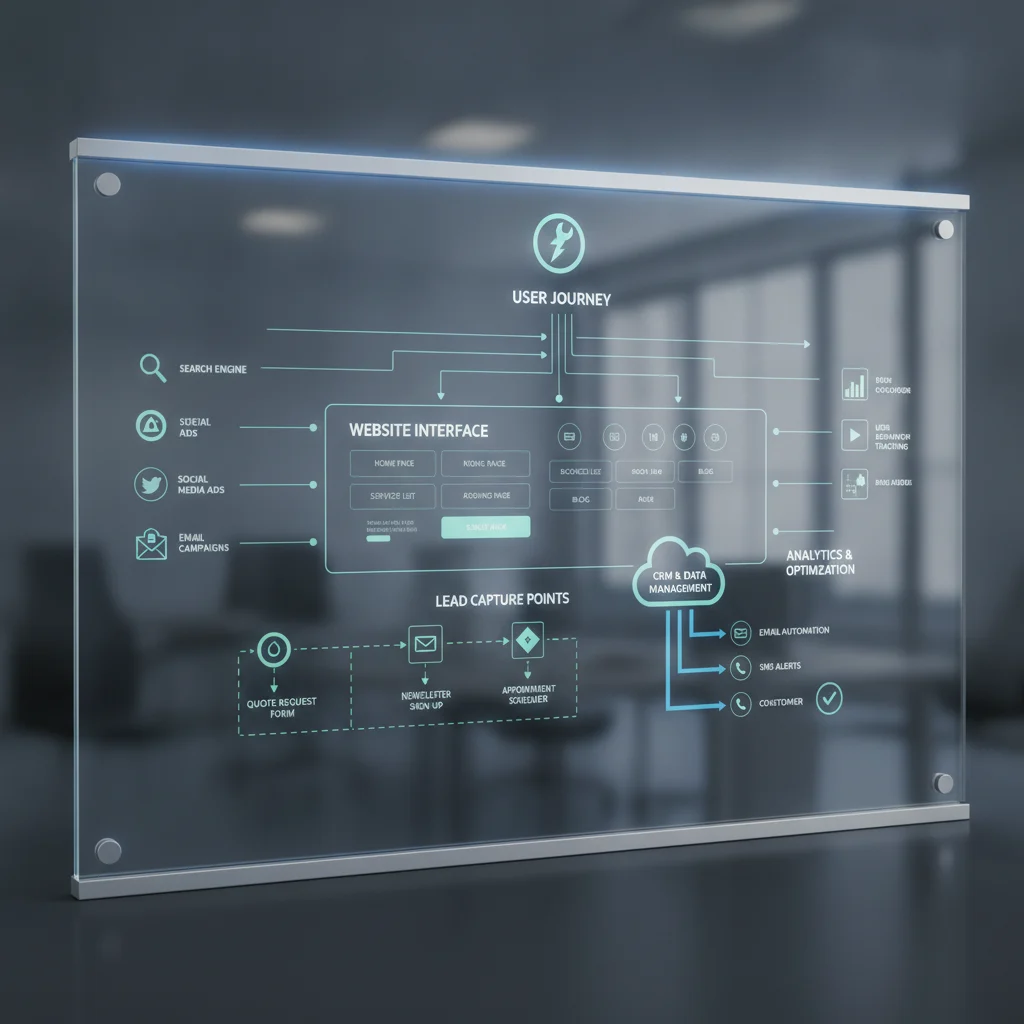
Comprehensive digital marketing for electrician businesses aligns website architecture with real-world sales figures, allowing you to track exactly which forms and phone numbers generate your most profitable jobs.
What Typically Goes Wrong with Low-Cost Web Design
Contractors often attempt to save upfront capital by hiring generalist freelancers, using generic DIY page builders, or accepting offshore bids. While these options look inexpensive on paper, they routinely cost more in lost revenue and emergency rework.
The first point of failure is technical latency. Cheap page builders compile massive, unoptimized code libraries that choke mobile devices. If a homeowner has to wait five seconds for your contact form to render, they will hit the back button and call the next contractor on the map.
The second breakdown occurs in conversion design. A novice designer might build an attractive color scheme without understanding local trade buyer behavior. Common mistakes include:
- Hiding the phone number behind a dropdown menu instead of fixing it to the top of the mobile screen.
- Creating massive contact forms with ten required fields for an emergency service call.
- Failing to display licensing, bonding, and master electrician numbers where prospective clients look for validation.
- Neglecting dedicated pages for distinct geographic service areas, leaving you invisible in neighboring cities.
- Leaving off click-to-call tracking, making it impossible to evaluate marketing effectiveness.
Fixing these structural errors down the road often requires a total rebuild. You end up paying twice: first for the ineffective budget site, and second for a professional team to build the platform correctly. Reviewing our breakdown of leading trade marketing firms provides insight into how vetted specialists structure their development processes to protect your capital.
How to Evaluate an Agency Web Services Proposal
Before committing capital to any agency, require a clear, line-item proposal that specifies deliverables, asset rights, and tracking frameworks. A reliable partner will answer these questions in writing without hesitation:
- Who owns the website and content? The contract must state explicitly that your business owns the domain, design, text, code, and hosting accounts upon payment.
- What platform is the site built on? Open-source platforms like WordPress allow any competent developer to maintain or move the site, protecting you from vendor lock-in.
- How are conversion events tracked? The agency must implement call tracking numbers, form submission tracking, and analytics dashboards configured to record business outcomes rather than just site hits.
- What is the scope of post-launch support? Ensure you know whether software updates, security scans, and minor content adjustments are included in your agreement or billed separately.
Transparent pricing models protect your operational cash flow. At ITZ Digital, we focus on helping trade businesses get more customers without breaking the bank. By combining honest upfront pricing with clean, portable code, our teams help you scale your electrical business online without paying for bloated agency overhead or trapped assets.

 By Kayce Marty