

Website Services
Proven HVAC Website Services Blueprints for Accelerating Growth
Learn how to structure your HVAC website with proven blueprints, automated lead cascades, and behavioral segmentation to book more high-margin service calls.
8 min read
Website Services
 By Kayce Marty6 min read
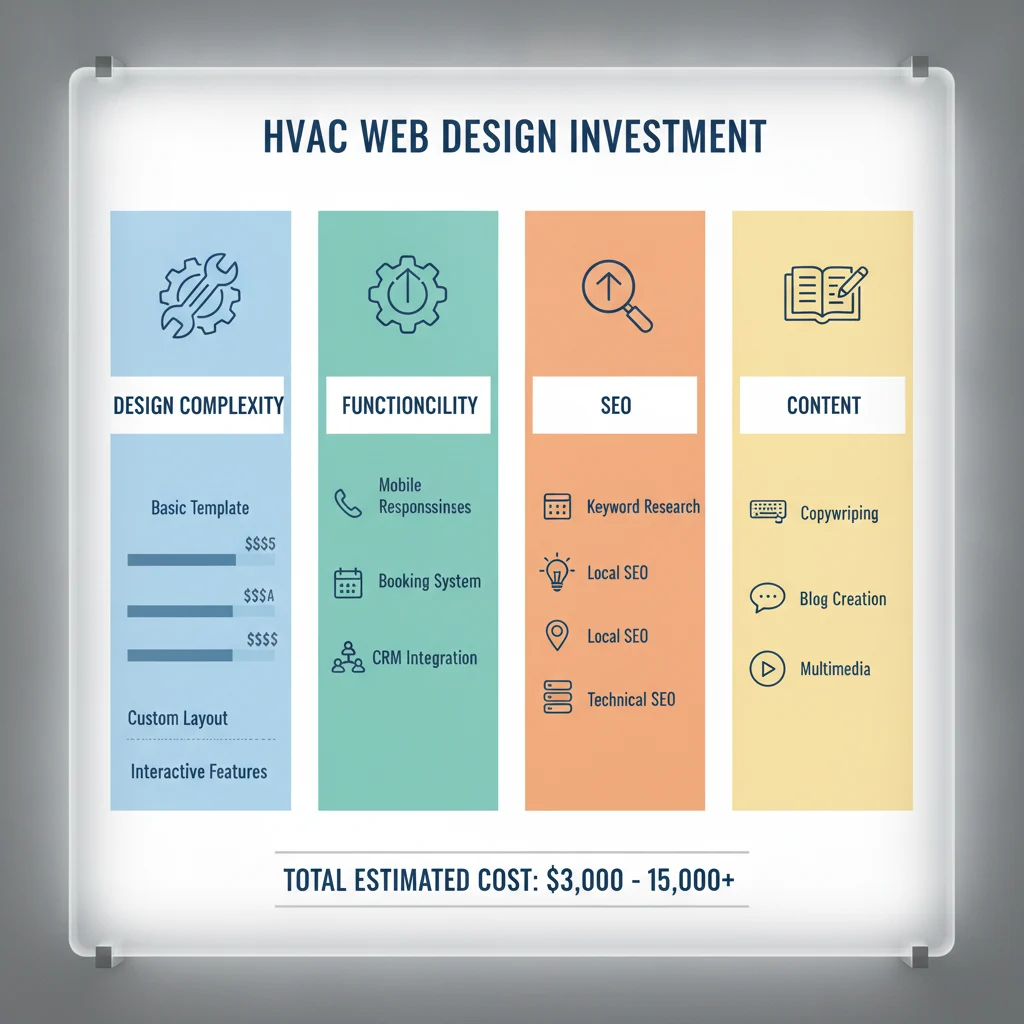
A custom HVAC website typically costs between a few thousand dollars for a streamlined local setup and well into five figures for a multi-location enterprise platform. What you actually spend depends on whether your site is built as a static digital brochure or an engineered revenue engine designed to capture emergency furnace and AC repair calls.
For heating and air conditioning contractors, your website is not an artistic project. It is operational infrastructure. When an air conditioner fails during an extreme heatwave or a heat pump gives out during a winter freeze, property owners do not browse leisurely. They tap the first search result, evaluate credibility within three seconds, and look for a clear phone number or instant booking module. Evaluating your hvac website services investment through the lens of booked calls, operational clarity, and customer acquisition transforms web design from an arbitrary expense into a predictable growth lever.
Understanding where capital goes prevents overspending on cosmetic elements that do not move the needle. A high-converting site combines technical engineering, local search fundamentals, and clear user experience design. When reviewing website services, expect your quote to divide into three distinct budget buckets.
Your technical framework dictates site speed, mobile usability, and security. Because a majority of emergency residential HVAC searches occur on mobile devices, responsive layout performance determines your bounce rate. This phase covers custom page layouts, accessible click-to-call mechanics, dispatch form integrations, and fast server infrastructure. A slow, bloated theme forces prospective customers back to search results before your phone number even renders on their screen.
Search engines rank individual URLs, not entire websites at once. A dealer offering heat pump repair, ductless mini-split installation, commercial refrigeration, and seasonal maintenance needs distinct pages for each service across every primary suburb they serve. Building this depth requires technical writing, internal linking mapping, and structured service schema. Skimping on page volume leaves your business invisible outside your immediate physical address.
A website must connect seamlessly to your day-to-day operations. Whether your office runs on specialized trade CRM software, ServiceTitan, Housecall Pro, or straightforward phone routing, integrating dispatch forms and direct scheduler widgets requires custom development. The objective is eliminating customer friction so an emergency replacement lead immediately lands on your dispatch board.
HVAC contractors encounter three prevalent pricing structures when hiring an agency. Choosing the wrong framework often leads to paying thousands of dollars for assets you do not actually own.
Owning your digital foundation outright is essential. An asset you own builds enterprise equity for your heating and cooling business over time. If you want to evaluate how different agency models structure these contracts, review our guide comparing leading HVAC marketing agencies to understand typical deal structures.
Budget website builders and generic freelancers promise quick turnarounds at bargain-basement rates. While the low invoice is tempting for an owner managing payroll and equipment costs, cheap builds consistently create hidden liabilities that choke business growth.
Low-cost builds frequently use boilerplate text duplicated across hundreds of other contractor sites nationwide. Search engines penalize or ignore thin, unoriginal copy. If your furnace repair page is identical to a contractor three states away, you will not rank against local competitors who invest in unique, geographically tailored pages.
Stock WordPress themes and visual page builders are notoriously bloated with unnecessary scripts. When an emergency customer searches for emergency AC replacement on an unstable mobile connection, a bloated site takes several seconds to load. Each additional second of load time dramatically increases the likelihood that the homeowner clicks the back button and calls your competitor.
Agencies that offer unnaturally low build prices often make their margins on the back end. They charge inflated hourly rates for basic text adjustments, add markup to hosting packages, or hold your domain name hostage behind administrative barriers. Transparency means knowing exactly what you pay for software, hosting, and human strategy each month.
A website does not generate revenue in a vacuum. It sits at the operational center of all your marketing channels, including paid search, direct mail, truck wraps, and organic search. When you modernize your site, you directly impact your cost per acquisition across all marketing spend.
Consider how conversion rate changes real-world profitability. If your current website receives 1,000 visitors per month from local search and converts 2% into phone calls, you generate 20 leads. If technical optimizations, mobile-first design, and strategic call-to-action buttons increase that conversion efficiency to 5%, that same traffic volume yields 50 leads without spending an extra dollar on traffic generation. That shift significantly lowers your cost per booked job.
To capture sustained local demand, web development must integrate with search optimization. Implementing structured markup, optimizing Google Business Profile signals, and structuring location silos are covered in our breakdown of proven SEO strategies for HVAC companies.
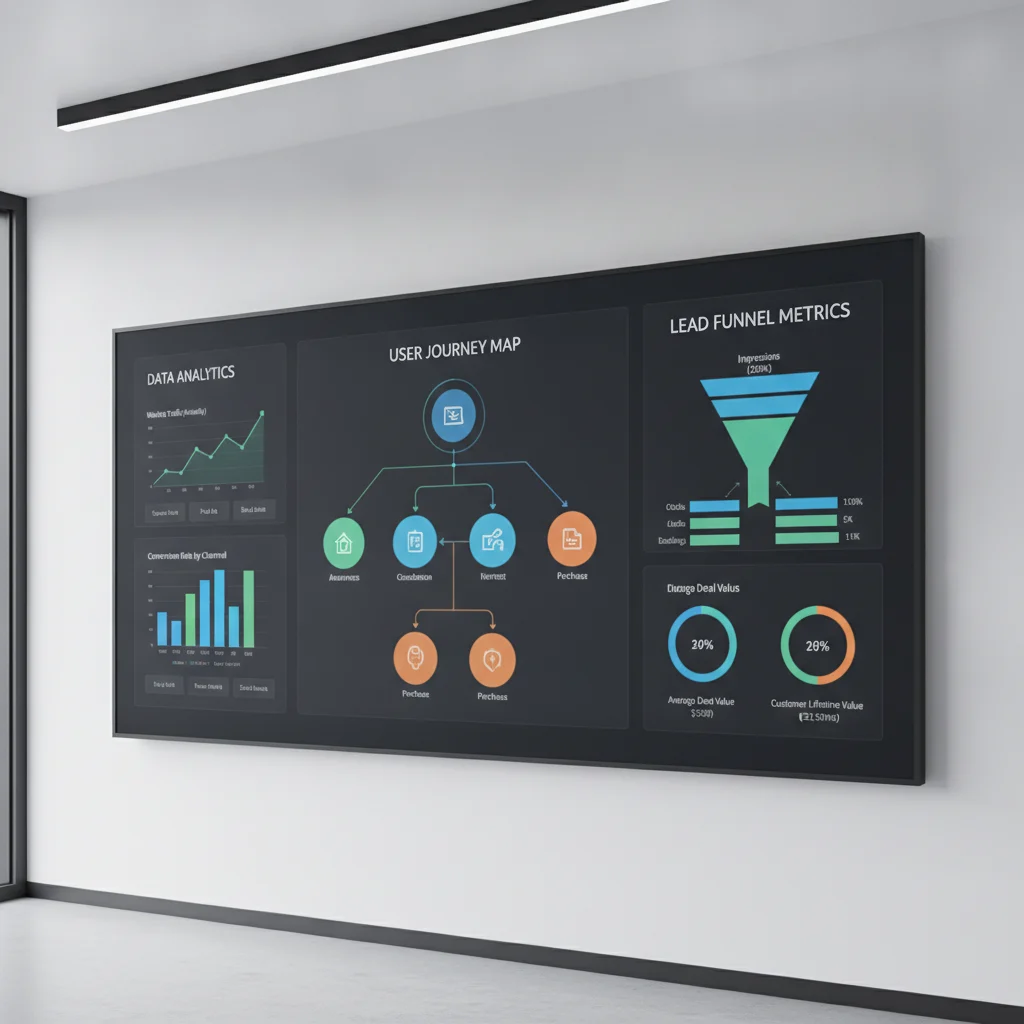
Too many marketing reports focus on vanity metrics like impressions, generic clicks, and total page views. For an owner looking to scale HVAC online, these figures do not pay technicians or purchase inventory. High-efficiency website management requires rigorous tracking connected to your financial numbers.
Every marketing dollar should be tied back to verified customer inquiries. To eliminate marketing waste, your site must deploy dynamic call tracking, automated form-fill monitoring, and clear attribution channels. Our team at ITZ Digital focuses on transparent metrics that highlight lead quality, call duration, and booked calls rather than inflated traffic counts.
When analyzing performance, focus on these concrete indicators:
For a detailed breakdown of the numbers your team should monitor every month, review our guide to HVAC digital marketing agency performance metrics.
A practical website strategy recognizes that your digital storefront requires deliberate lifecycle investments. Treating web design as a one-time project leaves you with an outdated platform within three years as search algorithms, browser requirements, and customer preferences evolve.
To maintain peak performance, establish a clear digital budget split:
Executing smart digital marketing for HVAC means treating your online assets with the same diligence as your fleet vehicles. When your platform is engineered for lead generation, every dollar spent on your website directly advances your broader HVAC customer acquisition strategy and keeps your dispatch boards full across every season.
A custom, lead-generating HVAC website generally ranges from several thousand dollars for a foundational build to upwards of ten thousand dollars for comprehensive multi-location platforms. Ongoing maintenance, hosting, technical updates, and conversion optimization typically require a separate monthly fee depending on the support level.
Most HVAC contractors begin seeing measurable lead conversions within the first three to six months after launch. Full financial returns compound over twelve months as search visibility grows, page speed improvements reduce bounce rates, and service-specific landing pages capture higher volumes of seasonal emergency calls.
You should always own your website outright, including the domain, creative assets, and code. Proprietary rental models lock you into permanent monthly payments and strip your business of its digital assets if you decide to switch marketing agencies.
Cheap template sites fail because they lack local search schema, load slowly on mobile networks, and feature generic copy that does not convert urgent heating or cooling inquiries. They also lack dedicated service architecture needed to compete against established local dealers.
Keep reading
Website Services
Learn how to structure your HVAC website with proven blueprints, automated lead cascades, and behavioral segmentation to book more high-margin service calls.
Website Services
Wondering about the investment required for a high-performing HVAC website? This comprehensive guide breaks down HVAC web design costs, explores ROI expectations, and reveals…
Website Services
Discover advanced HVAC web design techniques from ITZ Digital, including user behavior mapping, automated lead capturing, and custom audience segmentation, to dominate the…
Find out how we can help your business succeed.
Free audit of your market, your competitors and the gap between them.
Free audit · No obligation · No long-term contract