Building an HVAC Website That Functions as an Intake Engine
An HVAC website accelerates business growth only when configured as an operational intake pipeline rather than a digital business card. If your platform does not turn emergency traffic into dispatched trucks and off-season visitors into maintenance contract holders, it drains overhead instead of producing revenue. To systematically scale your heating and cooling operations, you need a site built around clear user intent, fast mobile action, and automated qualification.
Contractors often invest heavily in driving web traffic through local service ads, organic search, and social media, only to route prospects to slow, generic landing pages. When an air conditioner fails during high summer or a boiler cuts out during a winter freeze, homeowners make split-second decisions. The company that presents an immediate, friction-free path to service wins the job. Implementing specialized website services gives your business the structural backbone required to capture and convert high-ticket repair and replacement leads around the clock.
Blueprint 1: User Behavior Mapping and Intent-Based Routing
Every homeowner visiting your HVAC website arrives with one of three distinct mindsets: immediate emergency, planned equipment upgrade, or routine maintenance. Treating all three groups identically is the fastest way to lose revenue. Intent-based routing organizes your site structure so each visitor hits their ideal conversion path within two seconds of landing.
The Emergency Repair Pathway
Emergency visitors are stressed, visiting from a mobile phone, and want an immediate technician. They will not read your company history, browse your gallery, or fill out a multi-page questionnaire. For these visitors, your mobile interface must feature a sticky header with a prominent tap-to-call button, visible confirmation of emergency dispatch availability, and a clear list of your service radius. Minimize image weight on these service templates to ensure sub-two-second load times on unstable cellular connections.
The Planned Replacement Pathway
Homeowners seeking a new heat pump, furnace, or central AC unit behave differently. They research brands, efficiency ratings, sound levels, and financing options over days or weeks. Their conversion path requires clear product comparisons, transparent explanations of regional rebates, and interactive payment calculators. If you want to scale hvac online with high-margin replacements, provide self-guided cost estimators that trade ballpark price ranges for verified homeowner contact information.
The Maintenance and Membership Pathway
Service agreements provide the steady cash flow that keeps your field technicians busy during mild spring and autumn months. Your website should treat maintenance agreements as recurring subscription products rather than afterthoughts buried in a PDF flyer. Build dedicated service plan pages with side-by-side tier breakdowns, automated credit card checkout, and explicit lists of member benefits like priority dispatching and discount diagnostic fees.
Blueprint 2: Automated Lead Capturing Cascades
Relying on a static contact form that dumps messages into an unmonitored inbox cripples your lead conversion rate. Modern website services use cascading lead capture mechanisms that automatically escalate homeowner requests based on urgency and service type.
A high-converting capture cascade replaces traditional text fields with conditional, multi-step intake modules. When a customer selects AC Not Cooling on step one, step two asks whether the unit is making strange noises, leaking water, or completely dead. Step three asks for the property address to verify they fall within your primary service zone before requesting contact information. By breaking the intake into bite-sized questions, you lower cognitive friction and achieve higher form completion rates.
Once a lead submits their details, your web platform should trigger immediate automation:
- Webhook Dispatch Sync: The platform routes customer details directly into your field service management software (such as ServiceTitan or Housecall Pro) as an unassigned pending job.
- Instant Customer SMS: An automated SMS informs the homeowner that their request was received and provides an estimated response window.
- Internal Staff Alerts: High-priority replacement requests trigger instantaneous notifications to your comfort advisors or sales managers via phone notification or team chat.
- After-Hours Failsafes: If the lead arrives outside office hours, the interface immediately offers the option to book directly onto next day calendar slots or call the on-call emergency dispatch desk.
These automated cascades prevent lead rot and ensure your team makes contact while the homeowner is still sitting with their device in hand, directly improving overall hvac customer acquisition efficiency.
Blueprint 3: Custom Audience Segmentation Configurations
Homeowners in older historic neighborhoods have radically different HVAC requirements than property managers in suburban commercial strips. A high-performance HVAC website uses dynamic segmentation to deliver relevant technical information based on geography and service lines.
Create discrete geographic sub-directories for each municipality or county in your service territory. Avoid thin duplicate content; instead, tailor each area page with hyper-local details, including common regional heating challenges, municipal permit guidelines, localized utility rebate programs, and verified local project maps. Aligning your structural content architecture with proven SEO strategies for HVAC companies guarantees that each segmented page pulls qualified organic traffic directly from homeowners searching for local neighborhood technicians.
Furthermore, separate your residential and light commercial services cleanly at the root navigation level. Commercial facility managers demand preventative maintenance agreements, custom rooftop unit specs, and invoicing terms. When they land on a page dominated by residential tune-up coupons, they leave. Dedicated entry portals for commercial clients protect your brand credibility and prevent commercial leads from falling into residential dispatch queues.
The Real HVAC Website Services Investment: Budgeting Honestly
A successful hvac website services investment requires understanding the difference between short-term costs and long-term asset value. Many dealers make the mistake of hiring generalist web designers who build attractive visual layouts that lack the technical infrastructure needed for trades businesses.
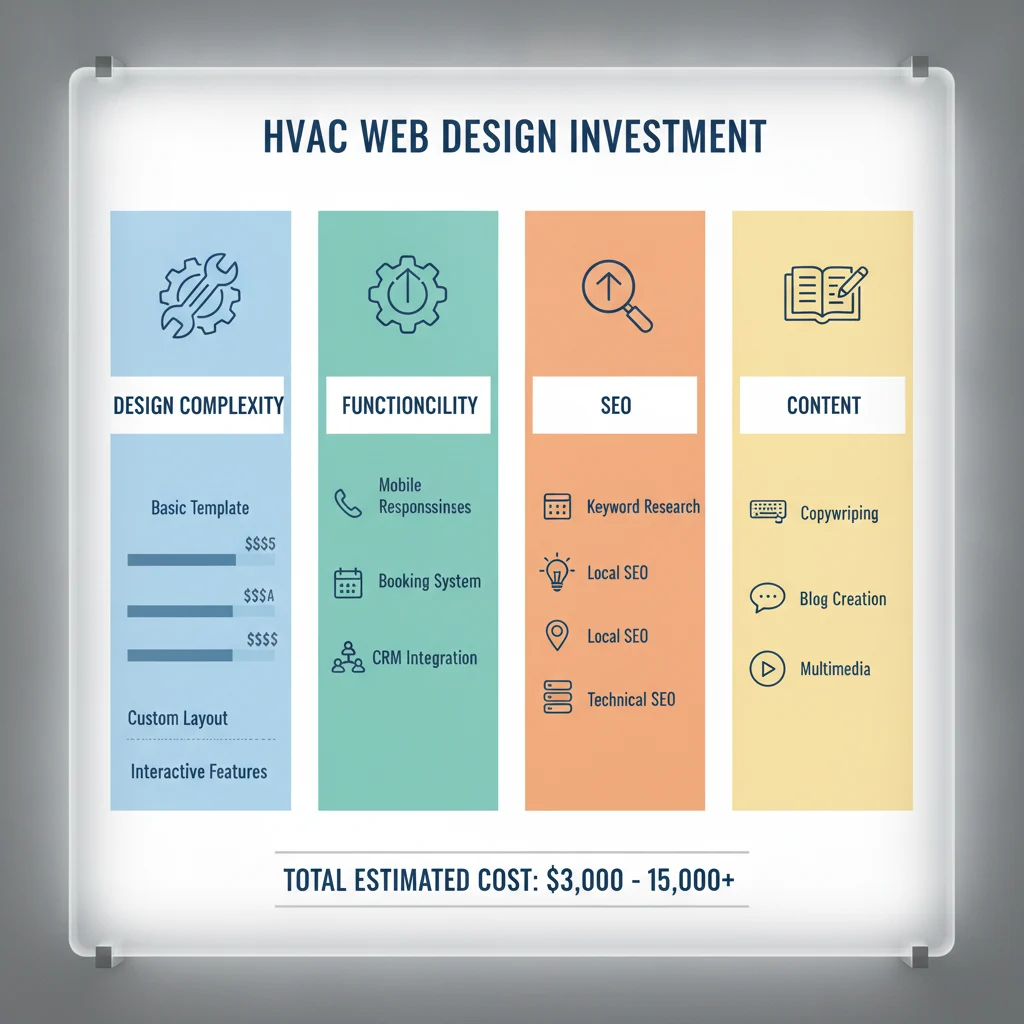
Expect professional website builds configured for the trades to start in the mid-four-figure range for basic platforms and rise past five figures for complex platforms containing custom quote calculators, automated dispatch webhooks, and extensive service-area architecture. In addition to upfront development, you must budget for monthly hosting, security maintenance, and API connections. Cheap monthly template programs might seem attractive, but they frequently retain ownership of your code, lock you out of data portability, and limit your ability to execute advanced search engine optimizations.
Budget realistically for professional photography, video assets, and technical copywriting. Stock photography featuring pristine air handlers in spotless European utility rooms destroys credibility. Homeowners want to see your branded vans, clean uniforms, and real technicians operating inside homes identical to their own. Factoring professional media production into your website development budget pays dividends across every marketing channel you run.
Tracking Core Production: What Actually Matters
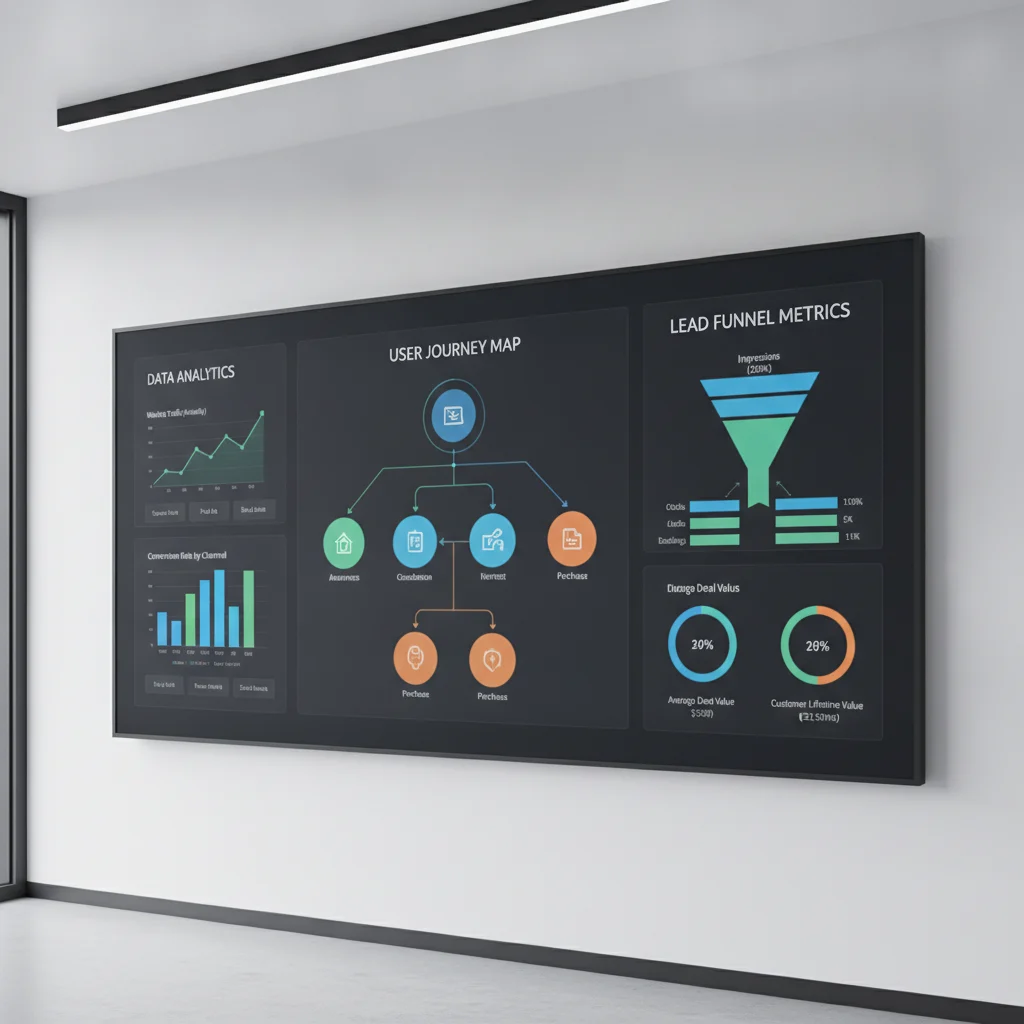
Too many HVAC business owners judge their website by vanity metrics such as total page views or raw form fills. When running professional digital marketing for hvac, your website analytics must track real business production metrics tied to dispatched revenue.
Your platform must integrate dynamic call tracking numbers that swap based on traffic source, capturing whether a caller originated from organic search, paid search ads, local map packs, or social channels. This data must feed back into your analytics stack to report actionable metrics:
- Cost Per Booked Job: Dividing marketing and site expenses by actual service calls run by technicians.
- Replacement Form Conversion Rate: The percentage of quote-calculator completions that convert into scheduled in-home estimates.
- Mobile Click-to-Call Rate: The ratio of mobile visitors who initiate a direct telephone call from the header banner during business hours.
- Lead-to-Dispatch Velocity: The average time elapsed between web form submission and a customer service representative confirming an appointment.
Reviewing these production numbers regularly—guided by established HVAC marketing performance metrics—reveals whether your website is functioning as a profitable operational asset or leaking potential revenue.
Where Most HVAC Platforms Fail: Common Pitfalls
Even well-intentioned web updates can fail if basic operational realities of the trades are ignored. Understanding common pitfalls protects your business from expensive redesign cycles.
The most frequent failure is unoptimized mobile performance. HVAC websites are often built and approved on large desktop monitors by managers sitting in air-conditioned offices. In the field, customers interact with your site on cracked smartphone screens in boiling attics or freezing basements. Large, uncompressed video backgrounds, clunky dropdown menus, and pop-up chat widgets that cover call buttons cause immediate site abandonment.
Another common breakdown is neglecting service-radius verification. If your website collects leads indiscriminately across an entire metropolitan region, your dispatchers waste hours calling back customers who live beyond your operational borders. Build address validation or postal code lookups directly into your forms so out-of-area inquiries are politely filtered out or routed to automated referral programs before tying up staff.
Finally, treating web development as a one-time project guarantees stagnation. Browser standards evolve, forms break when CRM APIs update, and seasonal demand swings require continuous shifts in prominent calls to action. A set-it-and-forget-it platform slowly degrades, costing you market share to competitors who actively refine their digital infrastructure. Partnering with a dedicated agency like ITZ Digital ensures your site remains technically sound, secure, and aligned with modern conversion standards.
Operational Checklist: Auditing Your HVAC Platform
Before launching a new website or scaling paid advertising campaigns, run your current platform through this operational checklist to identify and patch conversion leaks:
- Mobile Accessibility: Verify that your primary phone number is persistently visible at the top of the mobile screen and initiates a phone call with a single tap.
- Load Speed Verification: Test key emergency landing pages on third-party mobile speed checkers to confirm they load in under 2.5 seconds on mobile connections.
- Integration Checks: Submit test requests through every multi-step intake form to ensure leads flow into your CRM with all customer data, tags, and service notes intact.
- Trust Signals: Ensure your state contractor license numbers, insurance details, and physical shop address are clearly stated in your site footer to comply with regional regulations and establish local credibility.
- Financing Visibility: Confirm that monthly financing payment plans are prominently promoted on every major system replacement landing page.
Executing these blueprints transforms your website from a passive overhead expense into your company's most reliable, consistent source of dispatched residential and commercial jobs.

 By Kayce Marty