Estate planning website services cost vary depending on whether your law practice needs a simple digital business card or an end-to-end client acquisition platform. A firm investing in basic foundational layouts will spend significantly less up front than a practice commissioning custom interactive intake workflows, local search architecture, and educational resource libraries.
Understanding your total estate planning website services investment requires looking past upfront design fees. A website is not an artistic showcase. For an elder law or estate planning attorney, your website serves as your primary intake officer, credential validator, and consultation scheduler. To evaluate the true financial equation, you must evaluate initial engineering costs, recurring maintenance, and the measurable return on your marketing spend.
The Core Cost Drivers of Legal Web Design
Two law firms can request proposals for a new web presence and receive wildly divergent estimates. The variance rarely stems from visual styling alone. Instead, pricing reflects the underlying digital infrastructure, strategic copywriting, and conversion pathways built into the system.
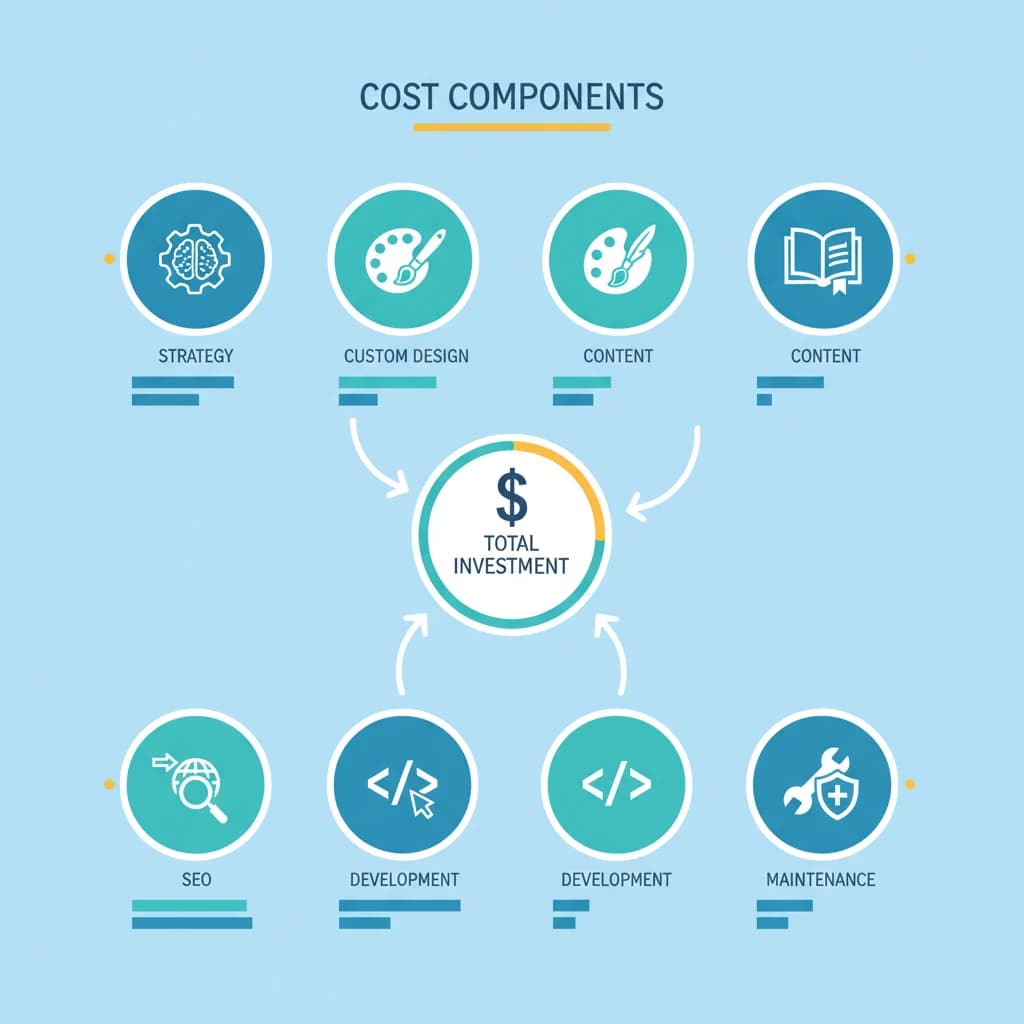
When assessing costs, your firm will encounter several primary billing categories:
- Custom Architecture vs. Standard Templates: Off-the-shelf templates require minimal developer hours, keeping initial fees low. However, pre-built themes often carry bloated code, slow loading times, and limited flexibility. Bespoke design constructs your site to mirror your specific consultation process, supporting higher conversion rates.
- Practice Area Content Strategy: Estate planning demands nuanced, highly accurate writing. Writing clear pages for revocable living trusts, irrevocable trusts, special needs planning, and probate administration requires technical legal fluency. Agencies that provide professional legal copywriting charge more, but they save your partners dozens of billable hours otherwise lost to drafting text.
- Interactive Intake and Scheduling: Integrating secure client intake portals, document upload capabilities, and automated calendar scheduling increases the technical scope. These tools reduce friction for prospective clients who want to secure a consultation immediately.
- Technical Search Engine Foundation: Proper site architecture, structured data markup, schema for legal practices, and on-page optimization demand deliberate technical execution before launch.
Firms seeking transparent, performance-driven web assets can explore our dedicated website services to see how structural decisions impact overall firm growth.
Hidden Retainers vs. Results-Oriented Asset Tracking
Traditional legal marketing agencies frequently bundle website production into long-term, multi-year contracts with opaque management fees. In these models, your firm pays an ongoing monthly retainer without clear accounting of what hours went toward developer maintenance, content creation, or actual optimization.
Even worse, some vendors retain ownership of your domain, your content, or your website design files. If you decide to part ways, you may discover that you were merely renting your firm's digital storefront. When the contract ends, your website disappears, forcing your practice to start over from scratch.
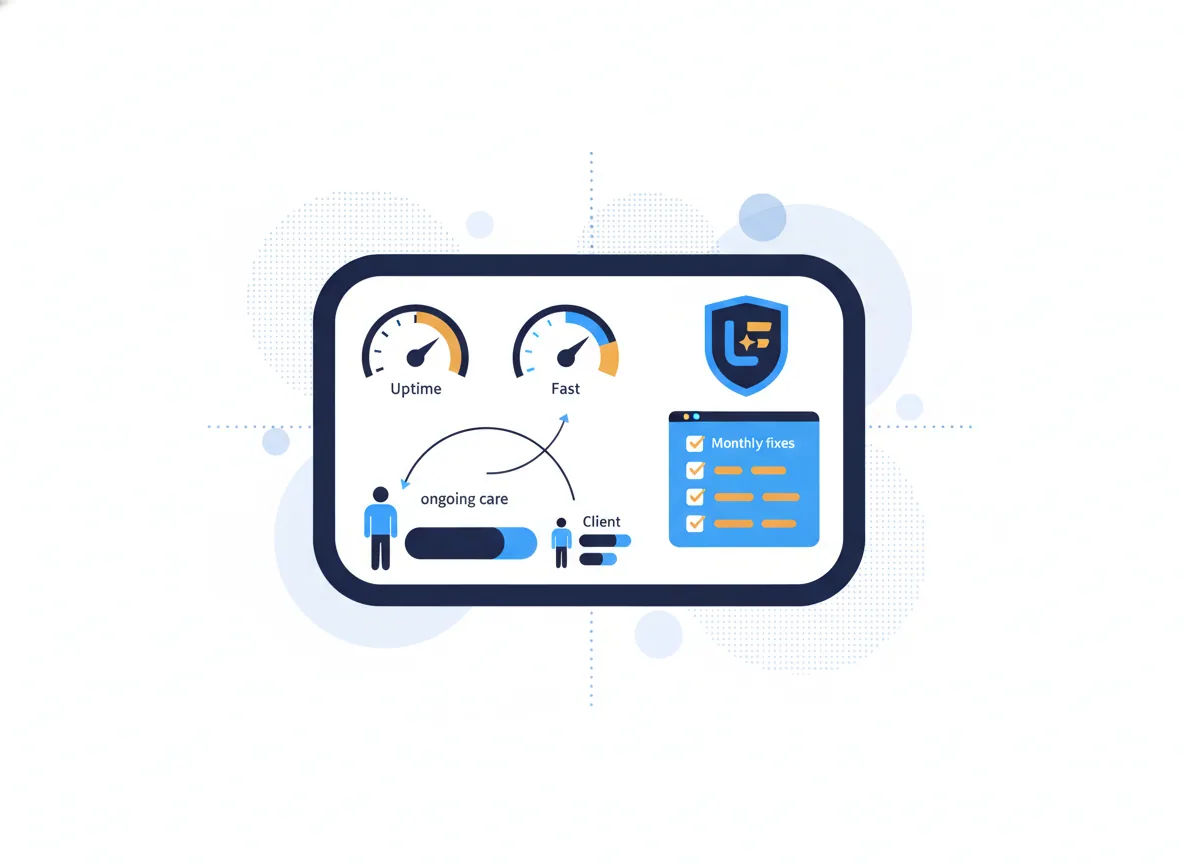
A modern, transparent billing model separates infrastructure builds from ongoing growth services. You should always own your digital assets outright, including the domain, visual assets, code repository, and client database. When analyzing ongoing maintenance proposals, demand a direct accounting of deliverables:
- Routine core, theme, and plugin security updates.
- Automated off-site database backups.
- Uptime tracking and server speed monitoring.
- Form testing to ensure prospective client consultations never fail silently.
- Direct technical support hours without surprise hourly billing spikes.
Partnering with ITZ Digital ensures your practice retains full ownership of every digital asset while eliminating the wasteful overhead typical of bloated legacy agency retainers.
Budgeting Honestly for Your Digital Infrastructure
Budgeting for a legal platform requires categorizing your spending into capital expenditures and operational investments. Treating your web presence as a one-time transaction leads to stagnation, technical debt, and lost market share.
Upfront Development Outlays
Your initial project cost covers discovery, information architecture, wireframing, professional design, development, content creation, and search setup. Rushing this stage or selecting the lowest bidder usually leads to a site that fails to project authority. Clients seeking estate planning guidance are preparing for vulnerable life transitions. If your site looks outdated, broken, or careless, visitors will assume your legal work shares the same traits.
Hosting, Security, and Compliance
Law firms handle sensitive prospective client data. Skimping on shared budget hosting creates security risks and page-speed bottlenecks. Budgeting for dedicated, managed WordPress hosting or modern cloud hosting guarantees fast page rendering, active firewall defenses, and SSL encryption. Furthermore, your practice must account for ongoing compliance standards, including ADA accessibility requirements and state bar advertising guidelines.
Ongoing Marketing and Content Expansion
A pristine website sitting on an isolated server produces no value without qualified traffic. To scale estate planning online, your budget must account for consistent visibility campaigns. Whether you invest in local search engine optimization, content marketing around estate tax updates, or targeted advertising, your site requires sustained attention. You can view our complete scope of our services to understand how development pairs with client acquisition strategies.
Calculating ROI and Estate Planning Customer Acquisition
Evaluating your digital investment becomes straightforward once you measure client acquisition costs against real case values. Unlike consumer products with low margins, estate planning services carry substantial lifetime client values.
A single engaged client seeking a comprehensive revocable living trust package, asset protection planning, or probate representation provides significant revenue to your practice. Furthermore, estate planning clients frequently return for trust amendments, estate administration upon death, and family referrals. A single well-executed estate plan can lead to multigenerational legal representation for children and extended family members.
To assess your return on investment, look at the mathematics of conversion:
- Traffic Volume: The qualified prospective clients visiting your practice area pages every month from your local market.
- Conversion Rate: The percentage of those visitors who complete an intake form, initiate a live chat, or call your office to request an initial consultation.
- Retainer Rate: The percentage of consultations your attorneys successfully convert into fee-paying clients.
If your website overhaul increases your site conversion rate even modestly, the operational impact compounds. A firm converting slightly more monthly traffic into booked consultations will cover its entire website engineering cost in a matter of months simply from estate planning customer acquisition gains.
What Typically Goes Wrong With Legal Web Design Projects
Law practices routinely experience frustration during website redesigns. Understanding common pitfalls protects your partners from wasted capital and delayed launches.
Vague Scope and Scope Creep
Web development projects stall when deliverables are not clearly documented before coding begins. Without a precise scope of work detailing page counts, revision limits, and exact integration points, projects drag on for months past their estimated completion dates. Ensure your agreement defines every deliverable, timeline milestone, and approval window explicitly.
Content Bottlenecks
The single most frequent cause of project delays is content production. Agencies often expect busy attorneys to draft forty pages of practice area text between client meetings and court appearances. Weeks turn into months as drafts sit unwritten. Avoid this failure mode by hiring a team that provides end-to-end legal content production, requiring only factual review and partner approval.
Failing to Track Real Conversion Events
Many law firm websites launch without basic analytics tracking configured. The agency marks the project complete, but nobody set up phone call tracking, form submission goals, or consultation event tags. Without tracking, you cannot determine which practice areas generate phone calls and which pages lose prospective clients. Transparent asset tracking must be built into the foundation prior to launch.
Neglecting the Mobile Experience
A significant portion of individuals researching trust administration, powers of attorney, and elder care options do so on mobile devices or tablets while assisting aging parents. Websites engineered solely for desktop monitors often present microscopic text, unclickable phone numbers, and cumbersome intake forms on mobile screens. A compromised mobile user experience directly depresses your firm's conversion rates.
Reviewing our past case studies illustrates how fixing these systemic operational problems produces measurable increases in booked client appointments.
Strategic Steps to Scale Estate Planning Online
Transitioning from an underperforming static website to a high-efficiency growth asset requires a disciplined sequence of steps. Your firm can systematically upgrade its digital positioning without wasting marketing dollars on unproven tactics.
First, audit your existing site to identify broken intake workflows, slow-loading templates, and content gaps. Next, clarify your core practice specialties. General practice websites that treat estate planning as a secondary bullet point struggle to rank against dedicated estate and probate practices. Your digital marketing for estate planning should emphasize your distinct authority in wealth transfer, business succession, or special needs trusts.
Finally, align with an agency partner that respects your bottom line and treats your digital footprint as an investment asset rather than an artistic hobby. You can about us and our practical operational philosophy to see how we help small businesses eliminate marketing waste and capture predictable local market share.
The Long-Term Value of Transparent Website Engineering
Investing in your firm's website is an operational decision that dictates your customer acquisition efficiency for years to come. By rejecting hidden monthly markups, demanding full ownership of your digital assets, and prioritizing user-focused conversion pathways, your estate planning practice creates a competitive advantage that compounds over time.

 By Kayce Marty