Optimizing estate planning website services for high-ROI acquisition requires structuring your digital presence around specific client intent rather than building a generic firm brochure. You achieve this by pairing dedicated practice area funnels with behavioral tracking, progressive intake forms, and automated qualification workflows that turn passive visitors into scheduled consultations.
Estate planning is deeply personal and emotionally fraught. Prospective clients do not search for legal counsel casually. They search because an aging parent fell ill, a child was born, a spouse passed away, or they experienced a major wealth event. When a firm treats its site like a static digital business card, it fails to meet prospects where they are. To deploy effective website services that drive actual revenue, your firm must build an intentional system engineered for conversion.
The Architecture of High-ROI Estate Planning Websites
Most legal websites make the mistake of dumping all services onto a single page titled Practice Areas. This structure damages search engine rankings and confuses users who arrive with a single urgent problem. An individual dealing with an uncooperative probate court does not care about your special needs trust packages at that moment.
To build an infrastructure capable of sustained growth, your site architecture should follow a modular model:
- Dedicated Practice Funnels: Create standalone pages for revocable living trusts, probate administration, guardianship, elder law, and high-net-worth tax planning. Each page must present the problem, outline the steps your firm takes, answer common friction points, and provide a direct path to book an intake call.
- Persona-Specific Entry Points: Structure navigation around life events. A navigation menu featuring pathways like Planning for Young Families, Caring for Aging Parents, or Protecting Business Assets helps visitors identify the exact solution they need within five seconds of landing.
- Frictionless Direct Booking: Integrate scheduling software directly into high-intent pages. Do not force an interested client to fill out an open-ended comment box and wait forty-eight hours for an email response. Offer immediate time slots for an initial consultation.
When you align the technical layout of your site with the real-world motivations of your clients, your paid and organic marketing immediately becomes more cost-effective. Discover how our team builds these systems by reviewing how we help firms grow through deliberate digital infrastructure.
User Behavior Mapping for Estate Planning Prospects
Effective digital marketing for estate planning relies heavily on user behavior mapping. You cannot fix conversion leaks until you understand how different visitors move through your digital assets. Estate planning prospects generally fall into two distinct psychological profiles: crisis-driven and proactive planners.
Crisis-Driven Visitors
Crisis-driven visitors are dealing with an immediate event, such as a relative who recently died without a will or a parent who urgently requires Medicaid planning for memory care. These users skim content rapidly. They look for immediate geographic proximity, clear statements of authority, and instant contact methods. For these users, your site must provide click-to-call numbers in the header, persistent sticky mobile call buttons, and brief intake options that do not demand extensive paperwork upfront.
Proactive Planners
Proactive planners, such as young couples drafting their first will or business owners structuring a succession plan, take a deliberate research approach. They read multiple pages, look through attorney credentials, check fee structure transparency, and evaluate downloadable guides. For this cohort, your site must provide comprehensive informational assets, such as trust comparison tables, estate tax threshold explainers, and video overviews explaining what happens during an initial meeting.
By installing heatmapping tools and event-tracking scripts on your landing pages, you can measure scroll depth, identify where users abandon forms, and adjust page copy to eliminate hesitations. When done right, user behavior mapping removes the guesswork from web design.
Automated Lead Capturing Cascades
A major leak in traditional estate planning customer acquisition is the binary call-to-action. Most legal websites offer only one option: Call us today for a consultation. Visitors who are not ready to commit to a phone call simply bounce, leaving your firm with zero contact details after paying for the traffic.
An automated lead capturing cascade solves this issue by deploying multiple conversion thresholds based on the visitor readiness level:
- Tier 1: Direct Intake (High Intent). For visitors ready to hire counsel, embed a streamlined intake calendar. Limit fields to name, email, phone number, and a simple dropdown for the planning topic. Every additional form field you add reduces your submission rate.
- Tier 2: Interactive Self-Assessments (Medium Intent). Visitors weighing their options respond well to interactive tools, such as an Estate Readiness Assessment or a Probate Exposure Calculator. These tools provide tangible value while collecting contact information and crucial qualification data before you ever speak to the prospect.
- Tier 3: Educational Asset Downloads (Research Intent). For early-stage researchers, offer targeted lead magnets, such as a Florida Trust Administration Checklist or a Guide to Protecting Digital Assets. Once downloaded, an automated email sequence delivers high-value educational content over two to three weeks, keeping your firm top-of-mind until the client is ready to retain an attorney.
Implementing this multi-tier cascade ensures you capture value from a significantly higher percentage of your overall traffic. You can evaluate the broader commercial impact of these conversion funnels by checking our recent client performance records.
Audience Segmentation Configurations for Retargeting
Even the highest-converting estate planning websites see seventy to eighty percent of first-time visitors leave without taking action. Because legal decisions carry significant emotional weight, the sales cycle often spans weeks. You must configure precise custom audiences to re-engage these prospective clients across Google and social channels.
Avoid generic retargeting ads that push your firm logo to everyone who visited your homepage. Segment your audiences based on the precise service pages they viewed:
- Probate Audience: Visitors who spent more than thirty seconds on probate pages should see educational messaging addressing statutory deadlines, executor duties, and methods to resolve sibling asset disputes.
- Parental Planning Audience: Visitors who reviewed guardianship documents should see targeted messaging focused on protecting minor children and avoiding state intervention.
- High-Net-Worth Segmentation: Users visiting irrevocable trust and business succession pages should receive content highlighting asset preservation and federal estate tax mitigation.
Deploying tailored creative to distinct audience segments keeps your acquisition costs manageable while steadily building credibility. To learn more about synchronizing paid retargeting with your web assets, review our complete scope of marketing services.
The Honest Cost of Estate Planning Website Services
Evaluating an estate planning website services investment requires treating your website as an operational sales tool rather than a design expense. Cheap templates built on slow, unmanaged hosting often cost law firms thousands of dollars per month in missed retainers.
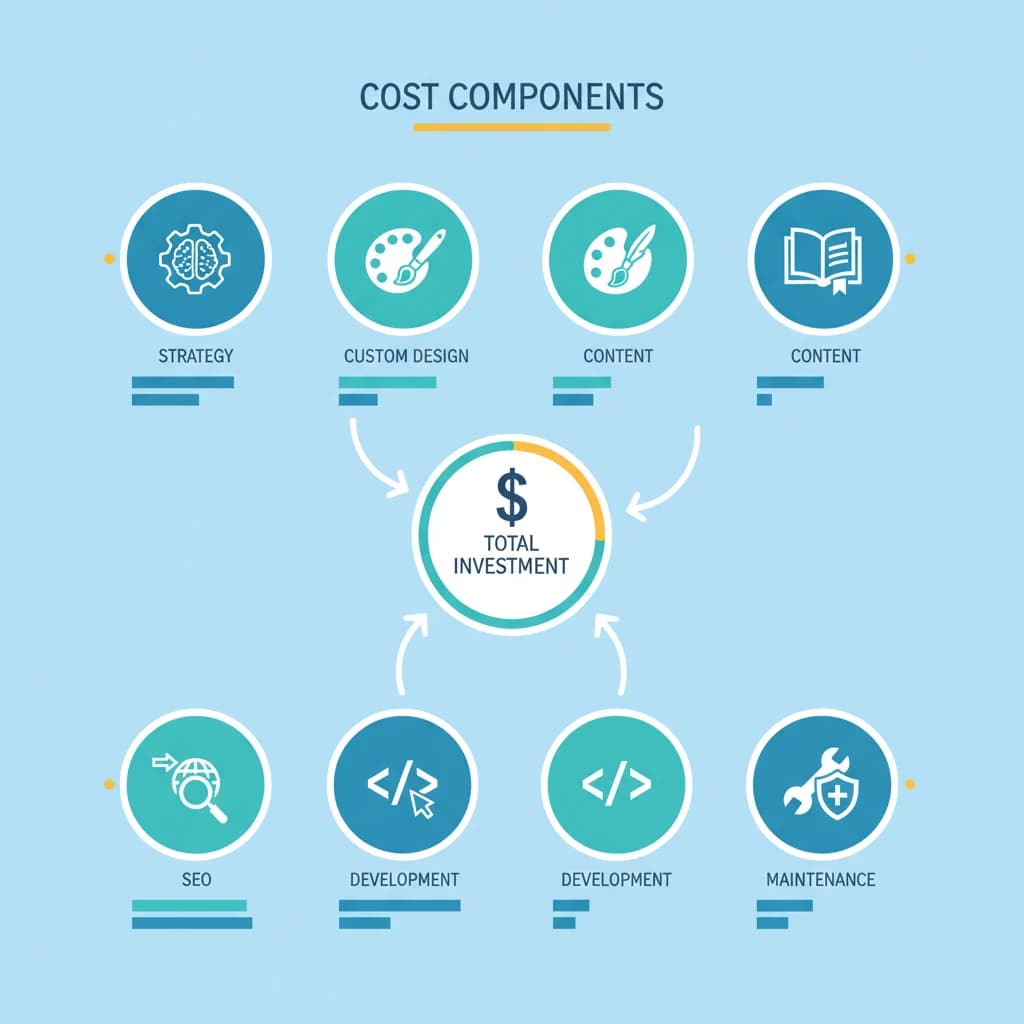
A modern, conversion-engineered website for an estate planning firm typically requires an initial investment between three thousand and ten thousand dollars. The variance depends on the complexity of your custom funnels, whether you need custom intake software integrations, and the depth of practice-area content production required. For high-volume multi-attorney firms, platforms with custom client portals and automated document delivery can exceed this range.
In addition to development, firms must budget for ongoing maintenance, split-testing, and hosting infrastructure. Expect ongoing optimization retainers to run from several hundred to a few thousand dollars monthly. If your average estate planning package commands three to five thousand dollars, your site only needs to produce one or two additional retained clients each month to generate a positive return on investment. Budgeting should always anchor to your average retainer value, not the lowest development quote available.
Where Estate Planning Website Projects Typically Fail
Many law firms invest in redesigns only to see lead volume remain flat. Understanding common pitfalls helps you protect your capital and build an asset that performs consistently:
- Writing for Other Attorneys: Law firm websites are notoriously guilty of dense, academic language. Clients do not search for testamentary capacity or per stirpes distributions. They search for how to protect their money and their families. Write at an eighth-grade reading level using active, empathetic phrasing.
- Slow Load Speeds on Mobile: Over half of legal searches happen on mobile devices. If your website takes more than three seconds to render, potential clients hit the back button and call the next firm on the search results page. Complex animations and uncompressed imagery kill conversion rates.
- Ignoring Local Search Foundations: Estate planning is fundamentally local. Failing to embed local schema markup, maintain uniform name, address, and phone details, or build location-specific service pages limits your organic reach in your target zip codes.
- Failing to Track Real Retainers: Measuring clicks, page views, and generic form submissions is not enough. You must track which specific pages, campaigns, and lead magnets result in booked consults and signed fee agreements. Without closed-loop tracking, firms frequently cut budgets on the exact pages that bring in their most profitable cases.
Partnering with a focused growth team prevents these missteps. Learn how our small business marketing agency helps law firms scale estate planning online through data-backed web platforms.
Growth Checklist: Building a Sustainable Client Acquisition Pipeline
Use this operational checklist to evaluate whether your current estate planning platform is built to acquire high-value retainers consistently:
- Technical Baseline: Does your site achieve high mobile performance scores, load in under two seconds, and hold an active SSL certificate?
- Service Architecture: Do you have individual pages for every core legal service rather than a consolidated list?
- Trust Signals: Are bar admissions, client reviews, professional association badges, and real attorney portraits clearly visible above the fold?
- Progressive Intake: Do you offer multiple contact options, including direct scheduling and self-assessment tools, alongside traditional phone numbers?
- Event Tracking: Is Google Analytics configured to measure button clicks, phone calls, form completions, and calendar bookings separately?
- Follow-Up Automation: Are incoming form inquiries connected directly to your CRM to ensure every lead receives an immediate confirmation text or email?
When these components operate together, your website stops acting as an overhead expense and becomes your most predictable channel for new client acquisition.

 By Kayce Marty