
 By Kayce Marty
Web Design
Strategic Roofing Web Design Playbook: Vetted Best Practices for High Conversion
Learn how to structure your roofing website to capture more leads, handle audience segmentation, and budget for your digital presence.
8 min read
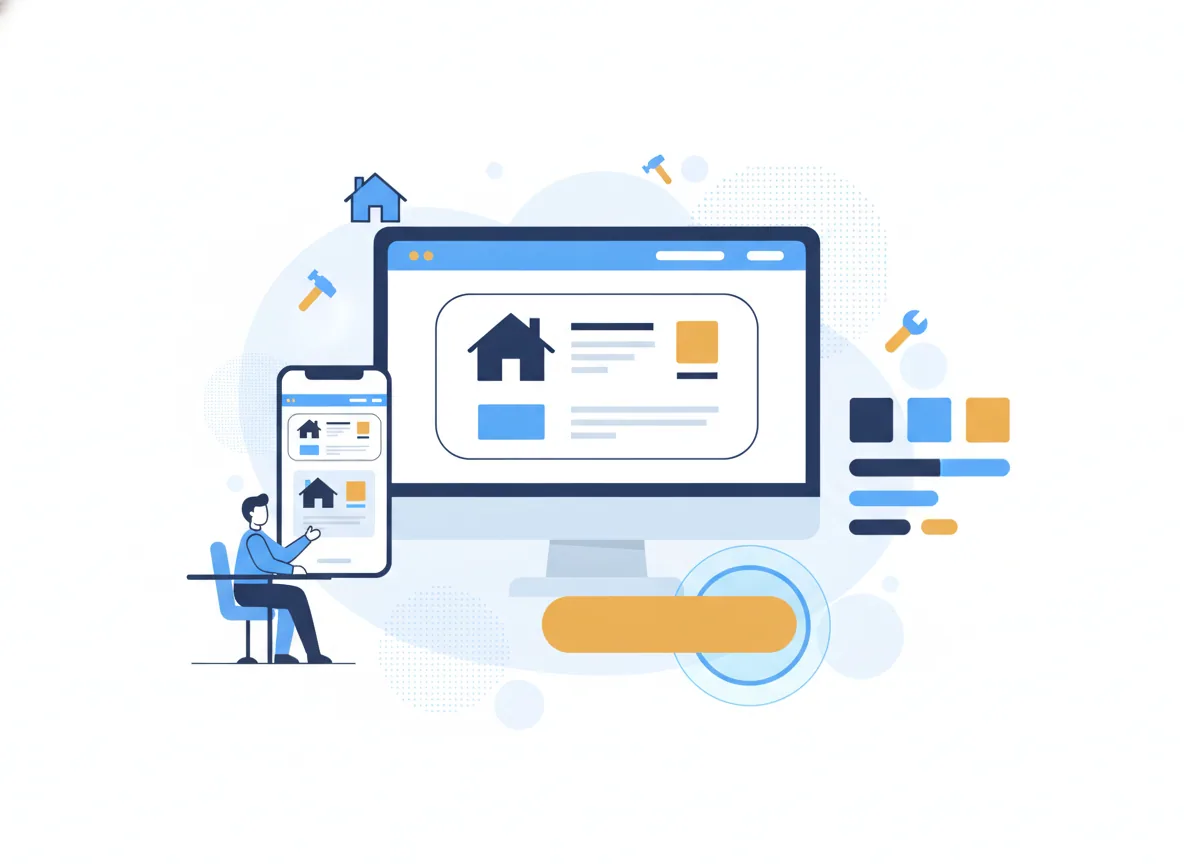
A professional roofing web design investment typically ranges from $3,500 to $10,000 for a custom, lead-generating asset. Your exact cost depends on the size of the site, the complexity of local SEO integration, and the specific features required to capture estimate requests. You can build a site for less using a DIY builder, but a functional asset designed to drive roofing customer acquisition requires professional architecture.
Understanding where your money goes prevents overpaying for basic features. A high-efficiency roofing website combines speed, user experience, and search engine visibility. Here is a breakdown of standard pricing ranges based on project scope.
Before any design work begins, your site needs an address and a place to live. Domains cost around $15 to $20 per year. Hosting costs vary based on server quality. Cheap shared hosting runs $5 to $10 a month, but it leaves your site vulnerable to crashes during traffic spikes, like after a major hailstorm when local homeowners are searching for rapid inspections. Premium, dedicated hosting costs $30 to $100 a month and ensures your site loads instantly and remains secure from malicious traffic.
The bulk of your roofing web design investment goes into design and development. You are paying for a strategic layout that guides a stressed homeowner toward calling your office or filling out an estimate form.
Homeowners do not hire roofers based on stock photos. They hire contractors who sound professional, local, and competent. Writing comprehensive copy for a roofing website requires industry knowledge. A standard 15-page site requires detailed explanations of your inspection process, storm damage protocols, and warranty information. Expect to allocate $1,000 to $2,500 of your total budget to professional copywriting if you want the site to convert visitors into booked jobs.
Many roofing contractors burn through thousands of dollars on websites that fail to produce a single qualified lead. The failure usually stems from structural traps, predatory agency billing models, and a total lack of transparency.
The most common disaster in digital marketing for roofing is not owning your own assets. Some agencies register your domain name under their own account. When you decide to switch providers, they hold the domain hostage, forcing you to start over with a new URL and zero domain authority. Always register your domain yourself or mandate in your contract that your roofing company is the sole legal owner.
Avoid agencies that build your site on their own closed-source content management system. If you cancel your monthly retainer, your website disappears. You cannot migrate a proprietary site to a standard host. Demand an open-source platform like WordPress. You pay for the build, you own it, and you can take it to any developer in the world.
Some agencies pitch a $1,500 website build to win the contract, only to reveal hidden fees for basic functionality. They charge extra for mobile responsiveness, extra for SSL certificates, and extra to integrate a basic contact form. A proper quote includes all foundational elements required for the site to function safely and effectively on the modern web.
A frequent failure in web design is prioritizing aesthetics over functionality. A site might feature stunning drone video of a roof replacement in the header, but if that video takes eight seconds to load on a mobile connection, the user will leave. If the request an estimate button is buried at the bottom of a block of dense text, the phone will not ring. Beautiful sites without clear conversion paths are just expensive digital brochures.
The marketing industry is notorious for obscuring costs. We design transparent, scalable billing profiles that eliminate marketing waste. You need to distinguish between the one-time cost of building the asset and the ongoing cost of marketing the asset.
Once your site launches, you will encounter monthly fees. Legitimate monthly retainers fall into two distinct categories: maintenance and marketing.
Waste occurs when agencies charge a high monthly fee for SEO but only provide passive hosting. They send automated traffic reports showing raw visitor numbers without tying those metrics to actual pipeline value. We focus on contrasting hidden management fees vs results-oriented asset tracking. You should know exactly what work was completed each month and how that work impacted your cost per booked job.
A website is an employee that works 24 hours a day. Measuring the return on investment requires looking past vanity metrics like total traffic and focusing on hard revenue and closed estimates.
Consider a custom roofing website that costs $6,000 to design and build. The national average for a full residential roof replacement is roughly $10,000, with gross profit margins often sitting between 25% and 40%. A single booked roof replacement yields $2,500 to $4,000 in gross profit.
If your new $6,000 website generates just two replacement jobs that you would not have otherwise captured, the asset has entirely paid for itself. Every lead generated from that point forward operates at a massive profit margin, minus only the minimal monthly maintenance costs.
Beyond the immediate break-even point, you must factor in the lifetime value of a customer. A homeowner who uses your firm for a minor repair today is highly likely to call you back for a full replacement in five years, provided you maintain the relationship. A high-converting website secures the initial contact that makes long-term retention possible.
To truly scale roofing online, you must track your cost per acquisition. If your website brings in 30 leads a month organically, and you close 10 of those leads into jobs, your organic CPA drops significantly compared to buying shared leads from third-party directories. The upfront design investment is a capital expenditure that aggressively drives down your long-term cost per booked job.
Launching a website without a search engine optimization structure is like opening a physical office but keeping the sign hidden. A functional site requires built-in SEO from day one to ensure Google understands exactly what you do.
Roofing contractors often make the mistake of listing all their services on one page. Google indexes individual pages, not entire websites. If a homeowner searches for metal roof installation, Google wants to serve them a page dedicated entirely to metal roofing. A high-efficiency site includes dedicated pages for roof repairs, replacements, storm damage inspections, commercial roofing, gutters, and siding. This structure signals authority to search engines and clearly answers the user's specific query.
Roofers rarely serve just one town. A structured website includes location pages for every major city and county in your service radius. This geographic targeting allows you to capture traffic from neighboring areas where you do not have a physical office address, expanding your footprint without opening a new branch.
The code underneath your site dictates how easily search engines can crawl it. Proper use of header tags, optimized image sizes, clean URL structures, and schema markup for local businesses are non-negotiable. Schema markup tells search engines exactly who you are, what geographic area you serve, and what services you provide. This data feeds directly into local map packs and organic rankings.
A standalone website only goes so far. It must serve as the central hub for all your marketing efforts. When you run Google Ads or Meta Ads, you pay for every click. Sending that paid traffic to a slow, poorly designed website wastes your advertising budget.
When someone clicks a Google Ad for emergency roof leak repair, they should not land on your home page. They should land on a dedicated repair page with a click-to-call phone number at the very top. A structured web build includes specific landing pages designed to match the intent of your advertising campaigns. This lowers your cost per click and increases your overall conversion rate.
You need to know exactly which marketing channel is working. A professional web design integrates dynamic number insertion and advanced form tracking. When a lead comes in, your CRM should tell you if they found you through an organic search, clicked a Google Ad, or followed a link from a local directory. This data allows you to cut spending on failing channels and double down on what works.
Transparency extends to the calendar. Building a custom, high-converting roofing website takes time. Expect the process to take four to eight weeks from the initial kickoff meeting to the final launch. Gathering high-resolution photos of your past jobs, writing detailed copy, and testing the site across all device types cannot be rushed without sacrificing quality.
Once the site is live, organic traffic does not arrive overnight. It typically takes search engines three to six months to crawl, index, and rank a new website in a competitive local market. During this waiting period, we strongly recommend running targeted Google Ads directly to the new site. This strategy generates immediate inbound leads while the organic foundation builds strength.
Your website is a living asset. You cannot launch it and forget it. To get the highest return on your investment, you must consistently feed the site with new data.
Upload photos of recently completed roofs. Add case studies detailing how you navigated complex storm damage insurance claims for local homeowners. Keep your team page updated to build trust. Every new piece of relevant content signals to search engines that your business is active, authoritative, and ready to serve your local market.
Partnering with a dedicated agency ensures your digital presence scales with your physical operations. By demanding clear pricing, full ownership of your assets, and a layout engineered for conversions, you transform a simple expense into a consistent revenue engine for your roofing business.
A professional roofing website typically costs between $3,500 and $10,000, depending on the number of pages, custom design features, and integrated local SEO elements. A basic template site runs on the lower end, while a custom lead-generation asset with advanced routing and fast load speeds sits higher.
Yes, monthly maintenance fees are worth it if they cover crucial updates like security patching, plugin updates, and regular backups. Expect to pay $100 to $300 monthly for reliable hosting and upkeep. Avoid contracts that charge hundreds just to host a static page with no ongoing optimization.
A new roofing website usually takes three to six months to start generating organic leads. Search engines need time to crawl, index, and rank your new pages. However, you can run Google Ads immediately to a new site to start capturing booked jobs while the organic traffic builds.
Agencies often charge hidden fees to pad their margins by separating basic requirements like mobile optimization, SSL certificates, or basic on-page SEO from the initial build cost. Always ask for an itemized contract that clearly outlines ownership of the domain, site assets, and the exact project scope.
Keep reading
Web Design
Learn how to structure your roofing website to capture more leads, handle audience segmentation, and budget for your digital presence.
Meta Ads
Stop wasting money on generic boosted posts. Learn the exact targeting, creative, and lead-capture systems that generate high-intent roofing leads on Meta.
Meta Ads
Understand how much to invest in roofing Meta Ads and how to structure your campaigns for transparent, scalable growth without wasting budget.
Find out how we can help your business succeed.
Free audit of your market, your competitors and the gap between them.
Free audit · No obligation · No long-term contract