
 By Chris Lee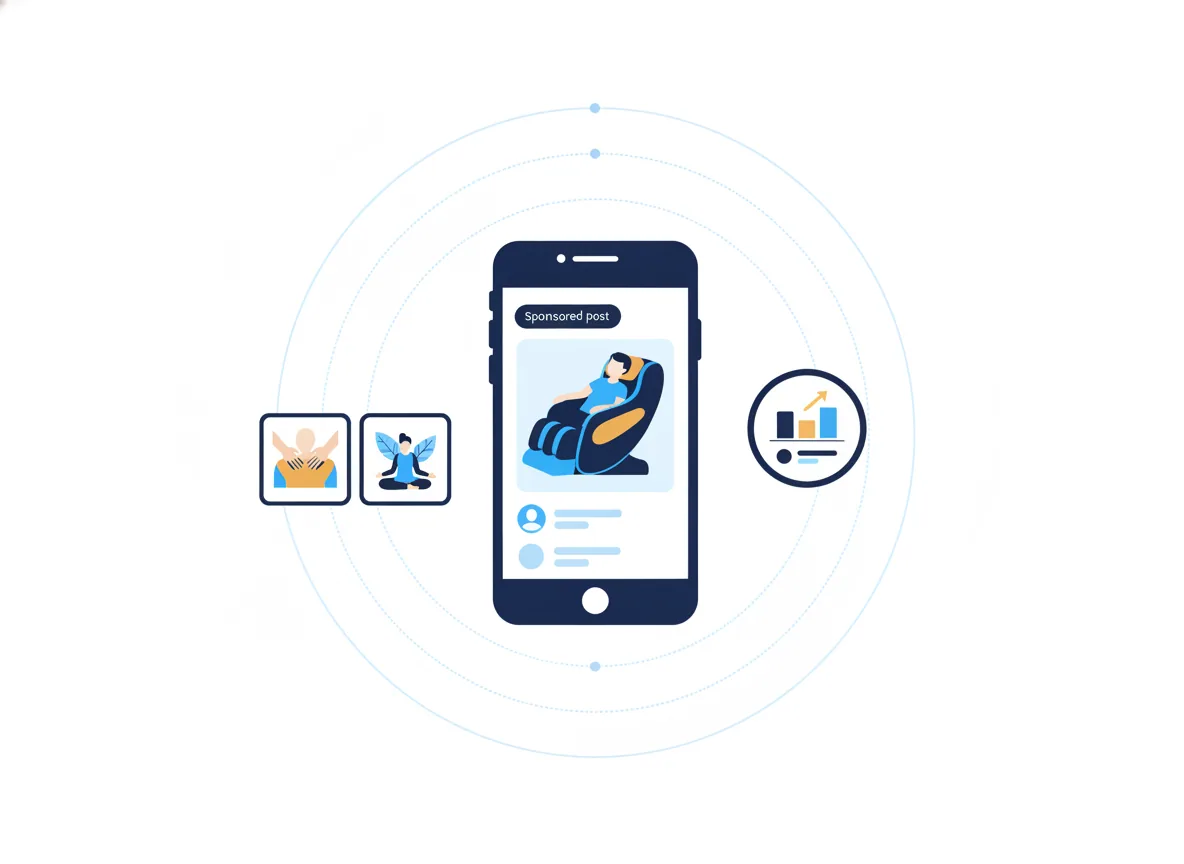
Meta Ads
How Much Does Massage Therapy Meta Ads Cost? Pricing and ROI Analysis
Learn the true cost of running Meta Ads for your massage therapy practice. Discover standard ad budgets, hidden fees to avoid, and realistic ROI expectations.
8 min read

Proven massage therapy Meta Ads blueprints rely on hyper-local audience segmentation, direct-response offers, and automated follow-up sequences that turn clicks into booked appointments. You do not need to guess what works when running digital marketing for massage therapy. Instead, you need a structured operational playbook that maps exactly how potential clients behave on social media and forces your advertising dollars to intercept them at the right moment. The goal is straightforward: acquire new clients at a predictable cost and keep your therapists' schedules full.
Successful advertising on Facebook and Instagram requires moving beyond simple boosted posts. A true blueprint functions as a comprehensive ecosystem that guides a user from total unawareness to a confirmed booking on your calendar. This ecosystem is built on two foundational pillars: understanding why people book and automating how you capture them.
People scrolling through Meta platforms are not actively searching for a massage in the same way they might on Google. They are looking at photos of friends, reading news, or watching videos. Your ad must disrupt their scrolling pattern by addressing an underlying desire or pain point. User behavior mapping breaks your target market into distinct operational categories. First, you have the maintenance client. This person values relaxation, stress relief, and self-care. Their scroll-stopping triggers are aesthetic visuals, tranquil environments, and messaging centered on escaping daily pressure. Second, you have the pain-relief client. This includes athletes dealing with soreness, office workers with lower back pain, or individuals recovering from minor strains. Their triggers are anatomical explanations, deep-tissue techniques, and messaging focused on restoring mobility.
To effectively scale massage therapy online, your campaigns must address these behaviors separately. A generic ad promoting a massage will yield generic, expensive results. An ad specifically calling out runner's knee or desk-worker shoulder tension will generate cheaper clicks and higher conversion rates because it maps directly to a specific user reality.
The biggest operational failure in massage therapy customer acquisition occurs between the moment a user clicks an ad and the moment they actually book. Modern platforms require automated lead capturing cascades to bridge this gap. When a user clicks your offer, they should not be sent to a slow-loading homepage with a generic contact form. Instead, use Meta's native Lead Generation objective. This keeps the user on the Facebook or Instagram app, pre-filling their contact information automatically using the data Meta already has on file.
Once that lead submits their information, your cascade must trigger instantly. Relying on front desk staff to manually check a spreadsheet and call leads hours later destroys your conversion rate. Connect your Meta Lead Ads to a customer relationship management tool using an automation platform. Within one minute of the lead submitting their form, they should receive an automated SMS text message thanking them for claiming the offer and providing a direct link to your online booking calendar. Five minutes later, they should receive an email with the same information, plus details about what to expect during their visit. This cascade removes the friction of scheduling and captures the user while their intent is highest.
Meta's advertising algorithm is incredibly powerful, but it needs parameters. Setting up proper audience segmentation ensures your budget is spent on local residents who are actually capable of visiting your clinic.
Massage therapy is an inherently physical business. People will only drive so far for a standard appointment. Configure your location targeting to a specific radius around your physical address. In dense urban environments, this might be a three-mile radius. In suburban or rural areas, it might expand to ten or fifteen miles. Do not target an entire state or a massive metropolitan area if your clinic is tucked into a specific neighborhood. Tightly constrained radius targeting prevents you from paying for clicks from people who will ultimately decide the commute is too inconvenient.
Your cheapest source of revenue is the client who already knows, likes, and trusts your therapists. Export your list of past clients from your booking software, specifically isolating those who have not visited in the last ninety days. Upload this list into the Meta Ads Manager as a Custom Audience. Run a dedicated campaign exclusively to this group with a reactivation offer, such as a complimentary aromatherapy add-on or an extra fifteen minutes on their next session. Because this audience already trusts your brand, the cost per booked appointment will be significantly lower than acquiring cold traffic.
Not all clients are equal. Some come in once for a discounted offer and never return. Others book a ninety-minute deep tissue massage every two weeks. Export a list of your most frequent, highest-spending clients and upload it to Meta. Create a one percent Lookalike Audience based on this data. Meta will analyze the thousands of data points it has on your best clients and find other people within your geographic radius who share those exact behavioral traits, interests, and purchasing habits. This allows you to target high-quality prospects without relying on broad, untargeted demographics.
With your audiences configured and your automations in place, you need specific campaign types to drive traffic. A mature ad account runs several campaigns simultaneously to capture different segments of the market.
Cold traffic needs a compelling reason to choose your clinic over the competitor down the street. The direct-response introductory offer reduces the risk for a new client. This does not mean you have to devalue your services with massive discounts. Instead, package value. Offer a standard sixty-minute massage that includes a free hot stone upgrade, or a specific flat-rate price for first-time visitors. The ad creative should feature a high-quality, well-lit photograph of a clean, inviting treatment room in your actual clinic. The copy must clearly state the offer, the location, and the specific steps required to claim it. Click here, submit your info, and check your phone for the booking link.
Run separate campaigns that highlight specific modalities and the problems they solve. Create a video ad featuring one of your massage therapists demonstrating a stretch or explaining the benefits of myofascial release for chronic pain. The ad copy should speak directly to the symptoms. These campaigns build authority and trust. When a potential client sees a knowledgeable professional explaining exactly how they can fix a stiff neck, the barrier to booking drops dramatically. These ads often generate higher-quality, long-term clients who are less price-sensitive because they are seeking a specific medical or therapeutic outcome.
The majority of people who click your ads will not book on their first interaction. They might get distracted, their boss might walk by, or they might simply want to think about it. Set up a retargeting campaign that shows ads specifically to people who have interacted with your Facebook page, watched your videos, or opened your lead forms but did not submit them. This campaign should feature a slightly different angle, perhaps highlighting customer reviews, a video tour of the facility, or a gentle reminder that their special offer is expiring soon. Retargeting captures the low-hanging fruit that your initial campaigns left behind.
Understanding the financial mechanics of paid advertising is mandatory before launching campaigns. Your massage therapy meta ads investment must be treated as a mathematical acquisition channel, not a branding expense. Start with a testing phase. Allocate a daily budget of thirty to fifty dollars per campaign. This provides Meta's machine learning algorithm with enough financial fuel to test different users within your radius, learn who converts, and optimize ad delivery. Running ads on five dollars a day will not yield enough data to make informed operational decisions.
Focus your financial analysis on the Cost Per Acquisition (CPA), which is the total amount spent to get one person to walk through your door and pay for a service. Do not get distracted by cheap Cost Per Click (CPC) or Cost Per Lead (CPL) metrics. A campaign generating two-dollar leads that never book is worthless, while a campaign generating twenty-dollar leads that book at a fifty percent rate is highly profitable.
Calculate your allowable CPA by understanding your client Lifetime Value. If an average new client visits your clinic four times a year and spends one hundred dollars per visit, their annual value is four hundred dollars. Spending sixty dollars on Meta Ads to acquire that client makes complete financial sense. Map out your budget with the understanding that the first month of advertising is about buying data and establishing baseline metrics. Months two and three are about optimizing campaigns to lower the CPA and increase booking volume.
Even with a solid strategy, execution failures can destroy your advertising budget. Identifying these pitfalls early will save you thousands of dollars in wasted ad spend.
The most common point of failure is poor lead follow-up. If your automated cascade breaks, or if you rely entirely on manual phone calls, leads will go cold. A person who requests a massage appointment on a Tuesday afternoon usually wants a massage within the next forty-eight hours. If your front desk waits until Wednesday morning to call them, that prospect has already booked with a competitor. Speed to lead is the single most important operational metric once the ad campaign is live.
Another frequent failure is a disconnect between the ad creative and the landing page experience. If your Meta Ad promotes a prenatal massage special, but the link sends the user to a generic homepage where they have to hunt through a menu to find prenatal services, they will abandon the process. Every specific offer must lead to a specific, frictionless booking sequence. Ensure your mobile booking software is easy to navigate. If a user has to create a complex account, verify their email, and navigate a clunky interface just to select a time slot on their phone, your conversion rate will plummet.
Ad fatigue also plagues local service campaigns. Because your target radius is small, the same local residents will see your ad multiple times. After a few weeks, the ad becomes invisible to them, and your cost per lead will steadily increase. You must refresh your ad creatives regularly. Swap out the photos, change the headlines, and test new video formats every three to four weeks to keep the local audience engaged.
Executing this playbook requires systematic implementation. Use this operational checklist to ensure every piece of your Meta Ads infrastructure is built correctly before you spend your first dollar.
By treating your advertising as a structured, trackable system, you eliminate the guesswork from growing your clinic. Implement these proven blueprints, monitor your cost per booked appointment aggressively, and scale your budget as your calendar fills up.
Start your massage therapy Meta Ads investment with a daily budget of thirty to fifty dollars. This provides enough data for the algorithm to optimize delivery within a local radius. Once you establish a consistent cost per booked appointment, you can scale that budget up to capture more market share.
Lead generation forms combined with single-image or short video ads perform best for massage therapy customer acquisition. Keep the video under thirty seconds showing your clinic interior or a therapist explaining a specific modality. Send users directly to an embedded lead form rather than making them wait for a website to load.
You should see new leads within the first forty-eight hours of launching a well-structured campaign. However, fully optimizing your cost per booked job typically takes three to four weeks. The algorithm needs time to test different audience segments and ad creatives within your specific geographic area to find the most responsive prospects.
High clicks with zero bookings usually mean a disconnect between your ad copy and your booking page. If you advertise a specific sports massage discount but send traffic to a generic homepage, users will bounce. You might also be suffering from a slow mobile website or a complicated booking software interface.
Keep reading
Meta Ads
Learn the true cost of running Meta Ads for your massage therapy practice. Discover standard ad budgets, hidden fees to avoid, and realistic ROI expectations.
Website Services
Discover standard pricing tiers, hidden fees, and return-on-investment metrics for professional massage therapy website design and ongoing digital management.

Website Services
Learn how advanced website services, behavior mapping, and automated lead cascades help massage therapy clinics book more tables and outpace competitors.
Find out how we can help your business succeed.
Free audit of your market, your competitors and the gap between them.
Free audit · No obligation · No long-term contract