
 By Kayce Marty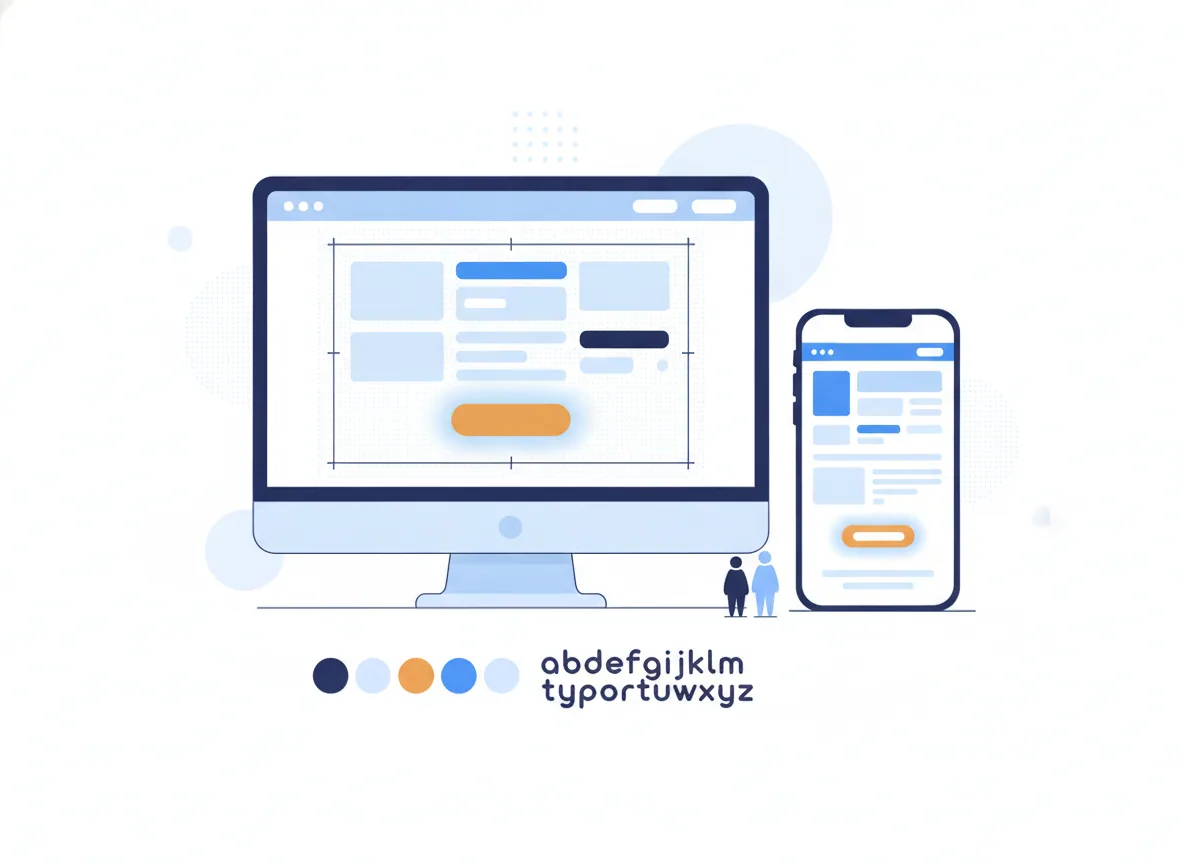
Web Design
The Tactical Guide to High-Conversion Urgent Care Web Design
Turn your urgent care website into an acquisition engine. Learn tactical design strategies, user mapping, and intake cascades that book more appointments.
7 min read

Building an effective urgent care website requires a strategic upfront investment, with ongoing hosting and maintenance adding a predictable monthly operational expense. Your actual financial commitment depends on how many locations you operate, the complexity of your online booking integrations, and the depth of search visibility required at launch.
An urgent care web design investment represents your primary engine for patient acquisition. When a parent has a sick child, they do not read physician biographies. They pull out their phone, search for an open clinic, check the wait time, and tap to reserve a spot. Your website must facilitate that exact transaction with zero friction. If it fails, that patient goes to the competitor down the road.
Budgeting for a new website requires understanding exactly what you are paying for. The pricing spectrum generally breaks down into three tiers based on practice size and technical requirements.
This tier fits single-location urgent care practices needing a modern, mobile-friendly presence. The build includes clear calls-to-action for walk-in patients, a list of accepted insurance providers, standard services offered, and basic contact forms. It typically relies on linking out to a third-party portal for online check-in rather than hosting custom integrations directly on the site, keeping initial costs highly accessible.
Practices with multiple locations usually land in this mid-tier range. The higher investment accounts for distinct location pages, which are critical for local search visibility. Each clinic needs its own page detailing specific hours, local wait times, and precise maps. This tier also involves more advanced digital marketing for urgent care, setting up the technical foundation for paid search campaigns and ensuring high-speed mobile performance.
Large regional networks require complex database structures and demand the highest level of capital. These sites often feature custom integrations with electronic health records, dynamic wait-time feeds pulled directly from the clinic's management software, and sophisticated location routing that automatically directs the user to the nearest facility based on their physical location.
Many medical practice managers end up locked into expensive, underperforming websites because of structural mistakes made during the procurement process. You need to know how to spot the financial traps.
The most common trap is the proprietary content management system. An agency offers to build your site for a deceptively low upfront fee. In exchange, they charge a high mandatory monthly retainer. What they do not tell you is that they built the site on their own closed system. If you try to leave, you cannot take your website with you. You end up continuously renting your digital presence. ITZ Digital refuses to operate this way. We build on open-source platforms. When the site is finished, your firm owns the asset outright.
People looking for urgent care are often stressed, injured, or feeling terrible. They are almost always using a mobile phone. If your website takes too long to load, features tiny buttons that are hard to tap, or forces users to pinch and zoom to read your address, they will bounce. Many agencies design beautiful desktop sites that break down entirely on mobile screens. Mobile-first design is not a buzzword; it is a clinical necessity for urgent care customer acquisition.
HIPAA compliance extends to your website forms. If you have a standard contact form asking patients to describe their symptoms, and that form sends an unencrypted email to your front desk, you are violating privacy regulations. Secure forms and encrypted data transit are non-negotiable, yet many generalist web designers fail to implement them, creating massive financial liability for your practice.
A website is not a digital brochure; it is a measurable asset. To scale urgent care online, you have to track exactly how many patients the website generates.
High-efficiency web design integrates robust analytics from day one. You need to know the cost per booked job or cost per patient visit. If you spend capital on a new web design and subsequent monthly ad campaigns, you must be able to trace the resulting walk-ins back to that specific spend. Conversion tracking must be installed on the specific buttons that matter: the "Get Directions" link, the "Call Now" button, and the "Check In Online" portal.
By tracking these specific actions, you eliminate marketing waste. You stop guessing which campaigns work and start looking at hard data. If a specific keyword drives patients to your site but the site fails to convert them into a booked visit, you have a usability problem. If the site converts well but traffic is low, you have an exposure problem. Separating these metrics allows you to diagnose and fix bottlenecks in your patient pipeline without throwing good money after bad.
Content on an urgent care site needs to be direct and highly functional. Patients do not want to read long paragraphs about your clinic's founding philosophy when they need immediate care for an injury.
Your homepage needs to answer vital questions instantly. Put this information above the fold. Do not make patients scroll past generic stock photos to find your address. At a minimum, your site must prominently display:
While the homepage drives immediate action, dedicated service pages drive organic search traffic. When someone searches for an X-ray clinic or sports physicals, they are looking for specific solutions. Building individual pages for major services signals to search engines that your clinic is the right answer for those exact queries.
One of the major cost drivers in an urgent care web design investment is the level of integration with your practice management software. Basic websites simply link out to a standalone patient portal. While cost-effective, this creates a disjointed user experience. The patient clicks a button, leaves your website, and lands on a generic third-party interface.
More advanced integrations utilize secure programming interfaces to pull wait times and scheduling directly into your website. The patient stays on your domain throughout the entire process. This seamless experience drastically reduces appointment abandonment rates. However, custom integration work requires specialized development skills, stringent security testing, and ongoing maintenance. When evaluating proposals, clarify exactly how the agency plans to handle your specific patient management system.
Urgent care is an inherently hyper-local business. Patients rarely travel long distances for immediate care. Therefore, your website must be perfectly optimized for local search algorithms to capture nearby search traffic.
If you operate multiple clinics, you cannot dump all your addresses onto a single generic locations page and expect to rank well in local searches. Search engines need distinct geographic signals for each clinic. Dedicated landing pages must be built for every physical location. These pages feature localized schema markup, which acts as a hidden layer of code telling search engines your exact coordinates, operating hours, and contact details in a format they instantly understand.
Each location page also serves as the highly relevant destination link for that specific clinic's online maps profile. This direct pairing is the strongest signal you can send to rank highly in local map results, capturing the vast majority of mobile traffic.
Patients are increasingly using voice assistants to find immediate medical help. Your web design strategy must accommodate these natural language queries. Structuring your frequently asked questions and service pages to mirror the exact phrasing patients use in real life is essential. By providing clear, concise answers to these spoken questions, your site becomes the primary source for voice search results in your specific geographic market.
Transparency regarding financial metrics is rare in the marketing industry. Many agencies obscure their management fees, blending them with your advertising spend so you never know exactly how much goes to the platform versus the agency. This opaque structure incentivizes the agency to encourage higher ad spend, regardless of the actual return on investment.
ITZ Digital designs transparent, scalable billing profiles that completely eliminate this conflict of interest. You pay for the web design as a fixed project. If you require ongoing management, you know exactly what the agency fee is, and you pay the advertising platforms directly for your ad spend. This clear separation aligns our incentives with yours. The focus remains strictly on lowering your cost per booked job, rather than artificially inflating your ad budget to increase an arbitrary percentage cut.
An optimized website serves as the central hub for all future marketing efforts. Whether you are running programmatic advertising to a specific zip code or investing heavily in local search optimization, every digital road eventually leads back to your website.
If you route traffic to a slow, confusing website, you are burning capital. The conversion rate will drop, and your cost per patient acquisition will skyrocket. Investing in a high-performance website first ensures that every dollar spent on traffic later has the highest possible chance of turning into a scheduled visit.
Building a multi-location architecture early also saves money down the line. If you plan to open a second or third clinic in the future, the website should be structured to accommodate new locations easily. Expanding should simply require launching a new location page and linking the new local maps profile, rather than tearing down and restructuring your entire site navigation.
Evaluate your current digital presence by trying to book an appointment on your own website using your mobile phone. Time how long the process takes and note any friction points. If the experience is frustrating for you, it is completely unacceptable for a sick patient.
A serious web design project pays for itself by removing that friction entirely. By prioritizing speed, mobile usability, and transparent tracking, you transform your website from a mandatory operational expense into your most reliable source of new patients. Focus on clear data, maintain ownership of your digital assets, and demand measurable results from your marketing vendors. Contact ITZ Digital to map out a scalable web design strategy for your clinic.
A standard urgent care website requires a moderate upfront investment that scales based on functionality. Sites requiring basic booking integration and location pages fall on the lower end, while custom patient portal integrations and multi-location architecture push costs into higher enterprise tiers. Ongoing hosting and maintenance typically add a predictable monthly operational expense.
Building a custom urgent care website typically takes a few months from start to launch. The timeline depends heavily on how quickly your firm provides feedback and whether the project requires migrating existing patient data or integrating a new electronic health record system. Expect significant delays if content approval drags on your end.
An urgent care website prioritizes immediate patient action and walk-in logistics above all else. Patients need to see live wait times, accepted insurance networks, and online check-in options immediately on the homepage. Traditional medical sites focus more on long-term condition management and physician biographies, whereas urgent care focuses exclusively on speed and convenience.
Yes, many agencies hide fees inside proprietary content management systems or mandatory ongoing marketing retainers. You might pay a deceptively low upfront cost but get locked into high monthly hosting fees where the agency retains full ownership of your site. Always verify in writing that you own your domain and your website assets.
Keep reading
Web Design
Turn your urgent care website into an acquisition engine. Learn tactical design strategies, user mapping, and intake cascades that book more appointments.
Meta Ads
Optimize your urgent care Meta Ads by targeting acute patient needs with geo-fenced campaigns, automated lead capturing, and compliant ad copy.
Meta Ads
Discover the real costs behind running Meta Ads for urgent care clinics. Learn to manage ad spend, track patient acquisition, and avoid common budget traps.
Find out how we can help your business succeed.
Free audit of your market, your competitors and the gap between them.
Free audit · No obligation · No long-term contract