A high-performing personal injury website costs between $5,000 and $15,000 for the initial build. Your exact
personal injury law web design investment depends on the number of practice area pages, CRM integrations, and your baseline technical requirements. When your law firm decides to upgrade its online presence, understanding where every dollar goes prevents expensive mistakes.
Breaking Down the Real Financial Cost of Personal Injury Law Web Design
A website is an active client acquisition tool, not a digital brochure. The price you pay reflects the underlying architecture required to turn a stressed, injured visitor into a qualified lead. Building this architecture requires a combination of strategic design, legal copywriting, and technical development.
The Base Build and Architecture
The foundation of your site dictates its future performance. A standard template modification might cost a few thousand dollars, but it rarely supports aggressive marketing campaigns. Custom architecture runs higher because it is built from the ground up to load quickly and guide users toward contact forms. Developers must structure the site so search engines can easily crawl and index every page. This means writing clean code, optimizing server requests, and establishing a logical hierarchy for your practice areas.
Practice Area Expansion and Legal Copywriting
Content dictates a large portion of your initial investment. Personal injury firms cannot rely on a single page detailing their services. You need distinct, authoritative pages for car accidents, truck accidents, motorcycle crashes, slip and fall incidents, and wrongful death claims. Each page requires hyper-local optimization and comprehensive legal information that answers common user questions. Writing this content requires time and legal knowledge, which significantly increases the total project cost. If you operate in multiple cities, the scope multiplies as you build localization pages for every target market.
What Typically Goes Wrong with Legal Web Projects
Many law firms overpay for their websites because they fall into common agency traps. Understanding these pitfalls helps you protect your marketing budget and retain control of your digital assets.
Proprietary Content Management Systems
Some agencies build websites on their own proprietary platforms. They offer a lower upfront cost but lock you into a perpetual contract. If you decide to leave the agency, you lose your website. You should always insist on an open-source content management system like WordPress. This guarantees that your firm owns the website files, the design, and the content. If your marketing partner fails to deliver results, you can pack up your site and move it to a new host without starting over.
Hidden Management Fees and Opaque Retainers
Marketing waste often hides in monthly maintenance fees. Agencies frequently charge high retainers while delivering automated reports and zero actual improvements. They obscure how much money goes toward ad spend versus management fees. When reviewing proposals, demand absolute clarity on post-launch costs. You need to know exactly what technical maintenance costs versus active lead generation. If an agency cannot explain their monthly deliverables in plain English, they are likely overcharging you.
Essential Features That Impact Your Budget
Certain technical elements are non-negotiable for a personal injury firm. These features increase the initial build cost but are necessary for capturing high-value cases.
Speed and Mobile Optimization
Your potential clients are often searching for a lawyer on their phones while sitting in an emergency room or standing at the scene of a crash. Your website must load instantly. Achieving this level of speed requires specialized development. Developers must compress code, optimize images, and configure premium caching systems. A slow website creates friction, causing users to abandon your page and call a competitor. Investing in a fast, mobile-first design is a direct investment in your conversion rate.
Intake Friction and CRM Integrations
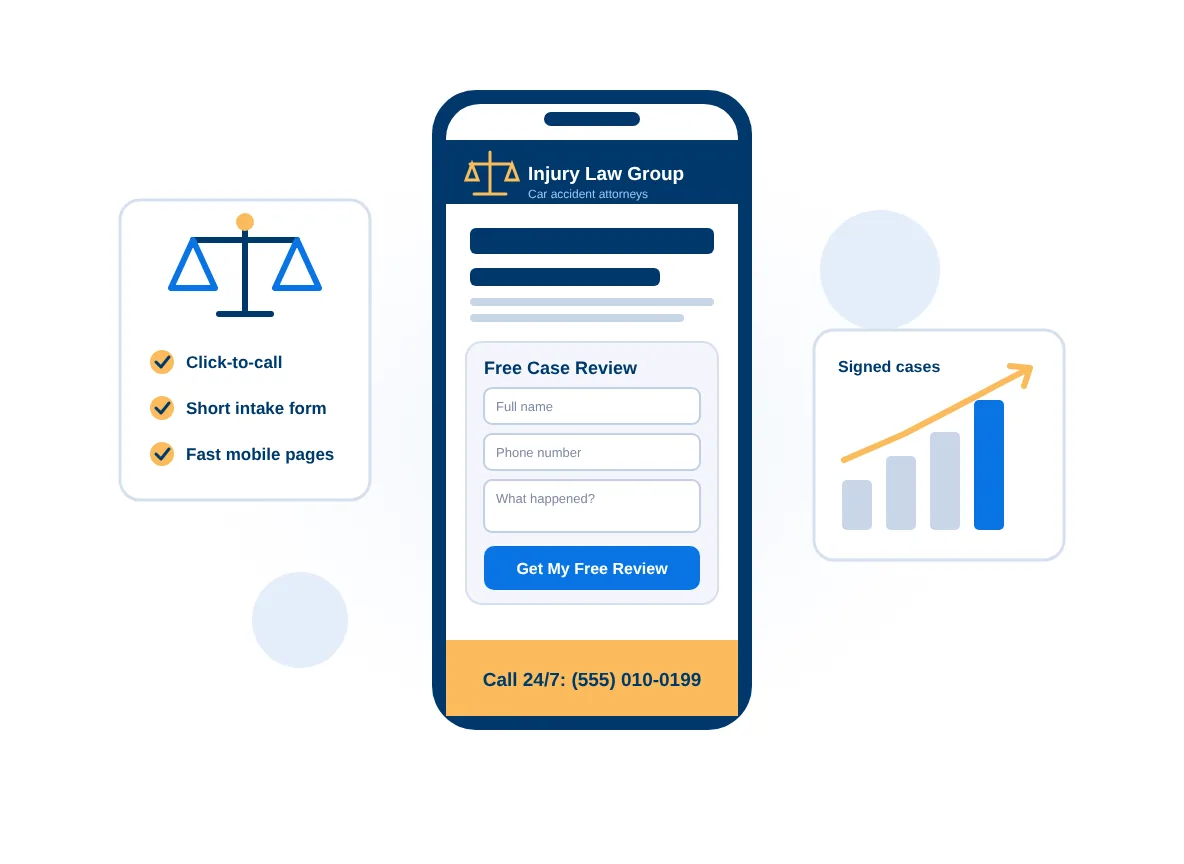
Converting a visitor into a lead requires seamless communication tools. Your website needs click-to-call functionality, sticky contact headers, and optimized intake forms. Connecting these forms directly to your law practice management software, such as Filevine or Clio, streamlines your intake process. Custom application programming interfaces ensure that web leads populate directly into your system without manual data entry. Setting up these secure connections requires developer hours, adding to the initial build cost.
Photography and Visual Assets
Stock photos of gavels and courthouses actively harm your conversion rates. Personal injury clients want to see the attorney who will handle their case. Hiring a professional photographer to capture headshots, office environments, and candid team interactions adds a few thousand dollars to your budget. Authentic imagery builds immediate trust. Video assets, such as attorney introduction videos or client testimonials, require professional editing and embedding. High-quality video assets slow down website loading times if not handled correctly, requiring developers to implement lazy loading techniques. This adds time to the development phase but results in a significantly higher conversion rate.
Trust Signals and Accessibility Compliance
Personal injury clients need to trust your firm before they pick up the phone. Your website must prominently display past case results, attorney profiles, and professional associations. Formatting these trust signals so they look professional on every device takes careful design work. Furthermore, your site must meet standard accessibility guidelines. Building an accessible website protects your firm from liability and ensures that users with disabilities can easily navigate your content. Retrofitting an old site for accessibility is expensive, so it should be included in your new build.
Digital Marketing for Personal Injury Law Integration
A beautiful website generates zero revenue if no one can find it. Your web design project must integrate seamlessly with your broader marketing strategy.
SEO Architecture from Day One
Search engine optimization is not something you apply after a website launches. It must be built into the core code. This means structuring your URLs logically, applying the correct schema markup for attorneys, and optimizing meta data across every page. Proper schema markup helps search engines understand your firm's location, reviews, and specific legal services. Building this infrastructure correctly from day one allows your organic traffic to grow much faster once the site goes live.
High-Converting Paid Ads Landing Pages
If you run Google Ads or Meta Ads, sending traffic to your homepage burns money. You need dedicated landing pages designed specifically for paid traffic. These pages strip away distracting navigation menus and focus entirely on a single call to action. Developing a library of landing pages for different campaign types, such as commercial vehicle accidents or premises liability, adds to your project scope. However, these specialized pages significantly lower your cost per lead, making the initial investment highly profitable.
How to Scale Personal Injury Law Online Efficiently
Once your website is live, the focus shifts to growth. Scaling your firm requires a disciplined approach to marketing expenditures.
Transparent Billing and Asset Ownership
ITZ Digital designs transparent, scalable billing profiles that eliminate marketing waste. You should own every digital asset your firm finances. We build your website on platforms you control and set up your analytics accounts in your name. Our invoices separate baseline technical costs from active marketing budgets. Contrasting our structured reporting against hidden management fees allows you to see exactly how your money works for you. You never have to guess what you are paying for.
Iterative Content Expansion
You do not need to build a hundred-page website on day one. You can scale personal injury law online by launching a robust core site and expanding it strategically. Start with your primary practice areas and most lucrative case types. Once the site is generating revenue, reinvest a portion of that capital into new content. You can add localized city pages or detailed blog posts targeting specific legal questions. This phased approach spreads out your financial commitment and aligns your spending with your firm's cash flow.
Measuring Personal Injury Law Customer Acquisition
The ultimate metric for your website is revenue. Tracking vanity metrics like overall traffic or total impressions distracts from what actually matters.
Tracking Cost Per Signed Case
You need to know exactly how much it costs to acquire a new client. This requires rigorous conversion tracking. We implement systems that track every phone call, form submission, and live chat initiated from your website. By tying these leads back to their source, you can determine which practice area pages and marketing channels deliver the highest quality cases. If a specific campaign generates a low cost per booked job, you can confidently scale your budget in that direction.
Live Chat and 24/7 Intake
Personal injury events happen at all hours. If someone is involved in a late-night collision, they will not wait until morning to contact a lawyer. Implementing a round-the-clock live chat service captures leads that would otherwise go to a competitor. Setting up the software, customizing the chat prompts, and routing the transcripts to your intake team takes configuration time. A well-configured chat widget drastically reduces the cost per signed case by capturing high-intent visitors immediately.
Understanding Timelines and ROI Expectations
Honesty regarding timelines is crucial for budgeting. If you are relying on organic search to drive traffic, expect the process to take six to twelve months before yielding consistent results. Search engines need time to index your new content and evaluate your authority. If you need immediate lead volume, you must allocate a portion of your budget to paid advertising while your organic presence matures. Balancing short-term paid acquisition with long-term organic growth ensures a steady pipeline of new cases without depleting your capital.
Your website is the central hub of your practice. Approaching the project with a clear understanding of the costs, required features, and potential pitfalls protects your firm. By prioritizing transparent partnerships and tracking actionable metrics, you can build a digital presence that aggressively captures local market share.

 By Kayce Marty