A personal injury law website drives growth only when its architecture is engineered around the urgent mindset of an injured claimant seeking immediate help. Turning your site into a predictable case-generation engine requires structured user behavior mapping, rapid mobile loading, and automated lead capture that eliminate friction before an intake specialist ever speaks with a prospect.
Many firms treat their website as a static digital business card. They feature generic headshots, sprawling paragraphs of legal jargon, and buried contact numbers. This approach burns ad spend and leaves organic traffic unharvested. To establish effective website services that produce high-value signed retainers, your firm needs an operational framework that converts distressed searchers into scheduled consultations.
The Core Blueprint: Architecture Built for Claimant Intent
Visitors landing on a personal injury website are rarely casual browsers. They are dealing with physical pain, vehicular damage, medical bills, missed work, and aggressive insurance adjusters. Your website layout must address those immediate anxieties within the first five seconds of landing.
An effective site structure organizes practice areas not by internal partner specialties, but by the claimant's lived experience. Separate dedicated landing pages are essential for car accidents, commercial trucking collisions, slip and fall incidents, and workplace injuries. Each page must present clear answers to practical questions: who pays medical bills, how fault is determined, and what steps to take next.
User Behavior Mapping: Tracing the Urgent Visitor Journey
User behavior mapping looks at how actual visitors move across your pages before either calling your office or abandoning the site. By tracking scroll depth, mouse movement, and click patterns, you can identify where prospects hesitate or encounter confusion.
On desktop layouts, users typically scan in an F-shaped pattern, reading the primary headline, scanning the immediate trust badges, and reviewing the contact method on the right side of the screen. On mobile devices, user attention is vertical and fragmented. Visitors look for a single, unmistakable action: a tap-to-call button or a brief evaluation form that does not demand excessive typing while handling an injury.
Mapping reveals clear friction points that kill conversions:
- Large hero images that push call-to-action buttons below the fold on mobile screens.
- Forms that demand sensitive information, like Social Security numbers or full police report uploads, before establishing trust.
- Unresponsive navigation menus that require multiple taps to find specific accident information.
- Stock photography of courtrooms that fails to convey local presence or personal empathy.
Automated Lead Capture
Converting a visitor into a prospective client requires capturing their details smoothly and notifying your intake team in real time. Static contact forms that dump submissions into a shared email inbox create delays that cost your firm cases. Claimants contact multiple attorneys; the first firm to answer often wins the retainer.
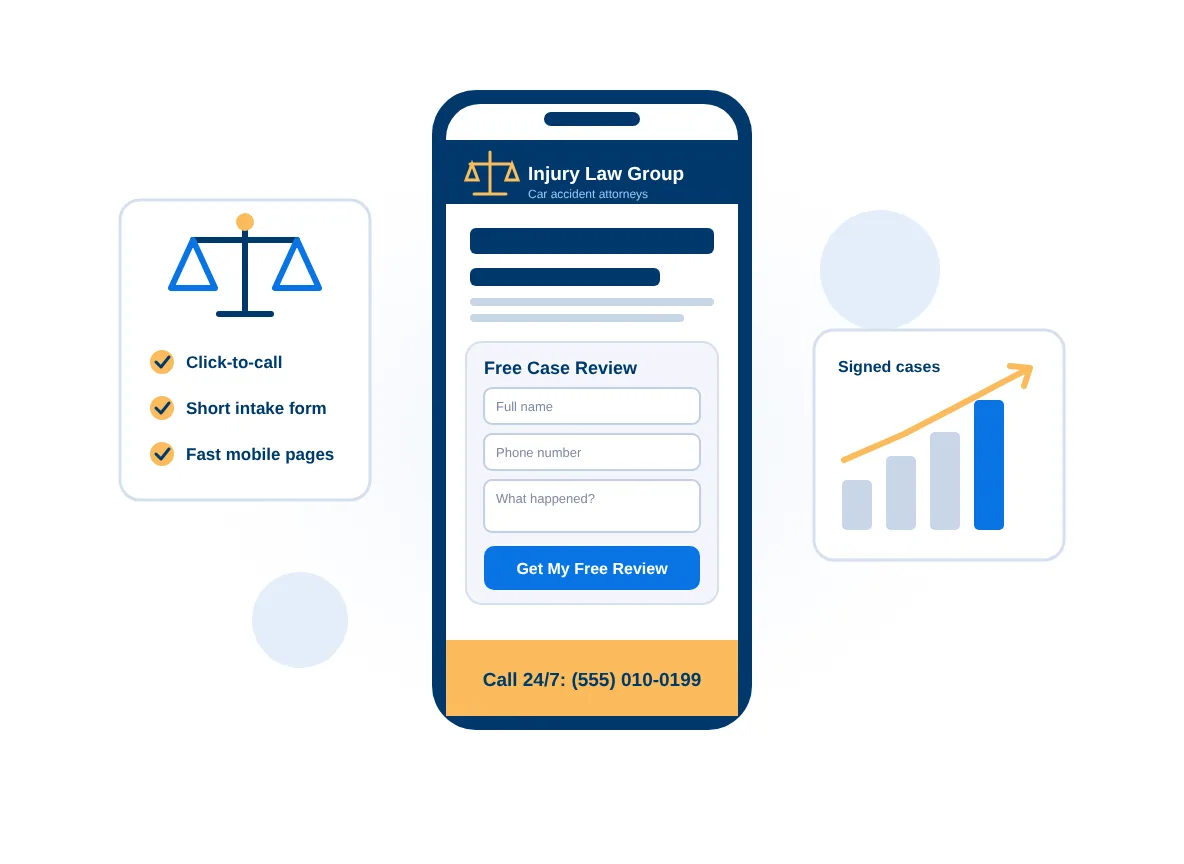
Automated lead capture uses progressive intake fields. The prospect starts by answering two basic, low-friction questions: the type of accident and the date it occurred. Once they engage, the system asks for their name, phone number, and brief description of injuries. The moment the user clicks submit, the system triggers three parallel operational actions:
- An automated SMS confirmation reaches the claimant, acknowledging their submission and stating that an intake coordinator is reviewing their details.
- The case information is pushed through an API directly into your practice management software, creating a pending matter.
- An alert sounds on your intake desk, prompting an immediate outbound call while the prospect still has your site open on their phone.
Different Messages for Different Cases
Not every case brings the same value, liability profile, or urgency. Audience segmentation routes visitors to tailored messaging based on their referral source, geographic location, and specific case type.
When running targeted campaigns, your website should dynamically adapt headers and testimonials. A visitor clicking a search ad for a commercial vehicle collision should see content highlighting experience with federal trucking regulations and commercial insurance carriers, not general slip-and-fall verdicts. Segmenting these experiences directly supports broader multi-channel digital marketing services by preserving ad scent and maximizing your conversion rate from click to signed case.
Operational Checklists for High-Performing PI Pages
Systematic growth requires repeatable standards across every page on your site. Use these checklists when auditing existing pages or building new practice area hubs.
The Mobile Intake Checklist
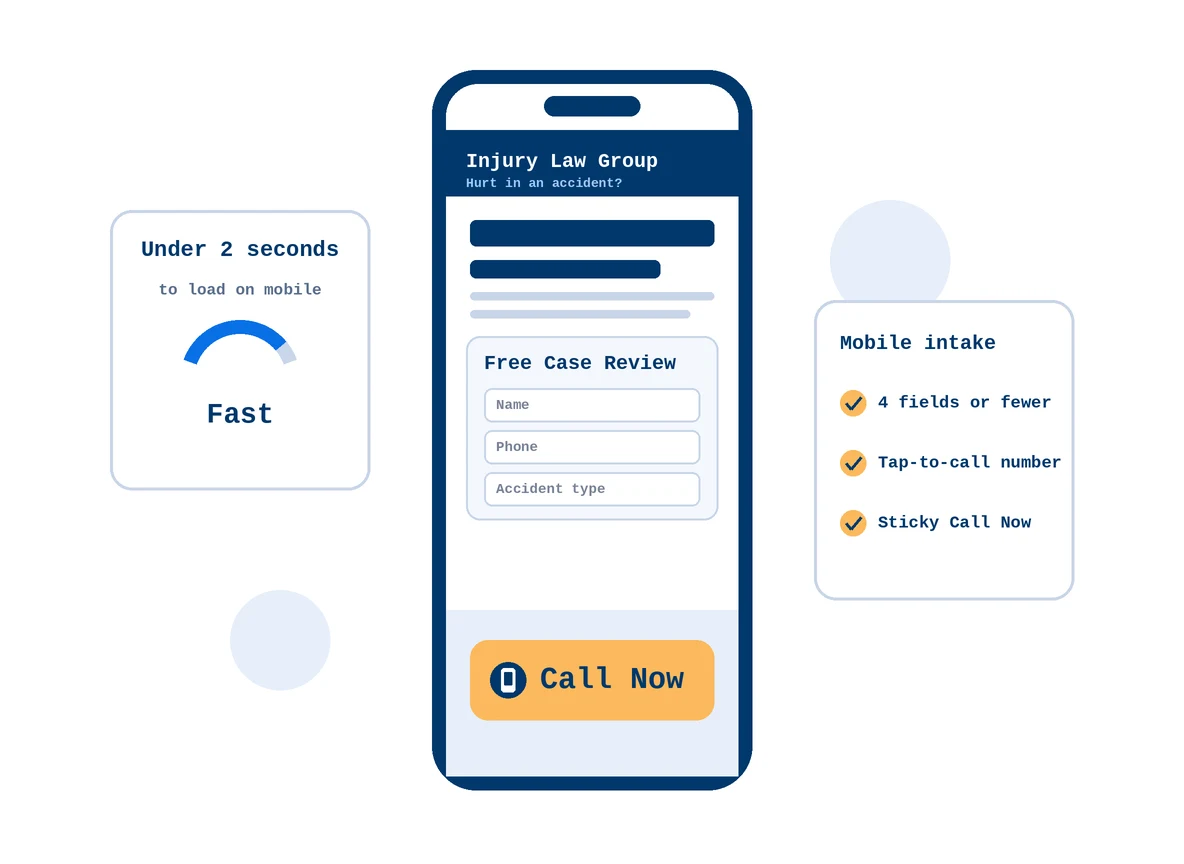
- Persistent Sticky Header: Keep a high-contrast "Call Now" button visible as the visitor scrolls down the page.
- Click-to-Call Functionality: Ensure telephone numbers use direct tel-links rather than static text that requires manual dialing.
- Simplified Input Fields: Limit mobile intake forms to four fields or fewer on initial submission.
- Sub-Two-Second Load Speed: Compress all imagery and defer non-essential scripts so content appears instantly on cellular networks.
- Thumb-Friendly Touch Targets: Position primary buttons where users can tap them without zooming or mis-clicking.
Trust Architecture and Local Signals
- Verified Settlement Highlights: Display past case results with clear disclaimers, focusing on the story and client outcome rather than just arbitrary dollar values.
- Authentic Community Roots: Feature office photography, localized street references, and maps confirming your physical office location.
- Independent Accreditations: Include badges from verified legal rating bodies, state bar associations, and local chamber memberships.
- Plain-Language Value Proposition: State clearly that your firm operates on a contingency fee model, removing the fear of upfront legal costs. Make sure any "no fee unless we win" message also states how case costs are handled, as your state bar requires.
What Typically Goes Wrong on Personal Injury Websites
Even well-funded personal injury firms frequently make critical design and operational mistakes that suppress lead volume. Recognizing these pitfalls early protects your marketing budget.
The most common failure is over-designing for peer recognition rather than claimant clarity. Law firm partners often demand ornate designs, heavy typography, and legal treatises that impress other attorneys but confuse injured citizens. A client dealing with a concussion does not want to read an appellate brief; they want to know if you can help them pay their medical bills.
Another frequent breakdown involves third-party chat widgets. Many firms install unmanaged, intrusive chat popups that disrupt navigation on mobile devices. If the chat operators are outsourced agents reading generic scripts who cannot provide meaningful answers, visitors quickly leave. Test your chat tools yourself to ensure they actively gather actionable intake data rather than frustrating users.
Finally, tracking discrepancies routinely undermine campaigns. When call tracking numbers fail to swap dynamically, or conversion tags fire on page views instead of verified form submissions, your marketing data becomes useless. Clean data is vital for sustainable digital marketing for personal injury law, and technical oversights at the website level blind your team to your true cost per acquisition.
What a PI Website Costs
Template sites cost a few hundred dollars a month but limit ownership, speed and integrations. Custom builds typically run $5,000 to $25,000, plus ongoing maintenance and optimization.
For a full breakdown, see our guide to personal injury website cost.
How to Scale Your Practice Online Systematically
To effectively scale personal injury law online, your website must integrate tightly with your broader business development operations. Designing the site is step one; feeding it qualified traffic and managing inbound volume is what drives sustainable expansion.
Review our performance case studies to see how foundational site redesigns directly improve inbound lead quality and intake velocity across competitive legal markets. A polished design without traffic produces nothing, just as aggressive ad campaigns directed to a broken website waste capital.
Tie your website forms directly to automated reporting dashboards. Track cost per lead, cost per qualified case, and cost per signed retainer. When these metrics are tied to specific landing pages and traffic channels, you can invest marketing dollars into practice areas and geographical sectors with total confidence.
At ITZ Digital, we help firms establish high-converting web assets engineered to reduce lead waste and maximize signed retainers. You can learn more about our agency and our systematic approach to growth to determine if our technical blueprints fit your firm's long-term business goals.
Successful personal injury law customer acquisition requires treating your digital presence as an automated intake pipeline. When your site combines user-centric design, fast mobile delivery, and immediate operational follow-up, your firm establishes a competitive advantage that competitors relying on outdated web strategies cannot match.

 By Kayce Marty