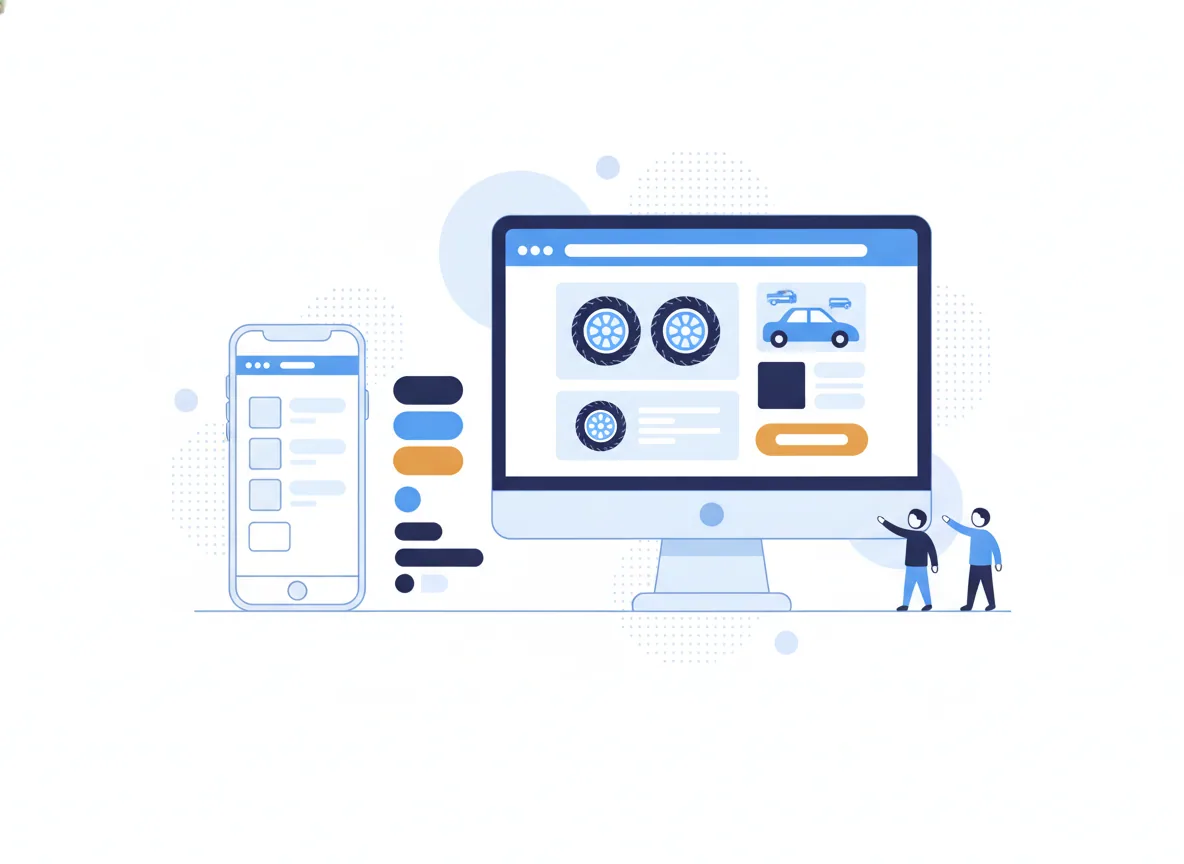
A professional tire repair website costs anywhere from $1,500 for a basic informational setup to $8,000 or more for a custom platform with live inventory feeds and online booking. Your exact price depends entirely on the features you need to turn local drivers into scheduled service appointments. A basic site acts as a digital business card, while a high-end site functions as a round-the-clock sales representative. When budgeting for your new site, you must factor in both the upfront build cost and the ongoing monthly expenses required to keep the site fast, secure, and visible to search engines.
The Real Cost of Tire Repair Web Design
When evaluating a tire repair web design investment, you need to understand exactly what you are buying. Web design is not a commodity where every agency delivers the exact same product. A low-tier website and a premium website look completely different under the hood, and those differences directly impact your ability to attract local drivers.
Template-Based Websites
If your shop is on a strict budget, a template-based website offers the lowest barrier to entry. These builds typically range from $1,500 to $3,000. The agency uses a pre-existing layout and swaps in your logo, brand colors, and service descriptions. This approach is fast. You can often launch a template site in just a few weeks. However, templates come with tradeoffs. The code is often bloated, which can slow down page load speeds. Slower pages frustrate mobile users sitting on the side of the road with a flat tire. Additionally, your site might look remarkably similar to a competitor across town who happened to hire an agency using the same theme.
Custom Website Builds
A custom website design starts with a blank canvas. These projects typically range from $4,000 to $8,000 or more. A designer maps out the user journey specifically for your tire shop, prioritizing actions like requesting a quote or booking an alignment. Custom builds allow for cleaner code, which translates to faster loading times and better core web vitals. This technical foundation makes it much easier to scale tire repair online as your business grows. If you plan to add multiple locations or aggressively pursue local search engine optimization, a custom build provides the necessary architecture.
Inventory and Booking Integrations
The most significant variable in your web design budget is functionality. If you want customers to search your tire inventory by make, model, or tire size, expect to pay a premium. Integrating point-of-sale systems or live inventory feeds requires custom development work. Online booking systems also impact the price. A simple contact form costs nothing extra. A fully integrated scheduling tool that links directly to your shop management software requires custom API connections and extensive testing. These integrations often add a few thousand dollars to the total project cost, plus potential ongoing software licensing fees.
Technical Foundations and Security
Every website requires a domain name, hosting infrastructure, and an SSL certificate to function properly. While domain names only cost a few dollars a year, professional-grade hosting can vary wildly. Cheap shared hosting environments put your tire shop on the same server as thousands of other businesses, leading to slow load times and security vulnerabilities. Premium hosting environments cost more upfront but ensure your site stays online during traffic spikes, like the first major snowstorm of the year when everyone needs winter tires. An SSL certificate encrypts customer data, which is completely non-negotiable if your site accepts appointment bookings or processes payments.
What Goes Wrong: Hidden Fees and Agency Traps
Many shop owners get burned by web design agencies because they do not ask the right questions about ownership and ongoing costs. The lowest upfront quote is rarely the cheapest option over a two-year timeline. Here is where tire shop web design projects typically go off the rails.
Held Hostage by Proprietary Platforms
Some agencies offer to build your website for free or for a very low upfront cost, provided you sign a long-term contract at a high monthly rate. They build your site on their own proprietary software platform rather than an open-source content management system like WordPress. If you ever want to leave that agency, you cannot take your website with you. You do not own the asset. You are simply renting it. When the relationship sours, you have to start over from scratch and pay for a brand new website. Always ensure your contract explicitly states that you own the website, the domain, and all associated content once the project is paid in full.
Phantom Maintenance Fees
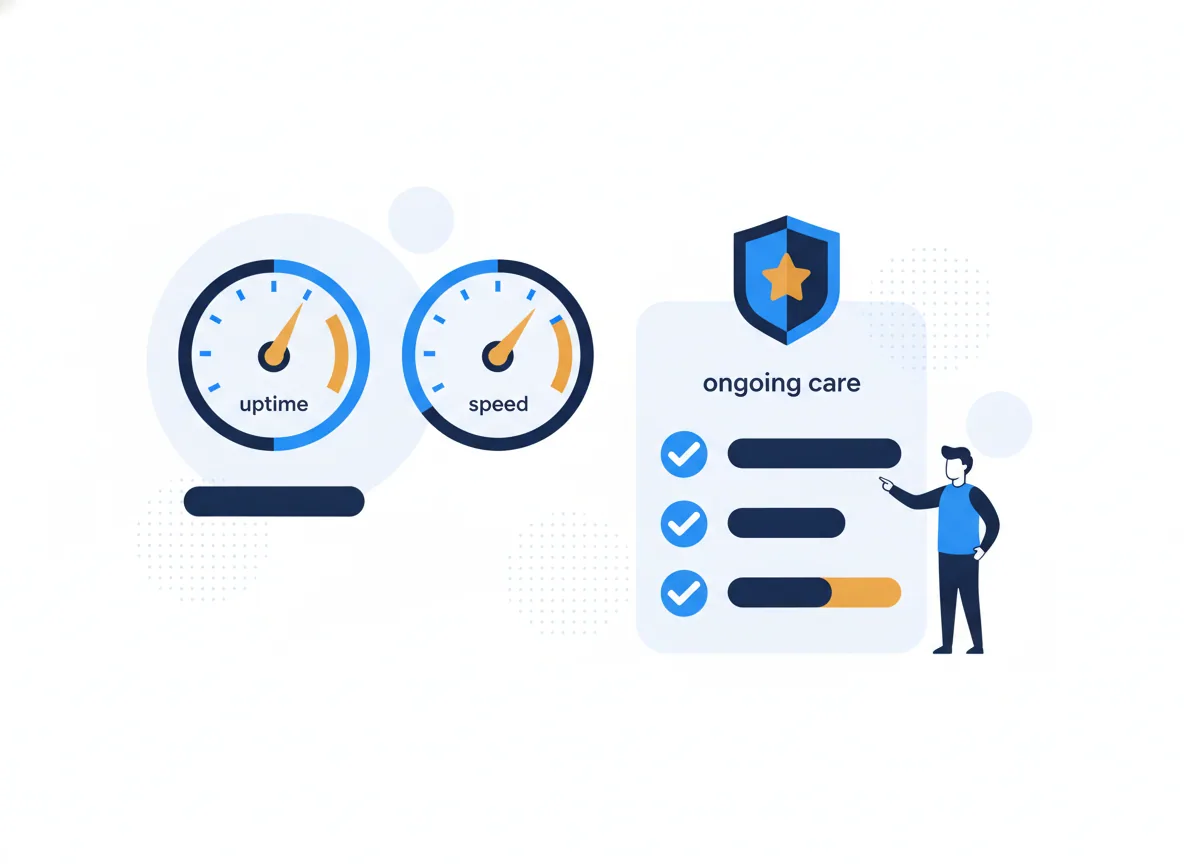
Ongoing maintenance is a normal part of owning a website. Software needs updating, and security patches must be applied. However, some agencies charge hundreds of dollars per month for maintenance and do absolutely nothing. They bank on you never checking their work. A transparent agency provides an itemized list of what their maintenance fee covers. If you are paying for hosting, plugin updates, and an hour of monthly content edits, you should see reports proving that work was completed. Do not pay vague management fees that lack accountability.
Ignoring Mobile Users
More than half of your website traffic will come from mobile devices. When someone gets a flat tire or experiences a blowout on the highway, they search for a nearby tire shop on their phone. If your web developer prioritizes the desktop experience and treats mobile as an afterthought, you will lose customers. A common trap is paying for a site that looks beautiful on a desktop monitor but has tiny, unclickable phone numbers on a mobile screen. If a stranded driver cannot tap your phone number to call you immediately, they will hit the back button and call the next shop in the search results.
Overcomplicating the User Experience
Tire shops often want to show off every piece of equipment they own or write extensive histories about how the shop was founded. While building trust matters, overcomplicating the user experience actively hurts your conversion rate. A driver with a blown-out sidewall does not care about your shop origin story; they care if you have a tow truck and a replacement tire. Web design projects fail when the agency builds a site for the owner rather than the customer. The navigation menu should be aggressively simple. Contact buttons must be highly visible. Service categories should be organized logically so a visitor can find flat repairs, rotations, or alignment services in one click.
Analyzing the ROI of Your Web Design Investment
A website is not a digital brochure; it is a mechanism for tire repair customer acquisition. To determine if your web design investment makes sense, you must analyze the potential return on investment. You do this by looking at your hard numbers.
Calculating Your Cost Per Booked Job
To understand your ROI, you need to track your conversion rates. You calculate this by measuring how many website visitors turn into leads, and how many of those leads your front desk converts into paying customers. Divide the total cost of your website build and your monthly hosting fees by the number of booked jobs it generates over a set period. This gives you your cost per booked job. For example, amortizing a custom web design build over three years alongside monthly maintenance gives you a flat monthly operating cost. Comparing that monthly cost against the profit margin of the jobs generated reveals your true return on investment. If the profit from the new jobs significantly exceeds the monthly amortized cost of the site, your website is a performing asset.
The Lifetime Value of a Tire Customer
Tire repair is rarely a one-time transaction. A customer who comes in for a simple patch job is a prime candidate for a new set of tires down the road. They will also need alignments, rotations, and seasonal changeovers. When you build a website that makes it easy for customers to find you and book appointments, you are acquiring long-term assets, not just one-off sales. Factoring in the lifetime value of a customer makes the upfront cost of a professional website much easier to justify. A single customer returning for a full set of high-end tires can offset the monthly maintenance cost of your site for an entire year.
Measuring Customer Acquisition Costs
Return on investment is not just about the initial web design invoice; it is about tracking your customer acquisition costs over time. A highly optimized website lowers the barrier to entry for new customers. When your site is easy to navigate and loads instantly, fewer people abandon the page. This higher conversion rate means you spend less money on advertising to acquire each new customer. Tracking this requires setting up proper analytics. You need to connect your website to core search consoles to monitor traffic behavior. Monitoring these metrics allows you to see exactly which pages drive the most phone calls and which pages cause users to leave.
Digital Marketing for Tire Repair: Beyond the Build
Launching your website is only the first phase. A fast, well-designed website will not generate revenue if nobody can find it. Your website is the foundation; digital marketing for tire repair is the engine that drives traffic to it.
Building a Foundation for Local SEO
Your web design dictates how easily search engines can crawl and index your site. A properly structured site uses clear heading tags, descriptive URLs, and optimized image sizes. These technical elements are critical for local search engine optimization. When a driver searches for tire repair in your city, search engines look at your website structure to determine if you are a relevant result. If your site takes too long to load or lacks clear service pages for flat repairs, rotations, and replacements, competitors will outrank you. A solid design build bakes these technical SEO fundamentals into the code from day one. In addition to on-page optimization, your website needs to integrate seamlessly with your local business profiles. The name, address, and phone number on your website must match your local directory listings exactly.
Converting Paid Traffic
If you plan to run paid advertising to drive immediate phone calls, your website must be designed to convert that expensive traffic. Sending paid ad clicks to a generic homepage is a massive waste of budget. A smart design strategy includes dedicated landing pages for specific ad campaigns. If you run an ad for heavy-duty truck tires, the user should click through to a page specifically about truck tires, complete with relevant images and a clear call to action. This level of relevance lowers your cost per click and increases your conversion rate, stretching your advertising budget further.
How to Scale Tire Repair Online
Growth requires systems. As your shop handles more volume, your website must absorb the administrative burden of fielding basic customer inquiries. Scaling means reducing the time your front desk spends answering basic questions about your hours, your location, and the specific tire brands you carry. A robust website answers these questions clearly and prominently. It filters out bad leads and guides qualified customers directly to your booking system or phone line. By turning your website into an automated answering machine and appointment setter, your staff can focus on turning wrenches and upselling services in the shop. Scaling your tire business also involves leveraging customer data. Your website should act as a hub for collecting contact information. Building a direct line of communication with local drivers allows you to send out seasonal reminders when winter tires need to be installed or when pothole season makes alignments necessary. This proactive approach keeps your schedule full during traditionally slow weeks.
Building a Tire Repair Customer Acquisition Machine
At ITZ Digital, our approach centers on transparency and measurable results. You should know exactly what your marketing dollars are doing. We design transparent, scalable billing profiles that eliminate the bloat found in typical agency retainers. Instead of charging hidden management fees that provide no value, we focus on results-oriented asset tracking.
We implement clear analytics architecture so you can see exactly how many phone calls and appointment form submissions came directly from your website. You track the cost of the build, the cost of the traffic, and the revenue generated from the booked jobs. This data-driven approach allows you to make informed decisions about where to allocate your budget next. When you eliminate marketing waste, you free up cash flow to invest in better shop equipment, highly trained technicians, and deeper tire inventory.
Your website is a business asset. It should generate a predictable stream of revenue month after month. By focusing on direct response principles and technical performance, we build platforms that turn local search traffic into bays full of cars.

 By Kayce Marty